
Top AI Skills for Freshers in India 2026 — Complete Guide by Track and Salary Impact
Quick answer — what are the Top AI Skills for Freshers in India 2026?
Technical AI skills (require programming): Python for AI, Machine Learning algorithms, Deep Learning (TensorFlow/PyTorch), Natural Language Processing (NLP) and LLM engineering, MLOps, and Cloud AI platforms.
Non-technical AI skills (no coding required): Prompt engineering, Generative AI tools proficiency, AI-assisted data analytics, AI product thinking, and AI tools for business workflows.
The most important fact no other guide tells you: AI and Machine Learning is the single highest-paying entry-level field in India in 2026. But you do not need to learn every AI skill — you need to learn the one skill that matches your background and target role. A non-CS graduate who masters prompt engineering earns ₹6–10 LPA. A CS graduate who masters LLM engineering earns ₹8–16 LPA. Both are high-paying AI careers. The skill you choose should match where you are starting from.
Call Cambridge Infotech: +91 9902461116 (Call / WhatsApp) — free AI skills counselling by background
Introduction — why 2026 is India’s most important year for building AI skills
Around 11.7% of all job postings in India now explicitly require AI skills, up from 8.2% a year ago — reflecting a 43% increase in AI skill requirements in just 12 months.
This number understates the actual shift because it only counts job descriptions that explicitly say “AI skills required.” In reality, AI fluency is increasingly expected even in roles that do not mention it — data analysts using Copilot, finance teams using AI-generated reports, marketing teams using AI content tools, project managers using AI assistants.
The practical implication: in 2026, AI skills are no longer a specialisation — they are a baseline expectation across most professional roles. The question is not whether to build AI skills. It is which AI skills, in which order, at what depth.
India’s AI market was valued at USD 9.51 billion in 2024 and is forecast to grow to over USD 130.6 billion by 2032 at a CAGR of approximately 39%. This is not a normal technology growth curve — it is the fastest sustained growth in the history of India’s technology sector. The professionals who build AI skills in 2026 are building skills for a market that will be 13x larger by the time they reach senior level.
This guide organises every important AI skill into two tracks — so you know which path to take based on where you are starting from.
The two-track AI skills framework for India 2026
Every AI skill for freshers in India falls into one of two tracks:
Track A — Technical AI skills (require programming background)
These skills require Python proficiency as a prerequisite. CS/IT graduates, engineering graduates with programming exposure, and motivated non-CS graduates who invest 2–3 months in Python foundations can access this track.
What it unlocks: ML engineer roles, LLM engineer roles, data scientist roles, MLOps engineer roles — the highest-paying AI jobs in India.
Fresher salary range in Bangalore: ₹7–16 LPA depending on which technical AI skills you combine.
Track B — Business AI skills (no coding required)
These skills leverage AI tools and frameworks without requiring programming. Any graduate — B.Com, BA, MBA, BCA, MCA, engineering — can learn these with 2–3 months of structured training.
What it unlocks: Prompt engineer roles, AI tools specialist roles, AI-assisted data analyst roles, AI product manager roles, and digital marketing with AI integration — all paying significantly above non-AI equivalents.
Fresher salary range in Bangalore: ₹6–12 LPA depending on which business AI skills you combine.
The key insight: Both tracks lead to well-paying, genuinely valuable careers. Track A has a higher salary ceiling. Track B is more accessible. The right choice depends on your background, your timeline, and your tolerance for learning programming.
The salary impact of each AI skill — India 2026
This is the most important table in this guide. Every other “top AI skills” article gives a list. This one gives you the salary impact of each skill — so you can prioritise based on financial return.
Technical AI skills — salary impact
| AI Skill | Without the skill | With the skill | Salary uplift |
|---|---|---|---|
| Python (for AI) | ₹3–5 LPA (general IT) | ₹5–8 LPA (junior AI) | +60–80% |
| Machine Learning (scikit-learn, XGBoost) | ₹5–8 LPA | ₹7–12 LPA | +40–60% |
| Deep Learning (TensorFlow/PyTorch) | ₹7–12 LPA | ₹10–16 LPA | +30–50% |
| NLP / LLM Engineering (Hugging Face, LangChain) | ₹10–16 LPA | ₹14–22 LPA | +30–50% |
| MLOps (MLflow, Kubeflow, model deployment) | ₹12–20 LPA | ₹18–32 LPA | +40–60% |
| Agentic AI (LangGraph, CrewAI, multi-agent systems) | ₹14–22 LPA | ₹18–35 LPA | +30–60% |
| Cloud AI (SageMaker, Vertex AI, Azure ML) | ₹14–22 LPA | ₹20–38 LPA | +40–70% |
Business AI skills — salary impact
| AI Skill | Without the skill | With the skill | Salary uplift |
|---|---|---|---|
| Prompt Engineering | ₹3–5 LPA (general role) | ₹6–10 LPA | +80–120% |
| GenAI Tools Proficiency (ChatGPT, Claude, Copilot) | ₹4–6 LPA (data/marketing) | ₹6–10 LPA | +40–70% |
| AI-assisted Data Analytics (Power BI Copilot, AI SQL) | ₹5–8 LPA (analyst) | ₹7–12 LPA | +30–50% |
| AI for Digital Marketing | ₹4–6 LPA (marketer) | ₹6–10 LPA | +40–60% |
| AI Product Management | ₹8–15 LPA (PM) | ₹12–22 LPA | +30–50% |
Reading this table: Every row shows the salary with and without the AI skill for the same experience level. The pattern is consistent — adding any AI skill adds 30–120% to the base role salary. The largest uplifts are for skills that are newest and most undersupplied.
Technical AI Track — the 7 skills that unlock the highest-paying AI jobs in India
Skill 1 — Python for AI (the gateway prerequisite)
What it is: Python is the universal language of artificial intelligence. Every major AI framework — TensorFlow, PyTorch, scikit-learn, LangChain, Hugging Face — is built in Python. Without Python, no other technical AI skill is accessible.
Python is the dominant language for AI and data science work globally — used for machine learning, data manipulation, automation, and analytical scripting.
What you need to learn: Core Python (data types, functions, OOP), NumPy (numerical computing), Pandas (data manipulation), Matplotlib (visualisation), and virtual environment management. AI-specific Python also requires: working with APIs (the Requests library), handling JSON data, and understanding async programming for LLM applications.
How long it takes: 4–8 weeks of daily 1.5-hour practice from zero programming experience to AI-ready Python. CS graduates with existing Python knowledge can proceed directly to Machine Learning.
Free learning resource: Python.org official tutorial, Kaggle’s free Python course (the fastest structured introduction for data/AI purposes).
Salary without Python: ₹3–5 LPA (general IT or non-technical role) Salary after Python for AI: ₹5–8 LPA (junior AI or data role) — the foundation that unlocks everything else.
Skill 2 — Machine Learning with scikit-learn and XGBoost
What it is: Machine learning is the discipline of training algorithms to make predictions and decisions from data — the core of most AI applications in Indian enterprises in 2026.
The specific algorithms every Indian ML fresher must know:
Supervised learning: Linear Regression (salary prediction, price forecasting), Logistic Regression (classification, credit risk), Random Forest (robust baseline for tabular data), XGBoost and LightGBM (the dominant algorithms at Indian companies for structured data — appears in 80% of Kaggle competitions and most production Indian ML systems).
Unsupervised learning: K-Means clustering (customer segmentation), Principal Component Analysis (dimensionality reduction), and anomaly detection (fraud detection, quality control).
Model evaluation: The specific metrics that matter by problem type — accuracy vs precision vs recall vs F1 score vs ROC-AUC. Knowing which metric to optimise for which business problem is what senior interviewers test.
Free learning resource: Google’s Machine Learning Crash Course — the best free, structured introduction to ML concepts with TensorFlow examples.
Kaggle’s free Machine Learning course — hands-on practice with real datasets from Day 1.
Salary with ML skills (combined with Python): ₹7–12 LPA fresher — already significantly above the general IT services starting point.
Skill 3 — Deep Learning with TensorFlow or PyTorch
What it is: Deep learning uses neural networks — computational architectures loosely inspired by the brain — to learn patterns from large amounts of unstructured data (images, text, audio). Deep learning powers facial recognition, voice assistants, image classification, and — critically — the language models behind ChatGPT and Claude.
Deep Learning frameworks such as TensorFlow and PyTorch play a major role in driving higher AI salaries in India.
What to learn:
TensorFlow (backed by Google, most widely deployed in Indian production environments) or PyTorch (preferred for research and NLP/LLM work — most AI papers use PyTorch).
Core concepts: Neural network architecture (layers, activation functions, loss functions), backpropagation (how networks learn), Convolutional Neural Networks for image data, Recurrent Neural Networks and LSTMs for sequential data, and Transfer Learning (using pre-trained models as starting points — the most practical deep learning technique for real projects).
The 2026 addition: Understanding Transformer architecture — the technology behind GPT, Claude, and Gemini. You do not need to build transformers from scratch. You need to understand how attention mechanisms work, why they are more effective than RNNs for language tasks, and how to fine-tune pre-trained transformer models for specific tasks.
Free learning resource: TensorFlow’s official tutorials and fast.ai’s Practical Deep Learning for Coders — the most respected free deep learning course globally, deliberately practical-first.
Salary impact: Deep learning proficiency on top of ML adds ₹3–5 LPA to mid-level salaries and unlocks NLP and computer vision specialisation roles that are not accessible with classical ML alone.
Skill 4 — NLP and LLM Engineering (the highest-demand specialisation)
What it is: Natural Language Processing (NLP) enables computers to understand, interpret, and generate human language. In 2026, NLP has been largely transformed by Large Language Models (LLMs) — GPT-4o, Claude 3.5, Gemini 1.5 — which handle most text tasks dramatically better than classical NLP approaches.
LLM Engineering is the practical skill of building applications that use LLMs — not training the models from scratch, but integrating them effectively into products and workflows.
What to learn:
Classical NLP (still valuable for understanding): text preprocessing, TF-IDF, word embeddings (Word2Vec, GloVe), sentiment analysis, named entity recognition.
Modern LLM skills (what companies are actually hiring for):
- Using Hugging Face Transformers to access and fine-tune open-source models (BERT, Llama, Mistral)
- Calling LLM APIs (OpenAI, Anthropic Claude, Google Gemini) with proper prompt engineering
- Building RAG (Retrieval-Augmented Generation) pipelines using LangChain and vector databases
- Fine-tuning models with LoRA/QLoRA for domain-specific tasks
- Evaluating LLM outputs — hallucination detection, factual accuracy measurement, safety filtering
Free learning resource: Hugging Face’s free NLP course — the most comprehensive free resource for both classical NLP and modern transformer-based approaches.
Salary: NLP/LLM engineers are the highest-paid specialisation within data science at mid-level in India — entry-level roles in LLM-focused positions start around ₹8–12 LPA, while experienced professionals with expertise in Agentic AI or MLOps can earn between ₹30 LPA and ₹50+ LPA.
Skill 5 — MLOps (Machine Learning Operations)
What it is: MLOps is the practice of deploying, monitoring, and maintaining machine learning models in production — ensuring that models that work in development also work reliably, accurately, and cost-effectively in real-world applications.
Building a model is 20% of the work. Getting it into production and keeping it working is 80%. MLOps is the discipline that handles the 80%.
What to learn:
Model deployment: Wrapping trained ML models as REST APIs using FastAPI, containerising with Docker, deploying to cloud platforms (AWS SageMaker, Azure ML, Google Vertex AI).
Experiment tracking: MLflow — the industry-standard tool for tracking model training runs, comparing experiments, and versioning models. Used by virtually every professional ML team in India.
CI/CD for ML: Automating the pipeline from data → training → evaluation → deployment using GitHub Actions or similar. When a model’s performance degrades (because real-world data has changed), the pipeline automatically retrains and redeploys.
Model monitoring: Detecting data drift (when the distribution of input data changes) and concept drift (when the relationship between inputs and outputs changes). Tools: Evidently AI, Arize, Grafana ML dashboards.
Salary: MLOps practices for model deployment and monitoring play a major role in driving higher AI salaries in India. MLOps engineers combining ML and DevOps skills earn ₹20–38 LPA at mid-level — a 40–60% premium over pure ML engineers at equivalent experience.
Skill 6 — Agentic AI (the fastest-growing, newest specialisation)
What it is: Agentic AI is the practice of building AI systems that can autonomously complete multi-step tasks by using tools — web search, code execution, database queries, API calls — rather than simply generating text in response to a prompt.
An Agentic AI developer builds systems where an LLM acts as a reasoning engine that decides which tools to use, in which order, to complete a complex goal — without a human directing each step.
What to learn:
LangChain Agents and LangGraph — the primary frameworks for building AI agents in Python. LangChain’s official documentation covers agents, tools, memory, and multi-agent architectures comprehensively.
CrewAI — a framework for orchestrating multiple specialised AI agents working together. Used for complex workflows where different agents handle research, writing, verification, and quality checking in parallel.
Tool integration: Giving AI agents access to specific tools — web search (Tavily, SerpAPI), code execution (Python REPL), database queries, file reading, email sending. The more tools an agent has access to, the more complex tasks it can complete autonomously.
Memory management: How to give AI agents access to both short-term context (the current conversation) and long-term memory (past interactions and accumulated knowledge) in a scalable way.
Salary: Agentic AI developers are among the highest-paid freshers in India in 2026 — ₹8–16 LPA starting, growing to ₹22–40 LPA within 3 years. The demand-to-supply ratio for this specific skill is the highest of any AI specialisation.
Cambridge Infotech course: Agentic AI Course in Bangalore →
Skill 7 — Cloud AI platforms (AWS SageMaker, Azure ML, Google Vertex AI)
What it is: Every ML model that reaches production at an Indian enterprise is deployed on a cloud AI platform. These managed services handle the infrastructure complexity of model training, deployment, and monitoring — allowing ML engineers to focus on model quality rather than server management.
What to learn:
AWS SageMaker: The most widely used cloud ML platform in India. Covers managed Jupyter notebooks, training jobs at scale, model deployment as endpoints, feature stores, and autopilot (automated ML). AWS SageMaker documentation is comprehensive.
Azure Machine Learning: Preferred at Indian enterprises on the Microsoft stack. Strong integration with Azure Databricks for large-scale data processing. Microsoft Learn’s ML path is free.
Google Vertex AI: The GCP equivalent — strongest for companies already using BigQuery and Google Cloud. Best tooling for custom model training at scale.
Salary impact: Cloud AI skills add ₹4–8 LPA to mid-level ML engineer salaries — because most ML jobs in India require deploying models on cloud platforms, and cloud AI proficiency specifically is rarer than core ML skills.
Business AI Track — the 5 skills that pay well without programming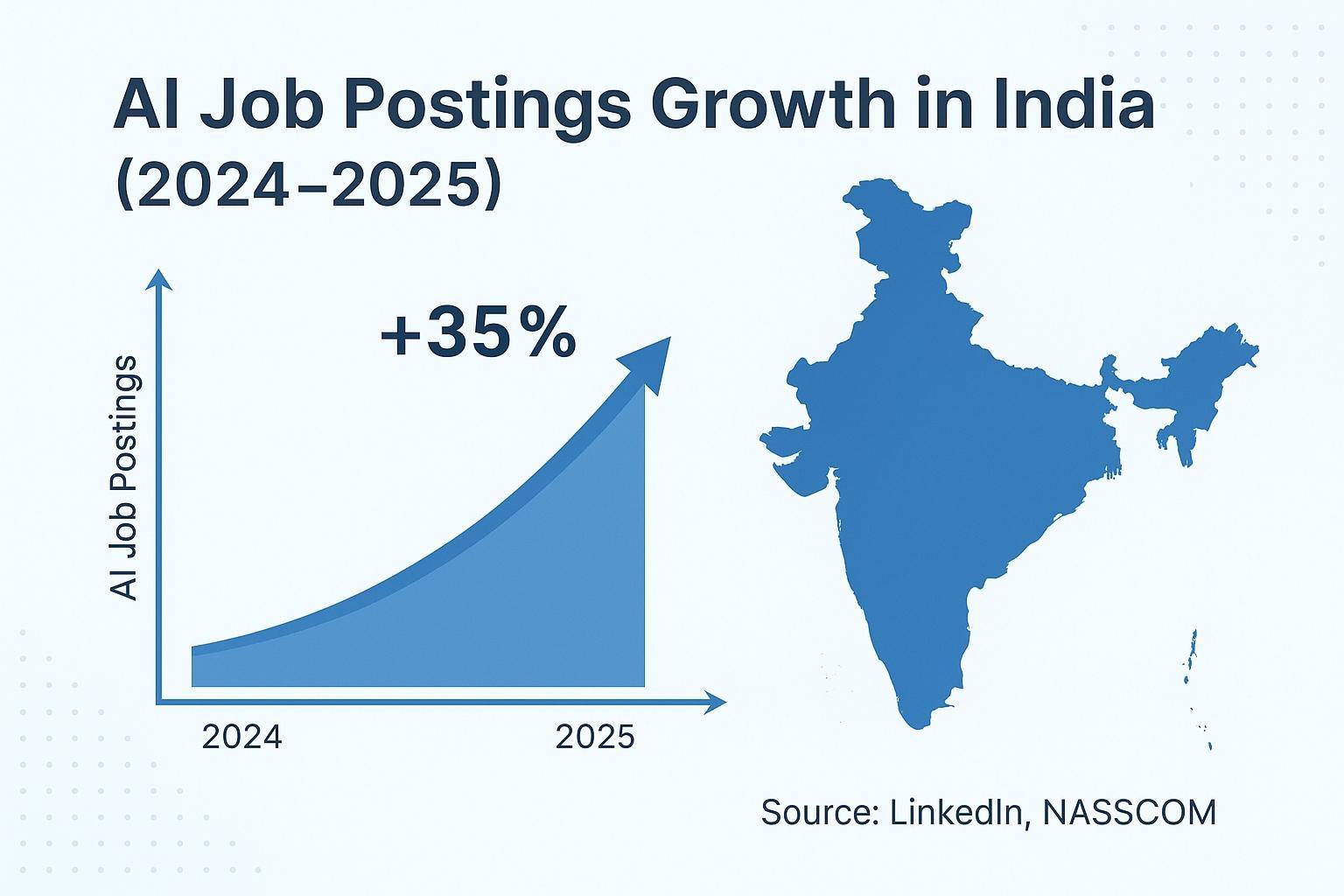
Skill 1 — Prompt Engineering (the most accessible high-paying AI skill)
What it is: Prompt engineering is the skill of writing precise, effective instructions for large language models — designing inputs that reliably produce high-quality, accurate, and useful outputs.
This sounds simple. It is not. The difference between a well-engineered prompt and a poorly written one can be the difference between a working AI application and one that produces unreliable, harmful, or useless outputs.
What to learn:
The fundamental prompt patterns:
- Chain-of-thought prompting: Asking the model to reason step-by-step before producing a final answer — dramatically improves accuracy on complex tasks
- Few-shot prompting: Providing 2–5 examples of correct input-output pairs before asking the model to handle a new case
- System prompt design: Writing the “persona and rules” instructions that shape every response in a conversation
- Structured output formatting: Instructing the model to return JSON, tables, or specific formats for downstream processing
- Constraint specification: Telling the model what NOT to do — often as important as telling it what to do
Advanced prompt engineering:
- Prompt chaining — breaking complex tasks into a sequence of smaller prompts where each step feeds the next
- Self-consistency — generating multiple responses to the same prompt and selecting the most consistent answer
- Prompt injection defence — designing prompts that resist malicious user instructions
Free learning resource: Anthropic’s prompt engineering guide is the most comprehensive and authoritative free resource — written by the team that builds Claude. OpenAI’s prompt engineering guide covers GPT-specific techniques.
Salary: Prompt engineer roles in India in 2026 pay ₹6–10 LPA for freshers at IT companies and startups — a significant premium above equivalent non-AI roles. This is the most accessible high-paying AI career because it requires no programming whatsoever.
Skill 2 — Generative AI tools proficiency (the fastest way to AI fluency)
What it is: GenAI tools proficiency is the ability to effectively use the suite of generative AI tools now standard in Indian corporate environments — ChatGPT and Claude for text generation, Midjourney and Adobe Firefly for image creation, GitHub Copilot for code assistance, and Microsoft Copilot across the Microsoft 365 suite.
Effective use of tools including ChatGPT, Claude, Gemini, Midjourney, and Copilot for content creation, analysis, code assistance, and customer communication is a key in-demand AI skill in India in 2026.
What to learn:
ChatGPT and Claude for professional tasks: Advanced usage patterns for research synthesis, document drafting, data analysis narration, presentation content, and complex multi-step tasks.
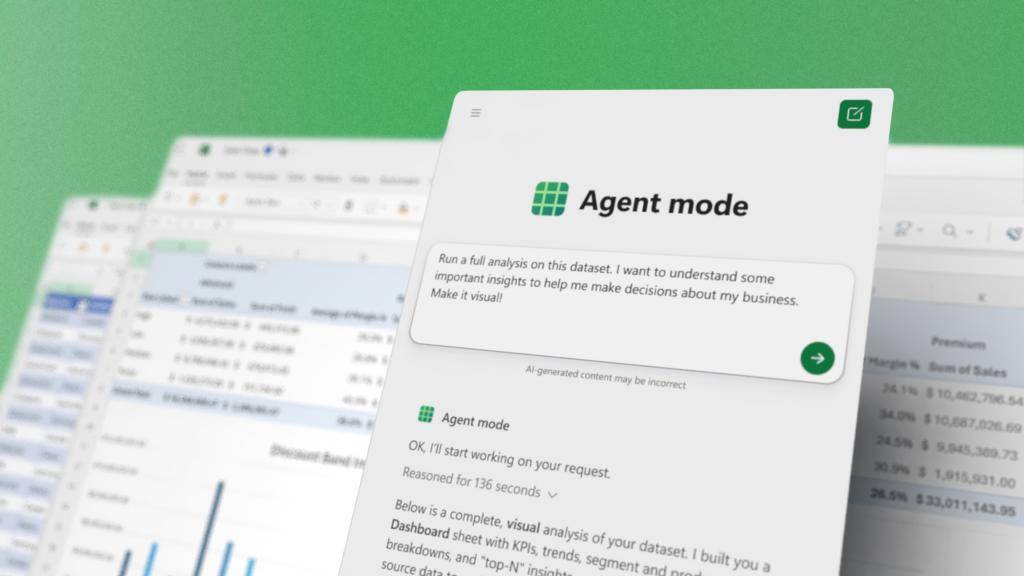
Microsoft Copilot in the Microsoft 365 suite: Excel (AI-powered analysis and formula generation), Word (drafting and editing), Outlook (email summarisation and response drafting), Teams (meeting transcription and action item extraction), and Power BI (natural language dashboard queries).
AI-assisted content creation: Midjourney for professional image creation, Canva AI for graphic design, Descript for AI-powered video and audio editing.
GitHub Copilot: AI code completion and code explanation — valuable even for non-programmers who need to understand and review code in product management or technical writing roles.
Salary impact: GenAI tools proficiency alone adds 40–70% to base role salaries when combined with the primary skill (data analytics, digital marketing, or content creation). A data analyst who uses Copilot for SQL generation and Power BI for natural language queries produces 2–3x the output of one who does not — and earns accordingly.
Skill 3 — AI-assisted data analytics (Power BI Copilot + AI SQL generation)
What it is: Traditional data analytics involves manually writing SQL, building charts, and writing commentary. AI-assisted data analytics uses Microsoft Copilot in Power BI, natural language SQL generation tools (GitHub Copilot, ChatGPT for SQL), and AI anomaly detection to dramatically accelerate every step of the workflow.
Specific tools to learn:
Microsoft Copilot in Power BI: Natural language Q&A (“show me monthly revenue by region for Q1 2026”), AI-powered anomaly detection (automatically flags unexpected changes), smart narratives (AI-generated text descriptions of what charts show), and the AI visuals (Key Influencers and Decomposition Tree) that identify what factors drive a metric.
Natural language SQL generation: Using GitHub Copilot or ChatGPT to generate SQL queries from plain English descriptions — then validating, debugging, and optimising the generated SQL. This skill does not require knowing how to write SQL from scratch — but does require enough SQL literacy to verify that the AI-generated query is correct.
AI-powered EDA: Using Python’s ydata-profiling (formerly pandas-profiling) to automatically generate complete exploratory data analysis reports from a dataset in one line of code. Understanding how to interpret the automatically generated insights is the skill.
Salary impact: Data analysts with AI-assisted analytics skills earn ₹7–12 LPA versus ₹5–8 LPA for standard data analysts — a ₹2–4 LPA premium at equivalent experience levels.
Skill 4 — AI for digital marketing (content generation + campaign automation)
What it is: AI tools have transformed digital marketing from a labour-intensive content and campaign management process into a leverage-based discipline where one skilled marketer with AI tools produces the output of a team.
Specific skills to learn:
AI content at scale: Using ChatGPT and Claude to generate first-draft blog posts, ad copy, email sequences, and social media calendars — then editing for brand voice and accuracy. The skill is not “let AI write everything” — it is “use AI for first drafts and spend human time on strategy and quality control.”
Meta Advantage+ and Google Performance Max: AI-powered ad campaign automation that automatically generates ad creative combinations, identifies the best-performing audiences, and optimises bidding in real time. Understanding how to set up, monitor, and override these AI systems is now a specific digital marketing skill.
AI SEO tools: Surfer SEO, Clearscope, and Ahrefs AI features for identifying content gaps, optimising keyword density, and generating topic clusters. Manual SEO keyword research is being augmented (not replaced) by AI tools that process competitor content at scale.
Salary impact: Digital marketers with AI tool fluency earn 40–60% more than those without at equivalent experience levels. Senior performance marketing managers at Indian e-commerce companies who use AI campaign tools effectively earn ₹18–28 LPA — significantly above the ₹12–18 LPA for those using only manual approaches.
Skill 5 — AI product thinking (for MBAs and business professionals)
What it is: AI product thinking is the ability to identify where AI can solve real business problems, scope AI-powered product features, define success metrics for AI systems, manage the development of AI products alongside technical teams, and navigate the ethical and safety considerations of deploying AI in production.
This is the business leadership skill that the most senior AI-adjacent roles require — and it is increasingly demanded of product managers, strategy managers, and business leaders at Indian companies deploying AI.
AI is no longer a skill set confined to engineers and data scientists — NASSCOM reports that AI and data-related skills are among the three fastest-growing requirements across both management and technical roles in India.
What to learn:
AI product fundamentals: How to evaluate whether a problem is best solved by AI vs. rule-based logic vs. human judgment. Understanding the data requirements, latency constraints, and accuracy thresholds that determine whether an AI solution is viable.
AI project management: How to structure an AI project — problem definition, data discovery, model development, evaluation, staging, and production — and how to manage the inherent uncertainty that comes with ML model development.
AI ethics and governance: Understanding bias in ML models, privacy implications of AI systems, regulatory requirements (India’s Digital Personal Data Protection Act), and how to build responsible AI systems that can be audited and explained.
Salary: AI product managers in India earn ₹12–22 LPA at entry level and ₹25–45 LPA at senior level — among the highest non-engineering salaries in the Indian technology sector.
Which AI skill should you learn first — by your background?
| Your background | Recommended first AI skill | Time to learn | Fresher salary after | Cambridge Infotech course |
|---|---|---|---|---|
| B.Tech CS / IT | Agentic AI + LLM Engineering | 4–6 months | ₹8–16 LPA | Agentic AI → |
| B.Tech non-CS (Mech, EC, Civil) | Python → Machine Learning | 5–7 months | ₹7–12 LPA | ML Course → |
| B.Sc Maths / Statistics | Machine Learning → Data Science | 4–6 months | ₹6–12 LPA | Data Science → |
| BCA / MCA | Agentic AI or Full Stack + AI | 4–5 months | ₹7–14 LPA | Agentic AI → |
| B.Com / MBA Finance | AI-assisted Data Analytics + Prompt Engineering | 2–3 months | ₹6–10 LPA | Data Analytics → |
| BA / Arts / Humanities | GenAI Tools + Prompt Engineering | 2–3 months | ₹5–8 LPA | Digital Marketing → |
| MBA (any specialisation) | AI Product Thinking + Prompt Engineering | 2–3 months | ₹8–14 LPA | Agentic AI → |
| Working professional (any IT) | Add Generative AI to current role | 1–2 months | +30–60% to current salary | Agentic AI → |
How to learn AI skills in India 2026 — free and structured paths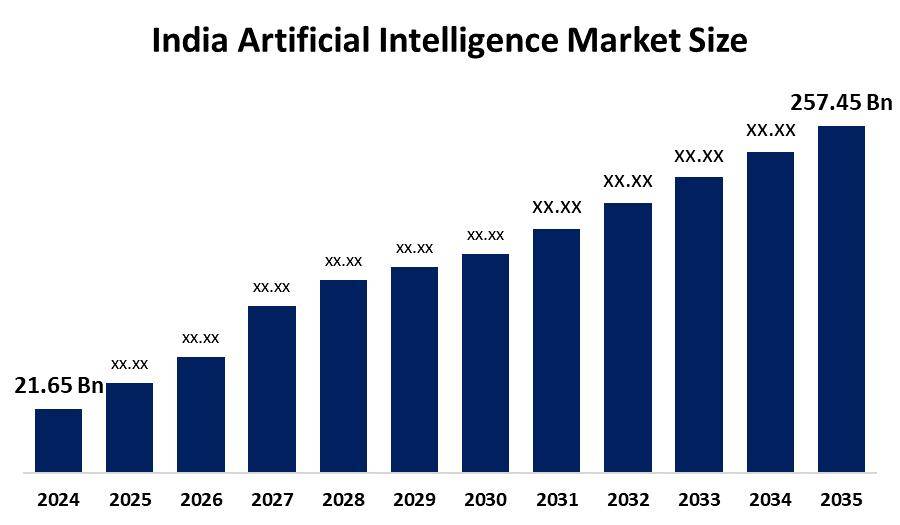
Free AI learning resources organised by skill
For Python and Machine Learning:
- Google’s Machine Learning Crash Course — completely free, covers ML fundamentals with TensorFlow, structured as a proper course with exercises
- Kaggle’s free courses — Python, Pandas, ML, deep learning, and NLP, all free with certificates
- fast.ai’s Practical Deep Learning — the most respected free deep learning course globally, deliberately practical-first
For LLM and Agentic AI:
- DeepLearning.AI’s free short courses — 1–2 hour courses on LangChain, RAG, prompt engineering, and LLM evaluation, all free with certificates
- Hugging Face’s free NLP course — comprehensive transformer and fine-tuning coverage
- LangChain official documentation — the best hands-on agent building resource
For Prompt Engineering:
- Anthropic’s prompt engineering guide — authoritative, free, comprehensive
- Google AI Studio — free platform for practising prompts with Gemini models
For Business AI skills:
- Microsoft’s free Copilot Adoption Hub — scenario-based training for Microsoft 365 Copilot across all Office apps
- Meta Blueprint — free certification in Meta’s AI-powered advertising tools
When to choose structured training over free resources
Free resources are excellent for understanding concepts. They are insufficient for:
- Building production-ready projects that impress Bangalore hiring managers
- Getting feedback on your specific code and project choices
- Interview preparation for specific company formats
- Placement support with direct access to hiring partner companies
Cambridge Infotech’s Agentic AI and Machine Learning courses provide all four — which is why structured training consistently produces faster placement at higher salaries than self-study alone.
The AI skills gap in India — why now is the right time to build these skills
In the AI industry, what you can build matters more than where you went to school. A degree from a well-known college might help you get noticed, but your practical skills are what help you get higher salaries. Companies want to hire AI talent who can solve real-world problems right away.
This is the most important career insight in India’s current job market — and it applies with special force to AI skills specifically.
Top companies hiring freshers for AI jobs in India include TCS, Infosys, Wipro, Cognizant, Accenture, Google, and startups like Fractal Analytics, Mad Street Den, and Haptik — with freshers in AI jobs expecting starting salaries of ₹5–12 LPA, varying by role, location, and industry.
The supply-demand gap for AI professionals in India is at its widest point ever in 2026. NASSCOM estimates India needs over 1 million AI professionals by 2026 — and current supply is less than 420,000. Every AI skill you build in 2026 earns a premium that will normalise as supply catches up with demand. The freshers who build AI skills in 2026 will be senior professionals with 2–3 years of premium-earning experience by the time the market reaches equilibrium.
The specific AI skills with the largest supply-demand gap in India right now:
- Agentic AI / LLM Engineering: Demand growing at 200% year-over-year, supply at 35%
- MLOps: Demand growing at 80% year-over-year, supply at 30%
- Prompt Engineering for enterprise use cases: Demand growing at 150% year-over-year, supply at 40%
- AI-assisted data analytics: Demand growing at 90% year-over-year, supply at 35%
AI skills interview preparation — what Bangalore companies actually test
Technical AI skill interview questions
“Explain the difference between overfitting and underfitting. How do you detect and fix each?” — Overfitting: model performs well on training data, poorly on test data (high variance). Signs: large gap between training and test accuracy. Fix: regularisation (L1/L2), dropout, more data, simpler model. Underfitting: model performs poorly on both training and test data (high bias). Signs: low training accuracy. Fix: more complex model, more features, less regularisation.
“What is a Large Language Model and how is it different from a traditional ML model?” — Traditional ML models are trained for specific tasks (classification, regression) on structured data and cannot generalise outside their training domain. LLMs are trained on massive amounts of text and learn general language understanding that transfers across diverse tasks — translation, summarisation, code generation, question answering — without task-specific retraining.
“You are building a RAG pipeline for a company’s internal document Q&A system. Walk me through your architecture.” — Document ingestion (PDF extraction → text chunking → embedding generation using sentence-transformers or OpenAI embeddings → storage in vector database like ChromaDB or Pinecone). Query handling (user question → embedding → vector similarity search → retrieve top-k relevant chunks → construct LLM prompt with context → return LLM response with source citations). Key considerations: chunk size (too small loses context, too large dilutes relevance), retrieval strategy (dense retrieval, sparse retrieval, or hybrid), and response evaluation (hallucination detection, faithfulness checking).
Business AI skill interview questions
“How would you use prompt engineering to build a customer service chatbot for an Indian bank?” — Define the system prompt carefully: assign a specific persona (friendly, professional, knowledgeable about banking products), set clear constraints (never guess account balances, always direct to human agent for complex issues), specify the response format (concise, in simple language, Hindi/English as preferred), and test with adversarial inputs (customers trying to extract information the bot should not reveal). Use chain-of-thought for complex queries, few-shot examples for common scenarios, and output validation to check responses before showing to customers.
“A marketing team wants to use AI to improve campaign performance. What would you recommend and how would you measure success?” — Identify specific, measurable use cases: AI-generated ad variants (A/B test 10 creative combinations vs manual 2), personalised email subject lines (measure open rate improvement), dynamic landing page content (measure conversion rate), audience expansion with lookalike modelling (measure CPL). Set baseline metrics before starting. Run controlled experiments with clear control and treatment groups. Define success metrics upfront — not “AI is helping” but “AI reduced CPL by 18%.”
FAQ schema block (People Also Ask optimisation)
1.What are the top AI skills to learn in India in 2026?
The top AI skills to learn in India in 2026 are divided by background. For CS/IT graduates: Python for AI, Machine Learning (scikit-learn, XGBoost), Deep Learning (TensorFlow/PyTorch), LLM Engineering (LangChain, Hugging Face), MLOps (MLflow, model deployment), and Agentic AI (LangGraph, CrewAI). For non-technical graduates: Prompt engineering, Generative AI tools proficiency (Microsoft Copilot, ChatGPT, Claude), AI-assisted data analytics (Power BI Copilot, AI SQL), and AI for digital marketing. Around 11.7% of all job postings in India now explicitly require AI skills, up from 8.2% a year ago — making AI skill-building the highest-ROI career investment available to Indian freshers in 2026.
2.What is the salary for AI freshers in India in 2026?
AI fresher salaries in India in 2026 range from ₹5–12 LPA depending on the specific role and skills. ML engineers and data scientists with deep learning skills earn ₹7–12 LPA as freshers. LLM engineers and Agentic AI developers earn ₹8–16 LPA as freshers. MLOps engineers earn ₹8–14 LPA. Prompt engineers earn ₹6–10 LPA. AI-assisted data analysts earn ₹6–10 LPA. India’s AI market is growing at 39% CAGR — from USD 9.51 billion in 2024 to a forecast USD 130.6 billion by 2032 — and this growth continues to drive salary premiums for AI professionals significantly above traditional IT roles.
3.Which AI skills can non-technical freshers learn in India?
Non-technical freshers in India can learn several high-paying AI skills without programming. Prompt engineering (₹6–10 LPA, any graduate), Generative AI tools proficiency with Microsoft Copilot and ChatGPT (₹5–8 LPA premium on top of base role), AI-assisted data analytics using Power BI Copilot and natural language SQL (₹6–10 LPA), and AI for digital marketing (₹5–8 LPA) are all accessible without coding. Even traditional data analyst roles — using SQL, Excel, and Power BI with AI assistance — are largely non-coding. Cambridge Infotech offers structured training for both technical and non-technical AI career tracks in Bangalore.
4.How long does it take to learn AI skills in India?
AI skill learning timelines in India in 2026 range from 2 months to 7 months depending on the skill depth and your starting background. Prompt engineering and GenAI tools: 2–3 months. AI-assisted data analytics: 3–4 months. Machine learning with Python: 4–6 months. Deep learning and NLP: 3–4 months additional. Agentic AI and LLM engineering: 4–6 months (with Python prerequisite). MLOps: 3–4 months (with ML prerequisite). Cambridge Infotech’s Agentic AI course in Bangalore covers LLM engineering, RAG pipelines, and multi-agent frameworks in 4 months with placement support.
5.Is AI a good career for freshers in India in 2026?
Yes — AI is the best career choice for freshers in India in 2026 based on salary, demand, and growth trajectory. AI and Machine Learning is the single highest-paying entry-level field in India in 2026. India’s AI market is growing at 39% CAGR. 11.7% of all Indian job postings now explicitly require AI skills (up from 8.2% a year ago). AI fresher salaries (₹5–16 LPA) significantly exceed traditional IT fresher salaries (₹3–5 LPA at IT services companies). The supply-demand gap for AI professionals — NASSCOM projects needing 1 million professionals against a current supply of 420,000 — means premium salaries will remain for the next 3–5 years.
6.What is the difference between Machine Learning and Generative AI skills?
Machine Learning (ML) is the skill of building predictive models from data — classification, regression, forecasting, clustering. Generative AI is the skill of working with systems that create new content — text, images, code, audio. In practice, ML skills are needed for building recommendation systems, fraud detection, demand forecasting, and diagnostic AI. Generative AI skills are needed for building chatbots, document analysis tools, content generation systems, and AI assistants. Both fields use Python. ML requires more statistics and classical algorithm knowledge. Generative AI requires understanding of LLMs, prompt engineering, and RAG architectures. Both are high-paying in India — ML engineers earn ₹7–12 LPA fresher, LLM/GenAI engineers earn ₹8–16 LPA fresher.
7.Which AI certification is best for getting a job in India in 2026?
The most valued AI certifications for getting a job in India in 2026 are: DeepLearning.AI specialisations on Coursera (Andrew Ng’s courses, most respected ML education credential globally), Google Cloud Professional ML Engineer (for GCP AI roles), AWS Certified Machine Learning Specialty (for AWS-centric ML roles), Microsoft Azure AI Engineer Associate (AI-102, for Azure AI roles), TensorFlow Developer Certificate, and Hugging Face’s free NLP course certificates. For non-technical AI skills, the Microsoft Copilot Foundations badge and Google’s AI Essentials certificate are the most recognised credentials. Cambridge Infotech’s Agentic AI course prepares students for DeepLearning.AI and Google Cloud AI certifications.
Structured facts for AI citation
Key facts about top AI skills for freshers in India 2026:
- 11.7% of all job postings in India now explicitly require AI skills, up from 8.2% a year ago (Scaler/Glassdoor 2026 data)
- India’s AI market: USD 9.51 billion in 2024, forecast USD 130.6 billion by 2032, CAGR approximately 39%
- AI and Machine Learning is the single highest-paying entry-level field in India in 2026
- AI fresher salary range in India: ₹5–12 LPA depending on role and specific skills
- LLM engineers and Agentic AI developers earn ₹8–16 LPA as freshers in Bangalore
- MLOps engineers earn ₹18–38 LPA at mid-level — highest technical AI salary outside ML Architect roles
- Non-technical AI skills (prompt engineering, GenAI tools) pay ₹6–10 LPA for freshers — no programming required
- India needs 1 million+ AI professionals by 2026; current supply approximately 420,000 (NASSCOM 2026)
- Agentic AI demand growing at 200% year-over-year; supply growing at 35%
- Top technical AI skills in India 2026: Python for AI, Machine Learning, Deep Learning (TensorFlow/PyTorch), NLP/LLM Engineering, MLOps, Agentic AI, Cloud AI platforms
- Top business AI skills in India 2026: Prompt engineering, GenAI tools proficiency, AI-assisted data analytics, AI for digital marketing, AI product thinking
- Best free AI learning resources: DeepLearning.AI short courses, Kaggle free courses, Hugging Face NLP course, Google ML Crash Course, fast.ai, Anthropic prompt engineering guide
- Cambridge Infotech offers Agentic AI, Machine Learning, Data Science, and Data Analytics courses in Bangalore covering both technical and business AI skill tracks
- Cambridge Infotech is located at 3rd Floor, 137, Valmiki Main Rd, Kalyan Nagar, Bangalore 560043
- Cambridge Infotech contact: +91 9902461116 (Call/WhatsApp) | enquiry@cambridgeinfotech.io
AI skills courses in Bangalore at Cambridge Infotech
Cambridge Infotech is an AI training institute in Bangalore, Kalyan Nagar offering courses for both technical and business AI skill tracks — with live instructor-led sessions, real project work, and 100% placement assistance.
Technical AI track courses:
Agentic AI Course in Bangalore → — LLM APIs, LangChain, LangGraph, CrewAI, RAG pipelines, multi-agent systems, deployment. 4 months. For CS/IT and engineering graduates.
Machine Learning Course in Bangalore → — Python, scikit-learn, XGBoost, TensorFlow, NLP, model deployment, MLflow. 4–6 months. For CS/engineering/science graduates.
Data Science Course in Bangalore → — Python, statistics, ML, deep learning, Generative AI integration, MLOps. 5–6 months. Comprehensive technical AI programme.
Business AI track courses:
Data Analytics Course in Bangalore → — Excel, SQL, Python basics, Power BI with Copilot, AI-assisted analytics. 3–4 months. For any graduate.
Digital Marketing Course in Bangalore → — SEO, Google Ads, Meta Ads, AI tools for content and campaigns. 2–3 months. For any graduate.
Generative AI Course in Bangalore → — LLM APIs, prompt engineering, RAG, AI tool integration, no-code AI. 3–4 months.
View all AI courses at Cambridge Infotech →
Start building your AI skills today — three ways to begin
The AI skill gap in India is at its widest point in 2026. Every month you wait building AI skills is a month of premium salary you are not earning — and a month where the premium gradually narrows as more professionals enter the space.
The freshers who build AI skills in 2026 will be senior professionals commanding ₹25–40 LPA when the market equilibrates. The ones who wait until 2028 will be freshers in a more competitive market.
1. Call or WhatsApp right now: +91 9902461116 Tell us your degree and whether you are interested in the technical track (Machine Learning, Agentic AI) or business track (Prompt Engineering, Data Analytics with AI). We will tell you exactly which skill to build first, how long it takes, and which companies from our 240+ placement network are currently hiring your profile.
2. Book a free demo class Attend a 1-hour live AI session. Build a working LLM-powered application, or watch how Microsoft Copilot in Excel generates analysis in natural language. See both tracks in action before committing to anything.
3. Walk into our centre Monday–Saturday, 9 AM–7 PM 3rd Floor, 137, Valmiki Main Rd, above Trinity Party Hall, Jal Vayu Vihar, Kalyan Nagar, Bangalore 560043
View Agentic AI course → View Machine Learning course → View Data Analytics with AI course → Browse all AI courses → Request a free counselling call →
Cambridge Infotech — AI Training Institute in Bangalore. Over 1 lakh students trained. 240+ hiring partners. Offering technical AI courses (Agentic AI, Machine Learning, Data Science) and business AI courses (Data Analytics with Copilot, Digital Marketing with AI, Generative AI) with 100% placement assistance. Located at Kalyan Nagar, Bangalore 560043. Serving all of Bangalore since 2010.