
Currently Empty: ₹0.00
Best Full Stack Developer Course in Bangalore 2026 | Training + Placement | Cambridge Infotech
November 6, 2025
Introduction
In today’s tech-driven world, companies are constantly looking for professionals who can build complete applications — from the user interface to the database. This is where Full Stack Developers come in. They are highly valued because they understand both front-end and back-end development, making them capable of building modern, scalable web applications end-to-end.
If you are planning to build a career in software development, enrolling in a full stack developer course in Bangalore 2026 is one of the smartest career moves you can make today. Bangalore, being India’s IT capital, offers unmatched exposure to startups, MNCs, tech communities, networking opportunities, and a strong job market for full stack professionals.
In this guide, we will explore the complete journey — from what full stack development is, to the syllabus, job opportunities, salary packages, and how to get hired faster.
 What is Full Stack Development?
Full stack development refers to working with both the front-end (client-side) and back-end (server-side) of a web application.
Front-End → What the user sees (UI/UX, Layouts, Forms, Interactions)
Back-End → The internal logic (APIs, Servers, Authentication, Database Operations)
A Full Stack Developer understands how all these parts interact to deliver a smooth, secure, and responsive user experience.
Why Choose a Full Stack Developer Career in 2026?
The demand for full stack developers has grown rapidly in the last 10 years. Modern companies don’t want to hire separate developers for each part of the stack — they want versatile developers who can understand a project from end-to-end.
Top Reasons to Pursue Full Stack Development
| Reason | Description |
|---|---|
| High Demand | Companies need developers who can handle multiple layers of development. |
| High Salary Growth | Full stack roles pay better than standalone front-end or backend roles. |
| Remote / Hybrid Work Options | Many global companies hire full stack developers remotely. |
| Career Flexibility | You can work in startups, product-based companies, or build your own projects. |
| Strong Future Scope | Full stack skills are needed in AI startups, fintech, SaaS, healthcare tech and more. |
By taking a full stack developer course in Bangalore 2026, you place yourself at the center of India’s largest technology ecosystem.
Why Bangalore is the Best Place to Learn Full Stack Development
Bangalore is known as the Silicon Valley of India. The city is home to:
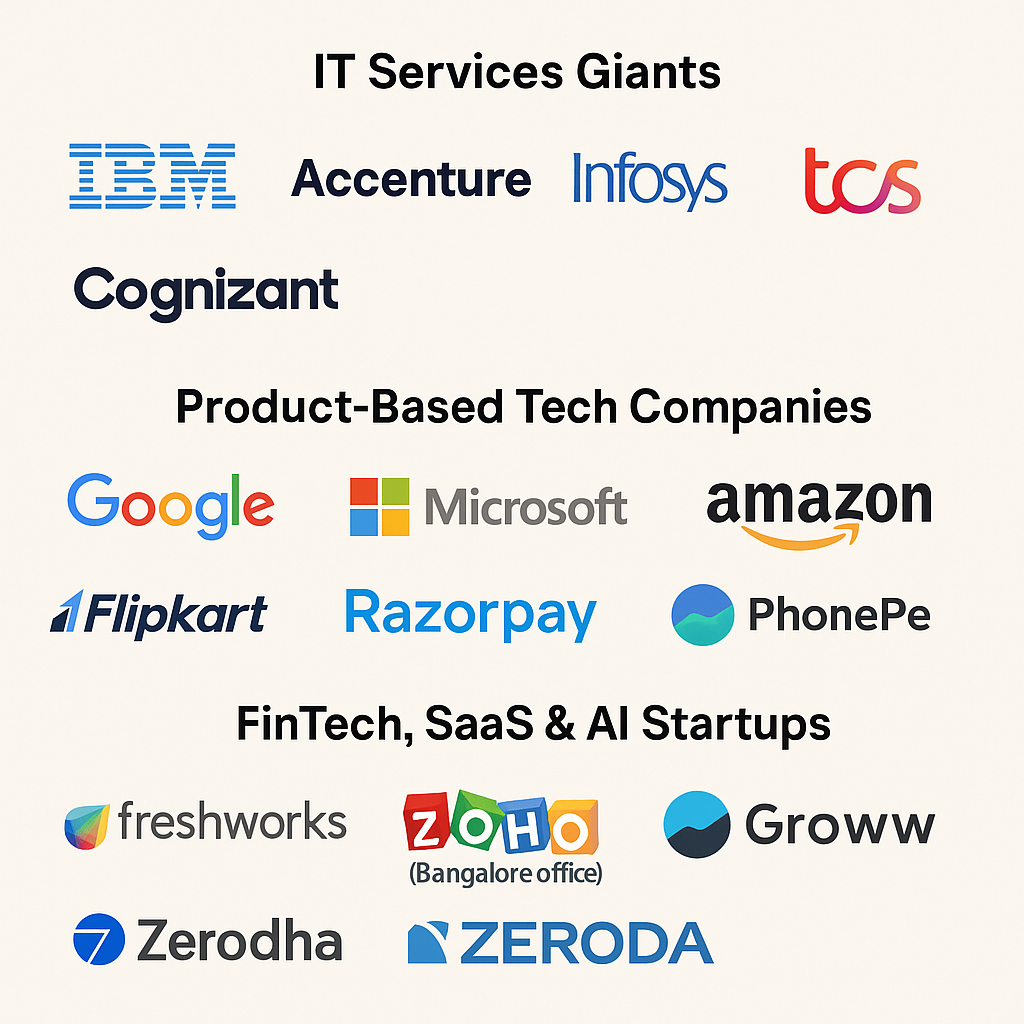
Global tech giants (Google, Amazon, Infosys, Wipro, IBM, Accenture)
Product-based companies (Flipkart, Razorpay, Swiggy, PhonePe, Zoho)
Thousands of startup companies
India’s strongest pool of software engineers and IT trainers
This makes Bangalore the ideal environment to learn and network.
Benefits of Learning Full Stack in Bangalore
Higher chance of internships and live project exposure
Placement drives and job fairs happening every week
Networking with developers from tech meetups and conferences
Access to fast-growing startup job opportunities
For these reasons, enrolling in a full stack developer course in Bangalore 2026 increases your job-readiness and employability faster than learning online alone.
Who Should Join a Full Stack Developer Course?
A full stack development career is suitable for:
| Background | Suitability |
|---|---|
| Freshers | An excellent way to start your IT career without experience. |
| Non-IT Graduates | With proper training, you can shift to tech easily. |
| Working Professionals | Upskill and move into better-paying developer roles. |
| Freelancers | Full stack skills allow you to build complete client projects independently. |
| Entrepreneurs | Helps you build and manage your own product or startup. |
No coding background?
No problem. A structured full stack developer course in Bangalore 2026 begins from fundamentals.
Skills You Will Gain from a Full Stack Developer Course
A strong full stack course equips you with:
HTML, CSS, JavaScript fundamentals
Front-end frameworks like React or Angular
Backend programming with Node.js, Java Spring Boot, or Python Django
Database design and management (MongoDB, MySQL)
API integration and development
Deployment and version control (Git, GitHub)
Real project development process (Agile / Scrum)
By the end of the program, you should be able to build, deploy, and demonstrate real, job-ready applications.
Why the Right Institute Matters
Not all training centers provide real practical exposure.
You should choose an institute that provides:
- Hands-on coding, not theory-only teaching
- Real industry-level projects
- Mock interviews and resume training
- Placement support and company tie-ups
- Trainers with real working experience
This is why many students prefer joining a full stack developer course in Bangalore 2026 through institutes with strong placement networks — like Cambridge Infotech.
 Full Stack Developer Course Syllabus
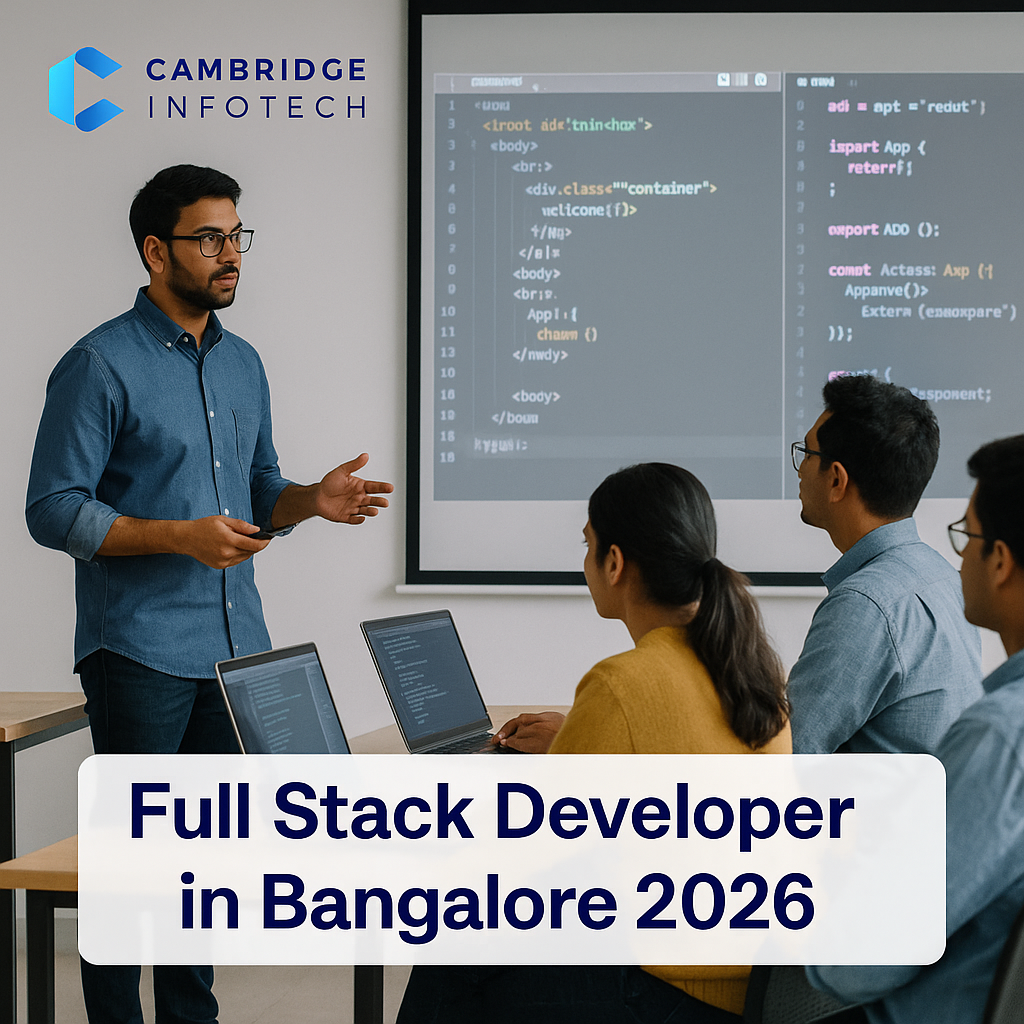
The strength of a full stack developer course in Bangalore 2026 depends heavily on how well the curriculum is structured. Full stack development is not just a single skill — it is a stack of technologies that must work together seamlessly. At Cambridge Infotech, the curriculum is designed by industry professionals and working developers, not just academic trainers. This ensures students gain practical, job-ready skills, not just theory.
Below is the complete breakdown of what a strong full stack syllabus should include.
1. Foundation Module: Programming & Logic Building
Before jumping into frameworks, students learn programming basics, because logical thinking is the foundation of development.
Topics Covered
Variables, Data Types, and Operators
Conditional Statements & Loops
Problem-Solving Patterns
Functions & Modular Coding
Debugging Techniques
A good full stack developer course in Bangalore 2026 must begin here, especially for freshers or non-IT students.
2. Front-End Development (Client Side)
Front-end is what users see and interact with on screen. The primary goal is to build responsive, clean, and user-friendly interfaces.
Technologies Covered
| Technology | Purpose |
|---|---|
| HTML5 | Structure the web page |
| CSS3 / Bootstrap | Style and responsive layouts |
| JavaScript (ES6+) | Logical interactivity |
| React.js / Angular | Modern UI development frameworks |
Core Skills Gained
Creating responsive layouts
DOM manipulation
API data rendering
Component-based UI architecture
State management (Redux/Context API)
This training ensures students can build professional, dynamic web interfaces.
3. Back-End Development (Server Side)
Backend is where business logic, authentication, and application rules are handled.
Backend Options Covered (Stack chosen based on industry trends)
| Language / Framework | Use Case |
|---|---|
| Node.js + Express.js (MERN Stack) | Fast-growing startup stack |
| Python Django / Flask | AI/ML/data-backed systems |
| Java Spring Boot | Enterprise-grade corporate systems |
Concepts Covered
REST API Development
Authentication & Authorization (JWT, OAuth)
Middleware Architecture
Error Handling & Performance Optimization
This is where students learn how apps think and communicate.
4. Database Management (SQL + NoSQL)
A full stack developer must be able to work with both relational and non-relational databases.
| Database | When Used |
|---|---|
| MySQL / PostgreSQL | Structured data, enterprise use |
| MongoDB | Flexible schema, startup scale systems |
Database Skills Learned
Schema Design
Query Writing
Indexing & Optimization
Joins, Aggregations, and Relationships
Connecting Database to Backend APIs
This makes your code data-driven and scalable.
5. Version Control & Collaboration
Real-world projects require teamwork. Version control ensures structured collaboration.
Tools Covered
Git
GitHub
GitLab Workflows
Branching strategies
Pull Requests & Code Reviews
This is where students learn to think like engineers, not just coders.
6. Deployment & Cloud Platforms
A real application must be hosted so users can access it online.
Hosting Platforms Taught
Amazon AWS
Microsoft Azure
Render / Railway
Vercel / Netlify (front-end hosting)
Students learn:
CI/CD pipelines
Server environments
Environment variable handling
Deployment troubleshooting
This transforms projects into production-ready applications.
7. Real-World Projects (Industry-Based)
This is the most crucial stage of a full stack developer course in Bangalore 2026.
Example Projects
| Project Type | Features |
|---|---|
| E-Commerce Web App | Product catalog, cart, payment integration |
| Social Media Clone | Authentication, feed system, profiles |
| Food Delivery App | Restaurant listing, live tracking, orders |
| Job Portal | Resume upload, employer dashboard, filtering |
These projects make your portfolio strong enough to impress hiring managers.
External Links
| Purpose | Anchor Text Example | Link |
|---|---|---|
| Web developer learning standards | Mozilla Web Docs | https://developer.mozilla.org |
| Software engineering best practices | W3C Web Standards | https://www.w3.org |
| Global job trends & salaries | Indeed Career Insights | https://in.indeed.com/career/full-stack-developer/salaries |
Real Projects, Portfolio Building & Interview Training
One of the most important differences between a strong training program and a weak one is the quality of real-world project experience. Recruiters today do not just look at certificates — they look at GitHub activity, code quality, and the ability to explain how and why your code works.
If you are joining a full stack developer course in Bangalore 2026, your primary goal should be to graduate with deployable projects that demonstrate your skills clearly.
Why Real Projects Matter More Than Theory
Most IT employers in Bangalore, especially product-based companies and startups, want developers who can solve problems, not just memorize syntax. Real projects show:
How well you understand application architecture
How you approach database schema design
How you structure your API layer
How efficiently you can deploy and troubleshoot
Whether your UI is user-centered, responsive, and logical
A good portfolio makes you interview-ready and job-ready.
Project Structure Used in Cambridge Infotech Training
At Cambridge Infotech, projects are built in real-time, step-by-step, using the same development workflow used in tech companies.
Standard Project Workflow
Requirement breakdown (Functional + Technical)
UI/UX design planning (Figma basics or simple layout sketches)
Database schema and API structure planning
Component-level front-end development
Back-end integration with proper authentication
Deployment and testing on cloud platforms
This ensures students don’t just build something — they build something meaningful.
Example Industry-Level Projects Included
| Project Title | Stack Used | What You Will Learn |
|---|---|---|
| E-Commerce Web Application | React, Node.js, Express, MongoDB | Product catalog, cart logic, user login, cloud deployment |
| Job Recruitment Portal | HTML, CSS, JavaScript, Django/MySQL | Search filtering, authentication, admin dashboards |
| Food Delivery Platform | MERN Stack | API optimization, interactive UI, real-time order status |
| Social Media Dashboard | React + Firebase | Profile management, feed rendering, cloud storage |
These types of projects directly align with the hiring expectations of companies in Bangalore’s startup ecosystem.
Portfolio & GitHub Profile Development
Once your projects are complete, the next step is publishing and showcasing them.
Students are guided to:
Push all work to GitHub
Write clear README documentation
Deploy projects on Vercel, Netlify, AWS, or Railway
Create a developer portfolio website to showcase projects
This is essential because your portfolio becomes your proof of skill.
A strong portfolio can replace years of experience in interviews.
Interview Preparation & HR Training
Unlike online tutorials or YouTube courses, a well-structured full stack developer course in Bangalore 2026 must include strong interview preparation.
At Cambridge Infotech, interview training covers:
Technical interview questions (front-end, back-end, databases)
System design basics for beginners
Live mock interviews with developers
Resume rewriting to highlight project impact
LinkedIn profile building and job outreach strategy
HR round practice (communication, confidence, reasoning)
This ensures students don’t just learn to code — they learn to present themselves professionally.
Soft Skills & Job Confidence Development
Many technically skilled students don’t get hired because they lack:
Structured communication
Project explanation clarity
Team collaboration vocabulary
Confidence in answering questions calmly
This is why Cambridge Infotech includes:
Presentation practice
Project demo rehearsals
Group discussions
Problem solving workshops
Soft skills turn you into a hire-ready full stack developer.
How Cambridge Infotech Supports Job Placement
Cambridge Infotech provides end-to-end placement assistance, including:
Dedicated placement coordinators
Interview scheduling with partnered companies
Job openings from IT firms across Bangalore
Startup hiring referrals
Alumni referral network support
To explore placement details, you can visit:
https://cambridgeinfotech.io/ (We will add internal page URLs once confirmed)
This solid support system is one of the key reasons students prefer to take a full stack developer course in Bangalore 2026 through Cambridge Infotech rather than purely self-learning online.
 Job Roles, Companies Hiring & Salary Scope in Bangalore