

Currently Empty: ₹0.00
Generative AI Use Cases in 2026: How Artificial Intelligence Is Transforming Every Industry
January 29, 2026
Generative AI Use Cases in 2026: How AI Is Powering the Next Digital Revolution
In 2026, Generative AI is no longer a future concept—it is the backbone of modern digital innovation. From content creation and software development to healthcare, finance, and education, businesses now rely on Generative AI to boost productivity, enhance creativity, and automate complex processes. Understanding Generative AI Use Cases in 2026 is essential for students, professionals, and organizations that want to stay competitive in an AI-driven world.
Top Generative AI Use Cases in 2026 Across All Industries
The rapid growth of artificial intelligence has unlocked powerful real-world applications. These Generative AI Use Cases in 2026 show how AI is transforming every major industry.
1. Content Creation & Digital Marketing
Generative AI has completely changed how content is produced. Businesses now generate high-quality marketing material in minutes.
Use cases include: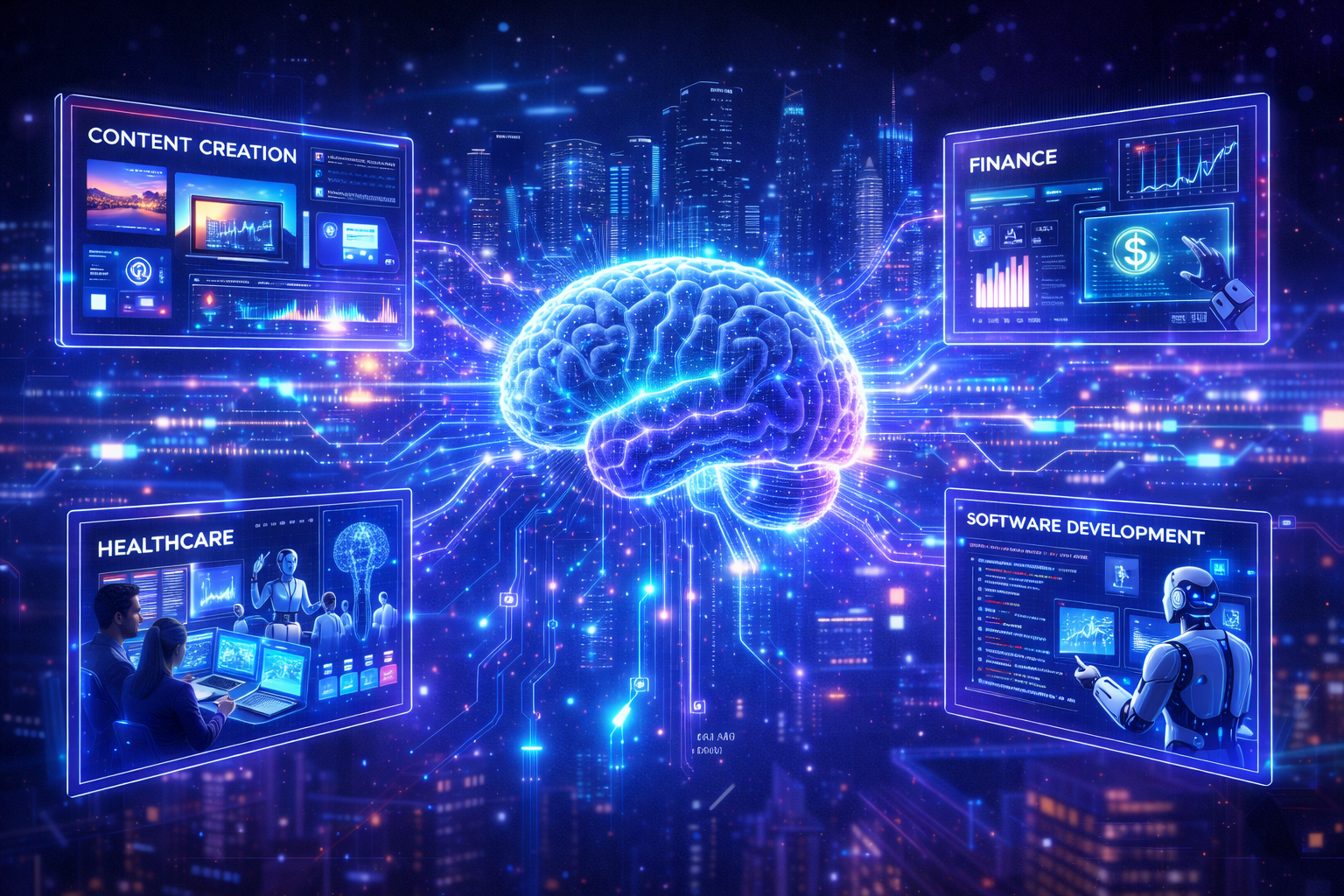
- Blog writing and SEO content
- Social media captions and ad copies
- Email campaigns
- Video scripts
- Personalized marketing messages
Marketers often use tools inspired by
OpenAI’s Generative AI technology
to automate and scale content creation efficiently.
2. Software Development
In 2026, developers treat AI as a coding partner.
Generative AI helps with:
- Code generation
- Debugging
- Software testing
- API documentation
- Low-code application building
Students who want to master this skill can join our
Generative AI Course in Bangalore
to gain hands-on experience with real-world projects.
You can also explore how research is evolving through
Google’s Generative AI research.
3. Education & Learning
Education is becoming more personalized and interactive.
Applications include:
- AI tutors
- Smart learning paths
- Automatic quizzes and assessments
- Coding mentors
- Virtual classrooms
Generative AI works closely with data science and Python. You can strengthen these skills through our
Data Science Training in Bangalore
.
4. Customer Support & Chatbots
AI-powered chatbots are smarter, faster, and more human-like.
Features include:
- 24/7 availability
- Multilingual communication
- Voice-based assistants
- Emotion-aware responses
- Automated ticket resolution
5. Healthcare & Medical Research
Generative AI is saving time and improving accuracy in healthcare.
Use cases:
- Medical report generation
- Drug discovery
- AI diagnosis support
- Virtual health assistants
- Medical image enhancement
Healthcare companies increasingly rely on
Generative AI solutions by IBM
for advanced analytics and automation.
6. Design, Art & Creativity
Generative AI is now a creative partner for designers.
Applications include:
- Logo creation
- UI/UX mockups
- Music generation
- Video editing
- 3D design
Designers combine AI tools with coding knowledge, which you can build through our
7. Finance & Banking
Financial institutions use Generative AI to improve accuracy and security.
Use cases:
- Automated financial reports
- Fraud detection
- Risk analysis
- Investment planning
- AI banking assistants
8. E-commerce & Retail
Shopping is now more personalized than ever.
Generative AI supports:
- Product image generation
- AI-written descriptions
- Virtual try-on tools
- Smart recommendations
- Dynamic pricing
These Generative AI Use Cases in 2026 help brands increase conversions and customer satisfaction.
9. Cybersecurity
Generative AI is used to strengthen digital security.
Applications include:
- Attack simulations
- Vulnerability testing
- Threat forecasting
- Automated security reports
10. Recruitment & HR
HR departments now work smarter with AI.
Use cases:
- Resume screening
- AI interviews
- Job description writing
- Employee training content
11. Legal & Compliance
Generative AI simplifies legal workflows.
It helps with:
- Contract drafting
- Case summaries
- Legal research
- Compliance documentation
12. Manufacturing & Engineering
Industries are becoming smarter with Generative AI.
Use cases:
- AI-based product design
- Digital twins
- Predictive maintenance
- Factory automation planning
Why Generative AI Skills Matter in 2026
These Generative AI Use Cases in 2026 prove that AI is no longer optional. It is now a core professional skill for: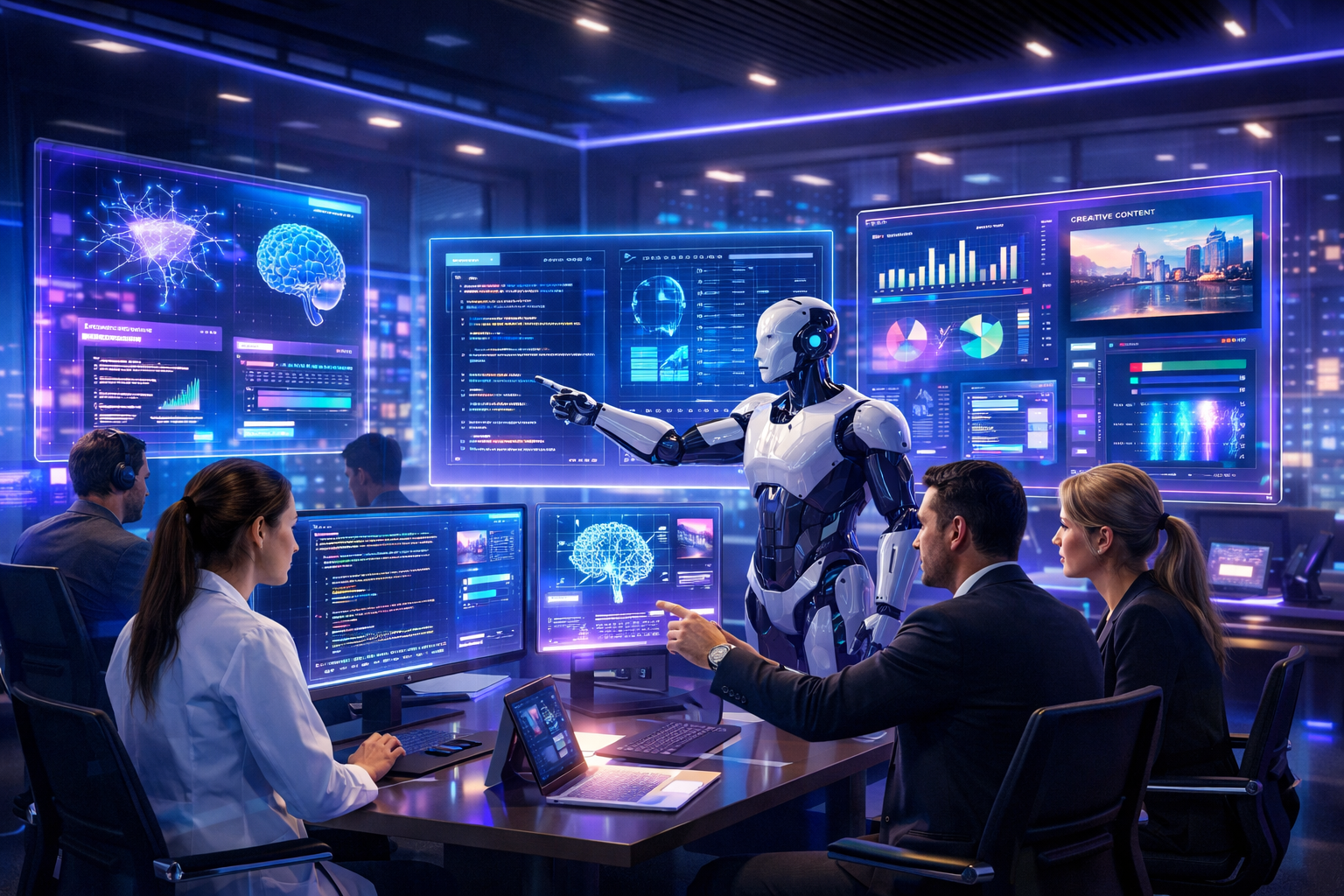
- Developers
- Marketers
- Data scientists
- Designers
- Business leaders
- Students
Those who learn Generative AI today will shape the technology-driven future.
FAQs – Generative AI Use Cases in 2026
1. What are the most important Generative AI Use Cases in 2026?
The most important Generative AI Use Cases in 2026 include content creation, software development, healthcare, education, finance, cybersecurity, design, and e-commerce. These applications help businesses automate tasks, improve accuracy, and boost creativity.
To understand how Generative AI works in detail, you can explore
OpenAI’s official platform.
2. Is Generative AI a good career option in 2026?
Yes, Generative AI is one of the fastest-growing career paths in 2026. Professionals with AI skills are in high demand across IT, marketing, healthcare, and finance industries.
You can start your career by enrolling in our
Generative AI Course in Bangalore to gain practical industry-level experience.
3. How is Generative AI different from traditional AI?
Traditional AI focuses on prediction and classification, while Generative AI creates new content such as text, images, videos, code, and designs.
For deeper technical insights, visit
Google AI Research.
4. Which skills are required to learn Generative AI?
To master Generative AI, you should have knowledge of:
- Python programming
- Machine learning
- Data science
- Prompt engineering
- AI tools and platforms
You can build these foundations through our
Data Science Training in Bangalore
and
5. How is Generative AI used in businesses?
Businesses use Generative AI for:
- Marketing automation
- Customer support chatbots
- Product design
- Financial analysis
- Decision-making systems
Leading companies use enterprise-grade AI solutions like
IBM Generative AI platforms to scale their AI operations.
6. Can full stack developers benefit from Generative AI?
Absolutely. Full stack developers use Generative AI for faster coding, bug fixing, UI generation, and documentation.
To upgrade your development skills, check out our
which integrates AI-driven development tools.
Conclusion
Generative AI is redefining how the world works, learns, and creates. The growing impact of Generative AI Use Cases in 2026 shows that artificial intelligence is not just improving processes—it is transforming entire industries. Businesses that adopt AI today are building tomorrow’s success, and professionals who master it are securing future-ready careers. Embracing Generative AI is no longer a choice; it is the gateway to innovation, growth, and digital leadership.