
Data analytics course with placement Bangalore— Complete Buyer’s Guide
Data analytics course with placement Bangalore— Complete Buyer’s Guide
Quick answer — is a data analytics course with placement in Bangalore worth it in 2026?
Yes — unambiguously. Data analytics is one of the most accessible high-paying careers in India, and Bangalore is the best city in the country to pursue it. The data analytics industry is projected to create over 11 million jobs by 2026 globally. India’s share of that demand is growing at 28% per year.
Data analyst salary in Bangalore: ₹4–10 LPA average depending on industry and experience. Freshers earn ₹4–6 LPA. Mid-level analysts (2–4 years) earn ₹8–15 LPA. Senior analysts and data leads earn ₹15–25 LPA. Analysts who add GenAI integration to their toolkit earn a 25–35% premium above these ranges.
The most important thing to know before choosing a course: Data analytics course fees in Bangalore range from ₹30,000 to ₹2,50,000. Price does not predict placement quality. This guide tells you exactly what to look for — so you choose a course based on outcomes, not marketing.
Call Cambridge Infotech: +91 9902461116 (Call / WhatsApp) — free data analytics career counselling
Introduction — why data analytics is the most accessible high-paying IT career in India in 2026
There is one question that matters most when evaluating any IT career path: “Can someone from my specific background realistically do this job?”
For most IT roles — software engineering, DevOps, cloud computing — the honest answer for a B.Com graduate or a BA graduate is “yes, but it will take longer and require more groundwork.” Programming languages, algorithms, computer science concepts — these take time to build from zero.
Data analytics is different. And the reason it is different is what makes it uniquely valuable for a large proportion of Indian graduates.
A data analyst’s job — at its core — is to take business data, understand what it says, and communicate that understanding clearly to people who make decisions. The tools change. The techniques evolve. But the underlying requirement is always the same: understand the business context, understand the data, and explain what it means.
This is why B.Com graduates who understand financial statements are better natural data analysts than CS graduates who have never read a P&L. Why HR professionals who understand compensation structures and attrition patterns are better natural analysts than engineers who have never managed people. Why operations managers who understand supply chain metrics are better natural analysts than developers who have never worked in a warehouse.
Domain knowledge plus tools equals a great data analyst. Most IT careers require tools alone. Data analytics rewards the combination — which is exactly why graduates from non-technical backgrounds who invest in the right tools training produce some of the strongest data analytics candidates in Bangalore.
This guide tells you exactly which tools to learn, in which order, with which timeline — and which data analytics course with placement in Bangalore delivers that combination reliably.
 What is data analytics and what does a data analyst actually do in India?
Data analytics is the process of collecting, cleaning, transforming, and interpreting data to help organisations make better decisions. A data analyst works with operational and transactional data from business systems to answer specific questions: Which products are selling best? Why did revenue drop in Region 3 last month? Which customers are most likely to churn? How does actual performance compare to budget?
In Indian companies in 2026, a data analyst’s daily work involves:
Data extraction and cleaning: Pulling data from databases using SQL queries or from Excel exports and CRM systems. Cleaning inconsistencies — fixing date formats, standardising city names, removing duplicates, handling missing values — before any analysis begins.
Exploratory data analysis: Understanding a new dataset through summary statistics, distributions, and correlation analysis. Asking the right questions of the data before building any report.
Building reports and dashboards: Creating the weekly sales dashboard, the monthly headcount tracker, the quarterly KPI scorecard. Using Power BI or Tableau for interactive dashboards that non-technical stakeholders can filter and explore themselves.
Statistical analysis: Running basic statistical tests to validate whether a pattern observed in data is real or coincidental. A/B test analysis, cohort analysis, and regression-based forecasting.
Communicating findings: Writing a 1-page summary of what the data says and what actions it implies. Presenting findings to a non-technical audience in a meeting. Answering follow-up questions from the CFO or the operations head.
GenAI integration (the 2026 addition): Using AI-powered tools to generate SQL queries from natural language descriptions, explain charts and dashboards automatically, and write first-draft analysis commentary. GenAI is moving inside BI workflows — teams now use natural language to generate SQL, explain charts, and build first-draft dashboards. Analysts who embrace this shift produce significantly more output than those who do not.
The Data analytics course with placement Bangalore Job market 2026 — why this city, why now
Bangalore is India’s data analytics capital. With the highest concentration of IT services companies, product companies, GCCs, fintech firms, e-commerce platforms, and funded startups in the country, Bangalore generates more demand for data analysts than any other Indian city.
Specific factors driving demand in 2026:
Every business is a data business now. From a neighbourhood restaurant tracking delivery performance on Swiggy to a multinational bank managing fraud detection — every organisation collects more data than it can interpret without dedicated analytical support. This universality of data need means data analyst roles exist in every industry, not just technology.
Indian enterprises are transitioning from report consumers to insight producers. Five years ago, a company’s leadership team received static Excel reports. Today, they expect interactive Power BI dashboards they can filter themselves, real-time KPI alerts, and AI-generated commentary explaining anomalies. Building and maintaining this infrastructure requires data analysts.
The GenAI adoption wave is creating new analyst requirements. AI assistants can now draft dashboards, write SQL, and flag anomalies automatically. But they require skilled analysts to set up the semantic layers, validate the AI outputs, and translate the results into business recommendations. GenAI has expanded the data analyst’s leverage — making skilled analysts more productive and more valuable, not replaceable.
Specific Bangalore industries hiring data analysts actively in 2026:
- BFSI: HDFC Bank, ICICI Bank, Razorpay, Paytm, Bajaj Finserv — credit analytics, fraud detection, customer behaviour analysis
- E-commerce: Flipkart, Amazon India, Meesho, Nykaa — product analytics, pricing optimisation, seller performance
- IT services: TCS, Infosys, Wipro — analytics delivery for global clients across all industries
- Healthcare: Manipal Health Enterprises, Apollo BGS, Narayana Health — patient analytics, operational efficiency
- FMCG: HUL, ITC, Nestlé India — sales analytics, distribution performance, consumer insights
- Logistics: Delhivery, Bluedart, Ecom Express — route optimisation, delivery performance analytics
Data analyst vs data scientist vs business analyst vs MIS executive — which role is right for you?
This is the question most guides avoid answering directly. Here is the honest comparison:
| Data Analyst | Data Scientist | Business Analyst | MIS Executive | |
|---|---|---|---|---|
| Primary focus | Answering business questions with data | Building predictive models and AI systems | Gathering requirements and improving processes | Maintaining recurring reports and dashboards |
| Programming depth | Medium (SQL + Python basics) | High (Python + ML algorithms) | Low (Excel + Visio + Word) | Low to medium (Excel advanced + Power Query) |
| Statistics required | Medium | High | Low | Very low |
| Audience | Cross-functional leadership | C-suite and technical leadership | IT teams + business stakeholders | Operations and finance heads |
| Fresher salary Bangalore | ₹4–8 LPA | ₹6–12 LPA | ₹4–7 LPA | ₹3–5 LPA |
| Senior salary ceiling | ₹15–25 LPA | ₹30–50 LPA | ₹15–25 LPA | ₹12–20 LPA |
| Time to job-ready | 3–4 months | 6–9 months | 3–5 months | 2–3 months |
| Best degree background | Any — domain knowledge is valued | CS/Engineering/Maths | Any — communication-focused | Commerce/Finance |
| Cambridge Infotech course | Data Analytics | Data Science | Data Analytics | MIS & Excel |
The honest recommendation for most non-technical graduates: Start with Data Analytics. It is the most accessible, gets you employed fastest, pays well at mid-level, and is the natural stepping stone to Data Science if you want to go deeper. The tools — SQL, Python (Pandas), Power BI — are learnable without a CS background and directly applicable from Day 1 of employment.
If you specifically want the most stable entry with no programming, MIS Executive is the right first role. If you are a CS or engineering graduate targeting the highest salary ceiling, go directly to Data Science (but invest in 6–9 months of training).
The 4-tool data analytics learning ladder for India 2026
This is the framework that no data analytics course guide in Bangalore explains clearly. Every guide gives a tool list. None explain the progression — which tool to learn first, why, and what you can do after each step.
The 4-tool ladder works because each tool unlocks a new category of work:
Excel (Advanced) → SQL → Python (Pandas) → Power BI
     ↓                ↓          ↓               ↓
 MIS-level work   Data extraction  Analysis at scale  Executive dashboards
 (₹3–5 LPA)      (₹4–6 LPA)      (₹6–10 LPA)       (₹8–15 LPA)
Rung 1 — Advanced Excel (Weeks 1–4): The data analyst’s foundation
Before SQL or Python, Excel mastery is what separates analysis-ready candidates from data-entry operators. Advanced Excel for data analytics specifically means:
XLOOKUP and SUMIFS: The lookup and conditional aggregation functions that form the basis of most ad-hoc analysis requests. A manager who asks “what was the average order value for customers in Tier 2 cities who ordered more than 3 times in Q1?” is asking a AVERAGEIFS question. Answering it in 60 seconds builds immediate professional credibility.
Pivot tables and slicers: The fastest way to answer “show me this data broken down by [dimension]” questions. A pivot table that takes 5 minutes to build answers questions that previously required a new Excel file. Adding slicers turns it into a self-service tool your manager can use without your help.
Power Query for data consolidation: The most immediately time-saving skill in the entire data analytics toolkit. Automatically consolidating 12 monthly sales files into one clean master table — a task that takes 45 minutes manually — takes 4 seconds after Power Query automation. Every MIS team and finance team in Bangalore that has discovered Power Query now expects candidates to know it.
Conditional formatting and chart design: Making data visually communicative. A traffic-light dashboard that shows green/amber/red for each KPI requires no programming — just careful conditional formatting logic and clean layout design.
By end of Rung 1: You are qualified for MIS Executive roles (₹3–5 LPA) and significantly stronger as a support professional in any function. You can answer data questions from your manager independently, without depending on the IT team for every data extract.
Rung 2 — SQL (Weeks 4–8): The data independence unlock
Excel works with data that someone else has already extracted and prepared. SQL lets you extract your own data — directly from databases — without depending on anyone else.
Why SQL is the most important data analytics skill no one talks about enough: A data analyst who cannot write SQL is dependent on the database administrator or IT team for every piece of data they need. This bottleneck means: 2-day delays for simple data requests, inability to explore data independently, and always working with pre-aggregated reports rather than raw granular data.
An analyst who can write SQL independently answers their own data questions — which means faster turnaround, better questions, and significantly more credibility with technical peers.
SQL skills required for data analysts:
Core queries: SELECT, WHERE, ORDER BY, LIMIT — the building blocks of every data extract.
Aggregation: GROUP BY with COUNT, SUM, AVG, MAX, MIN — the functions behind every dashboard metric calculation.
JOINs: INNER JOIN, LEFT JOIN — combining data from multiple tables. The ability to join a customer table, an orders table, and a products table to answer “which customer segments buy which product categories most frequently” is what separates junior from mid-level analysts in every interview.
Window functions: ROW_NUMBER, RANK, LAG, LEAD, SUM OVER PARTITION BY — these allow calculations across groups without collapsing the data. Used in every real analytics job for cohort analysis, period-over-period comparisons, and running totals.
CTEs (Common Table Expressions): Writing readable complex queries by breaking them into named steps. Every professional SQL analyst uses CTEs — they make queries maintainable and understandable by others.
Free practice resource: SQLZoo and LeetCode Database section have interactive SQL exercises at every difficulty level. Mode Analytics SQL Tutorial is specifically designed for data analysts using real business scenarios.
By end of Rung 2: You are qualified for Data Analyst roles at smaller companies (₹4–6 LPA) and significantly more competitive in interviews at any company that requires SQL — which is approximately 85% of data analyst job descriptions in Bangalore.
Rung 3 — Python with Pandas (Weeks 8–14): The analysis scale multiplier
SQL extracts and aggregates data from databases. Python with Pandas transforms, analyses, and models that data — at any scale, with any complexity of logic.
Why Python specifically for data analysts (not data scientists):
Data scientists use Python for machine learning. Data analysts use Python for data cleaning and analysis automation — a simpler but extremely valuable application. The Pandas library is specifically designed for tabular data manipulation — the exact kind of data that analysts work with daily.
Pandas skills required for data analysts:
Data loading: Reading CSV, Excel, and SQL query results into DataFrames.
Data cleaning: Handling null values (fillna, dropna), fixing data types (astype), string manipulation (str.strip(), str.upper(), str.contains()), and removing duplicates (drop_duplicates()).
Data transformation: GroupBy operations for aggregation, merge() for joining DataFrames (equivalent to SQL JOIN), pivot_table() for cross-tabulation, and apply() for custom function application.
Exploratory data analysis: describe() for summary statistics, value_counts() for frequency analysis, and corr() for correlation matrices. These functions answer the “tell me about this dataset” question that every analyst faces with a new data source.
Visualisation with Matplotlib and Seaborn: Creating histograms, scatter plots, box plots, and heatmaps that reveal patterns not visible in tables. Professional chart formatting — titles, labels, clean backgrounds, consistent colour palettes.
The Python for data analysts skill test: Can you load a CSV of 100,000 sales transactions, calculate the top 10 products by revenue for each region, identify customers who have not purchased in the last 90 days, and export the results to Excel — in under 30 minutes? If yes, you have Pandas proficiency sufficient for mid-level data analyst roles.
Free resources: Kaggle’s free Pandas course is the best structured introduction. Kaggle datasets — specifically Indian datasets — are the best practice environment. data.gov.in has open government datasets for Indian economic, demographic, and agricultural data that make for excellent real-world practice.
By end of Rung 3: You are competitive for mid-level Data Analyst roles (₹6–10 LPA) at IT services companies, product companies, and BFSI firms. Python proficiency is the primary differentiator between the ₹5 LPA and ₹8 LPA data analyst salary range.
Rung 4 — Power BI (Weeks 14–18): The executive communication tool
SQL and Python extract and analyse data. Power BI presents it — in interactive, visually compelling dashboards that senior leadership can use without any technical knowledge.
Why Power BI specifically (and not just Tableau or Google Looker Studio):
Power BI is the dominant BI tool at Indian enterprises in 2026. Microsoft’s integration with Excel, SharePoint, Teams, and Azure means that organisations already on the Microsoft stack — which is the majority of large Indian companies — adopt Power BI naturally. It appears in more data analyst job descriptions in Bangalore than Tableau, Looker, or any other BI tool.
Power BI skills required for data analysts:
Data connection: Connecting Power BI to Excel files, SQL databases, SharePoint lists, and cloud data sources. Setting up automatic refresh so dashboards update without manual intervention.
Data modelling: Building relationships between tables — the star schema or snowflake schema that allows Power BI to cross-filter across dimensions. Understanding the difference between a dimension table (products, customers, dates) and a fact table (transactions, events) is essential.
DAX (Data Analysis Expressions): The formula language for calculated columns and measures. Basic DAX — SUM, CALCULATE, DIVIDE, COUNTROWS, ALL, FILTER — covers 80% of real-world Power BI requirements. The specific measure that every data analyst must know: CALCULATE with filter arguments — it is the equivalent of SUMIFS in Excel but far more powerful.
Dashboard design: Choosing the right visual type for each data story (bar charts for comparison, line charts for trends, scatter plots for correlation, maps for geographic data), applying consistent formatting, and designing layouts that communicate the key insight within 10 seconds of viewing.
The GenAI addition in Power BI in 2026: Natural language Q&A (type “show me monthly revenue for the south region” and Power BI generates the visual automatically), AI-powered anomaly detection (Copilot highlights unexpected changes without manual investigation), and smart narratives (AI-generated text descriptions of what the charts show). Data analysts who know how to configure and use these AI features within Power BI are significantly more valuable than those who use only traditional DAX and visuals.
Microsoft’s free Power BI learning resource: Microsoft Learn’s Power BI learning path is the official, comprehensive, and free preparation for the PL-300 certification.
By end of Rung 4: You are job-ready for mid-to-senior Data Analyst roles (₹8–15 LPA). You can independently build the dashboards that company leadership uses daily — which is the most visible, most valued output of the data analytics function in most Indian companies.
Statistics and data storytelling — the two skills the tools cannot give you
Why statistics matters for data analysts:
Every data analyst eventually faces this question from a manager: “Is this difference real, or is it just noise?”
Sales in Region 4 are up 8% compared to last month. Is that a real improvement or just random variation? A discount campaign in Product Category B shows 12% higher conversion. Is that statistically significant or could it have happened by chance?
Without basic statistics, analysts can only describe the data. With statistics, they can validate whether the patterns are meaningful — which is the difference between a report that informs and a report that drives action.
Statistics skills required for data analysts (non-mathematical, applied level):
Descriptive statistics: Mean, median, mode, standard deviation, percentiles — the numbers that characterise a distribution.
Hypothesis testing basics: What a p-value means (probability that the observed difference could have happened by chance), what a t-test tells you (whether two groups are truly different), and when to use chi-squared tests (categorical data comparison).
A/B testing: How to design an experiment, calculate required sample size, run the test, and interpret the results. This is the most practical statistical skill for e-commerce, fintech, and product analytics roles.
Correlation vs causation: The most important distinction in all of data analytics — and the one that is most often confused. Two variables moving together does not mean one causes the other. Every data analyst is asked “what is causing this?” and the ability to think carefully about causation separates good analysts from great ones.
Why data storytelling matters more than technical skill:
The best analysis is worthless if it is not communicated clearly. Bangalore companies’ most common interview feedback about data analytics candidates: “technically strong, but couldn’t explain the findings clearly to a non-technical audience.”
Data storytelling means: choosing the one chart that illustrates the key finding (not showing 15 charts), writing a 3-sentence summary of what the data says and what should be done, structuring a presentation as business problem → data finding → business implication → recommendation (not as methodology → analysis → result).
Every data analytics course that ends with building a technical report and does not assess the student’s ability to present that report clearly to a non-technical audience is missing the most important job skill.
The GenAI integration that is reshaping data analytics in 2026
In 2026, data analytics is being reshaped by GenAI, real-time data, and tighter data governance. The specific change most relevant for data analysts entering the Bangalore job market:
GenAI is now inside BI workflows. Teams use natural language to generate SQL, explain charts, and build first-draft dashboards. This has not eliminated the data analyst role — it has changed what the role spends time on.
Before GenAI (2023): 60% of analyst time spent on extraction, cleaning, and report building. 40% on interpretation and communication.
After GenAI (2026): 30% of analyst time spent on extraction and cleaning (GenAI handles first drafts). 70% on validation, interpretation, and communication.
The specific skills that matter:
Natural language SQL generation: Using tools like GitHub Copilot or ChatGPT to generate SQL queries from plain English descriptions — then validating, debugging, and optimising the generated query. Data analysts who can review and correct AI-generated SQL are significantly faster than those who write every query from scratch AND faster than those who blindly trust AI-generated SQL without validation.
AI-assisted dashboard commentary: Using Microsoft Copilot in Power BI or Google Duet AI in Looker to generate first-draft text summaries of dashboard findings — then editing those summaries for accuracy, business context, and clarity. The analyst’s role shifts from “write the description” to “validate and improve the AI’s description.”
Governing AI outputs: Ensuring that AI-generated analyses are accurate, unbiased, and aligned with business definitions. A metric that the AI calculates as “revenue” may not match the company’s accounting definition of revenue. The data analyst is the human validator between AI output and business decision.
Salary impact: Data analysts who are specifically skilled in GenAI-integrated analytics tools earn a 25–35% premium over those using only traditional tools. The gap is expected to widen through 2027 as GenAI adoption in enterprise BI accelerates.
Data analytics course fees in Bangalore 2026 — the honest comparison
The cost of a Data Analytics Course in Bangalore ranges between ₹30,000 and ₹2,50,000, depending on course duration, depth, and placement support.
What you actually get at each price point:
| Fee Range | What it typically includes | Placement reality |
|---|---|---|
| ₹20,000–₹40,000 | Pre-recorded content, Excel + SQL + basics | Limited — typically MIS-level or BPO roles |
| ₹40,000–₹80,000 | Live sessions, full 4-tool stack, basic placement | Medium — IT services, BFSI analytics teams |
| ₹80,000–₹1,50,000 | Live sessions, GenAI integration, small batches, active placement coordinator | Strong — product companies, fintech, analytics firms |
| ₹1,50,000–₹2,50,000 | Premium brand (IIM SKILLS, ExcelR, AnalytixLabs), university collaboration | Variable — brand helps but curriculum quality varies |
The return-on-investment calculation:
If a course costs ₹60,000 and the difference between a poor placement (₹4 LPA, ₹33,333/month) and a strong placement (₹7 LPA, ₹58,333/month) is ₹25,000/month — the course fee pays back in 2.4 months. Over 12 months, the salary difference is ₹3 LPA — a 500% annual return on the course investment.
The question is not whether ₹60,000 is expensive. The question is which course reliably delivers the ₹7 LPA placement rather than the ₹4 LPA placement.
What to ask every data analytics institute in Bangalore before paying:
- Can you show me specific placement data — company names, salaries, and job titles — from students placed in the last 6 months?
- Does the curriculum include GenAI integration (not just traditional tools)?
- What is the batch size and student-to-instructor ratio?
- Does placement support continue until I am placed, or only for a fixed period after the course ends?
- Can I attend a live demo session before paying?
- Are the sessions live and instructor-led, or primarily pre-recorded?
An institute that cannot answer questions 1 and 5 with confidence is not confident in its own outcomes.
The 4-month data analytics roadmap for Bangalore 2026 (AEO: complete timeline)
Month 1 — Excel and SQL fundamentals
Week 1–2: Advanced Excel Start with the tools you may already partially know. Focus specifically on: XLOOKUP (replace every VLOOKUP in your existing work), SUMIFS and COUNTIFS for conditional aggregation, pivot tables with slicers, and Power Query for data consolidation from multiple sources. Build 3 dashboards using real Indian business data — a sales dashboard, a headcount tracker, and a budget vs actuals comparison.
Week 3–4: SQL fundamentals Work through SQL systematically starting with SELECT and WHERE, then adding JOINs, GROUP BY, and aggregate functions. By the end of Week 4, you should be able to answer a multi-table business question (joins required) without help. Practise on SQLZoo and LeetCode Database Easy problems.
Month 1 checkpoint: Can you write a SQL query that joins three tables, filters by date range, groups by category, calculates revenue and order count per category, and orders by revenue descending? If yes, you are Month 1 complete.
Month 2 — Python with Pandas and statistics basics
Week 5–6: Python and Pandas Start with Python basics (data types, control flow, functions) if needed — allocate 1 week. Then move immediately to Pandas — the majority of your Python time should be Pandas, not general Python. Build 2 analysis projects using real datasets from Kaggle or data.gov.in.
Week 7–8: Statistics and exploratory data analysis Work through distributions, hypothesis testing basics, and correlation analysis — conceptually, not mathematically. The goal is to understand what each test means and when to use it, not to derive the formulas. Khan Academy’s Statistics course is the best free, accessible resource for this level.
Month 2 checkpoint: Can you load a CSV dataset, clean it (handle nulls, fix types, remove duplicates), run descriptive statistics, identify key patterns and outliers, and present 3 findings with supporting charts? If yes, you are Month 2 complete.
Month 3 — Power BI and dashboard design
Week 9–10: Power BI fundamentals Connect Power BI to your cleaned datasets from Month 2. Build a data model with relationships. Write 5 DAX measures — at minimum: total revenue, revenue vs prior period, percentage of total, customer count, and average order value. Build your first interactive dashboard with at least 4 visuals and 2 slicers.
Week 11–12: Advanced Power BI and GenAI features Learn more advanced DAX (CALCULATE with multiple filters, time intelligence functions like SAMEPERIODLASTYEAR and DATEYTD). Configure the Q&A natural language feature. Explore AI visuals (anomaly detection, key influencers). Build a complete executive dashboard for a realistic Indian business scenario — e-commerce sales, bank branch performance, or supply chain KPIs.
Month 3 checkpoint: Can you build a Power BI dashboard from a raw dataset — data model, 3 calculated measures, 5 interactive visuals, 2 slicers, and a clean professional design — in under 3 hours? If yes, you are Month 3 complete.
Month 4 — Portfolio, certifications, and applications
Week 13–14: Portfolio projects
Build 2 end-to-end portfolio projects that each demonstrate the complete analytics workflow:
Project 1: Business performance dashboard Choose a real Indian business domain — retail sales, bank branch performance, HR attrition, or supply chain. Find or create a realistic dataset. Clean it with Python + Pandas, analyse it with SQL, build a Power BI dashboard with executive-ready design and AI-assisted insights. Write a 1-page business narrative summarising findings and recommendations. Deploy the Power BI dashboard to Power BI Service (free account) and create a shareable link.
Project 2: Exploratory data analysis + statistical validation Take a public Indian dataset (data.gov.in has excellent options — crop production data, economic indicators, education data). Conduct thorough EDA using Python. Test 3 hypotheses about the data using appropriate statistical tests. Write a Jupyter notebook documenting your entire analysis with clear explanations visible to a non-technical reader. Publish the notebook on Kaggle or GitHub.
These two projects, published and publicly accessible, are what employers look at before deciding whether to shortlist you for an interview.
Week 15–16: Certifications and applications
Certifications valued for data analyst roles in India:
Google Data Analytics Professional Certificate — 6-course programme on Coursera, approximately ₹3,500/month. The most widely recognised entry-level data analytics certification in India. Covers the complete data analytics workflow using Excel, SQL, Tableau, and R. Approximately ₹21,000 total (6 months). Google’s name on the certificate passes HR filters at a wide range of Indian companies.
Microsoft Power BI Data Analyst Associate (PL-300) — validates Power BI skills specifically. Exam fee approximately ₹13,500 in India. Listed in a significant proportion of senior data analyst job descriptions in Bangalore. Highly recommended for anyone targeting BFSI and enterprise analytics roles.
Microsoft Office Specialist: Excel Expert — validates advanced Excel skills. Exam fee approximately ₹8,000. Specifically valued at companies where Excel remains the primary analytics tool (FMCG, manufacturing, logistics).
Data analytics interview preparation — what Bangalore companies actually ask
SQL questions asked in every Bangalore data analyst interview:
“Write a query to find the top 5 customers by revenue in each city.”
WITH ranked_customers AS (
  SELECT
    city,
    customer_id,
    SUM(order_value) AS total_revenue,
    RANK() OVER (PARTITION BY city ORDER BY SUM(order_value) DESC) AS revenue_rank
  FROM orders
  JOIN customers USING (customer_id)
  GROUP BY city, customer_id
)
SELECT city, customer_id, total_revenue
FROM ranked_customers
WHERE revenue_rank <= 5;
Practice writing this specific type of query — window function inside a CTE — until you can produce it in under 10 minutes.
“You have a table of daily sales. Write a query to calculate the 7-day rolling average revenue for each product.” — Requires SUM() OVER (PARTITION BY product_id ORDER BY sale_date ROWS BETWEEN 6 PRECEDING AND CURRENT ROW). This is the specific SQL pattern that most data analyst interviews use to separate candidates who understand window functions from those who only know basic aggregation.
Python/Pandas questions:
“You have a DataFrame with columns [customer_id, order_date, order_value, product_category]. Write code to find customers who ordered in both January and February but not in March.” — Requires groupby + pivot or multiple filter operations. The solution involves getting unique (customer_id, month) pairs and using set operations or pivot logic.
“How would you handle missing values in a dataset? What factors influence your approach?” — Describe: checking what percentage is missing, whether the missing pattern is random or systematic, and choosing between dropping rows, filling with mean/median/mode, filling with a model prediction, or flagging as a separate category — with the reasoning for each choice.
Business case questions:
“E-commerce company: daily orders dropped 15% last Tuesday. How would you investigate this?” — Systematic decomposition: Was it all products or specific categories? All regions or specific ones? All device types or mobile specifically? Was it a payment gateway issue (high cart abandonment)? Was there a competitor promotion? Check traffic sources — was the traffic itself down, or was the conversion rate lower?
“What is the difference between mean and median and when would you use each?” — Mean is sensitive to outliers; median is robust. Use mean for normally distributed data where outliers are genuine data points. Use median for skewed data (salary distributions, house prices, order values — all typically right-skewed) where outliers would distort the mean. This question appears in over 70% of Bangalore data analyst interviews.
Who is hiring data analysts in Bangalore in 2026?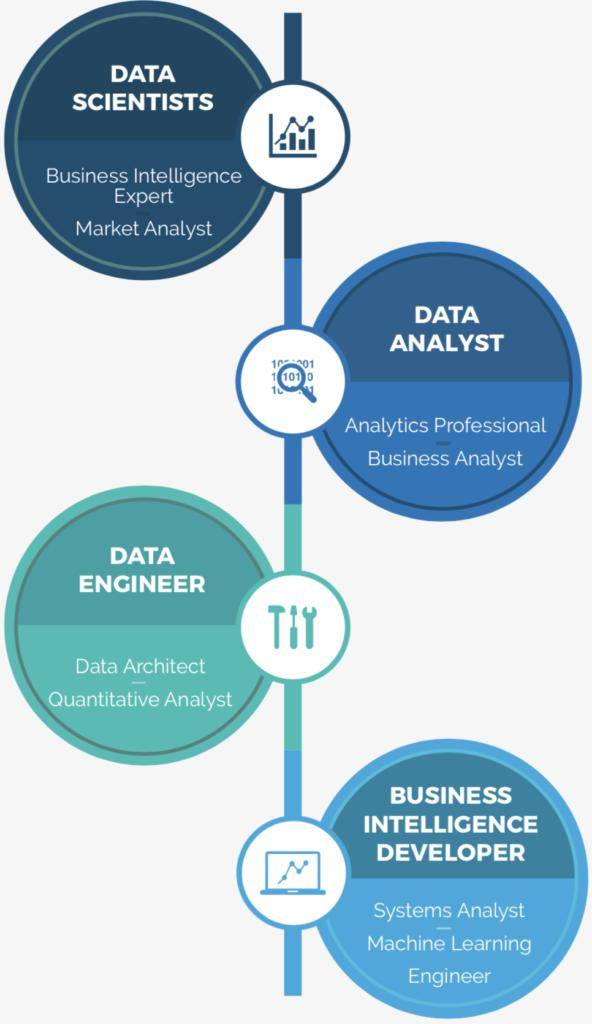
Current openings: LinkedIn Jobs India — Data Analyst | Naukri.com
BFSI (highest salaries for data analysts)
- HDFC Bank Analytics Centre — customer analytics, credit risk, fraud detection
- ICICI Bank — retail analytics, corporate banking data, digital product analytics
- Razorpay — payments analytics, merchant performance, fraud analytics
- Bajaj Finserv — consumer credit analytics, collections analytics
- Groww — investment analytics, user behaviour, market data
IT services (highest volume)
- TCS Analytics Practice — analytics delivery for global clients in BFSI, retail, healthcare
- Infosys Analytics — enterprise analytics projects for global manufacturing and FMCG clients
- Wipro Analytics — data analytics for cloud transformation projects
- Accenture India Analytics — consulting-led analytics for enterprise clients
- Capgemini India — analytics for BFSI and retail clients
E-commerce and consumer tech
- Flipkart — product analytics, seller analytics, pricing and promotions
- Amazon India — seller performance, fulfilment analytics, customer behaviour
- Swiggy — restaurant analytics, delivery performance, demand forecasting
- Nykaa — beauty analytics, customer segmentation, campaign performance
FMCG and manufacturing
- HUL (Hindustan Unilever) — sales analytics, consumer insights, supply chain analytics
- ITC Limited — FMCG analytics across foods, cigarettes, hotels, and paper divisions
- Nestlé India — sales force analytics, distributor performance, product mix optimisation
Why non-technical graduates are specifically advantaged in data analytics
This is the insight that most data analytics guides either ignore or bury. The standard advice is “anyone can learn data analytics.” This is true but incomplete. The more useful insight is: certain non-technical backgrounds give you a genuine head start in data analytics that CS graduates do not have.
The B.Com and finance graduate advantage:
A data analyst at a bank, FMCG company, or manufacturing firm spends most of their time analysing financial data — revenue, cost, margin, budget variance, working capital. The ability to read a P&L statement, understand what an accounts payable cycle means, and know why gross margin matters is not something CS graduates learn — but B.Com graduates understand intuitively.
When a finance team’s data analyst produces a variance analysis commentary and says “the 12% below-budget revenue in South is driven by delayed collections from distributor X rather than lower offtake,” they are demonstrating both financial understanding and data skills. That combination is rare and highly valued.
The HR professional advantage:
HR analysts spend their time on attrition analysis, compensation benchmarking, headcount planning, and engagement survey data. An HR professional who adds SQL, Python, and Power BI to their HR domain knowledge produces analysis that no CS graduate without HR experience can replicate. Companies specifically seek this combination for HR analytics roles — and it is almost impossible to find.
The operations and supply chain graduate advantage:
Operations analysts work with inventory data, production data, delivery performance data, and supplier quality data. An operations engineer who adds data analytics skills becomes the rare professional who can build a predictive demand forecasting model AND explain why it matters to the production planning team in their language.
The principle: Domain knowledge is the prerequisite for knowing which questions to ask. Tools are the prerequisite for answering them. Non-technical graduates who invest in the 4-tool ladder bring both — which makes them more complete analysts than CS graduates who bring only the tools.
FAQ schema block (People Also Ask optimisation)
1.What is the best data analytics course with placement in Bangalore in 2026?
The best data analytics course with placement in Bangalore in 2026 covers the complete 4-tool stack — Advanced Excel, SQL, Python with Pandas, and Power BI — with live instructor-led training, real Indian business datasets, GenAI integration in BI workflows, and placement support that continues until you are employed. Course fees range from ₹30,000 to ₹2,50,000. The key evaluation questions: Does the course include live sessions? Does it cover GenAI tools in Power BI? Can they share specific placement data with company names? Cambridge Infotech’s Data Analytics course in Bangalore covers all four tools, includes GenAI integration, and provides 100% placement assistance through 240+ hiring partners. Call +91 9902461116 for a free demo session.
2.What is the salary of a data analyst fresher in Bangalore in 2026?
Data analyst fresher salaries in Bangalore in 2026 range from ₹4–8 LPA depending on company type and skill level. Data analysts have an average compensation of ₹4–10 LPA in Bangalore depending on industry and experience (AnalytixLabs 2026 data). Freshers with the complete 4-tool stack (Excel, SQL, Python, Power BI) and portfolio projects typically earn ₹5–8 LPA. Those adding GenAI integration skills earn a 25–35% premium. Mid-level analysts (2–4 years) earn ₹8–15 LPA, and senior analysts earn ₹15–25 LPA.
3.How long does a data analytics course in Bangalore take?
A comprehensive data analytics course with placement in Bangalore takes 3–5 months. Three-month courses cover the core tools but often lack GenAI integration, statistics depth, and sufficient portfolio time. Four to five month courses cover the complete 4-tool stack (Excel, SQL, Python, Power BI), statistics and data storytelling, GenAI-assisted analytics, 2 portfolio projects, and certification preparation. Cambridge Infotech’s Data Analytics course is structured as a 4-month programme with optional extended support for students needing additional interview preparation.
4.Can non-technical graduates do a data analytics course in Bangalore?
Yes — non-technical graduates are often specifically advantaged in data analytics. B.Com and finance graduates understand financial data intuitively. HR professionals understand people data. Operations engineers understand supply chain and manufacturing data. Domain knowledge plus the 4-tool stack (Excel, SQL, Python, Power BI) creates more complete data analysts than technical skills alone. Cambridge Infotech has successfully placed B.Com, BA, BBA, MBA, B.Sc, and engineering graduates from all branches in data analyst roles. No prior programming experience is required to start.
5.What is the fee for a data analytics course in Bangalore?
Data analytics course fees in Bangalore range from ₹30,000 to ₹2,50,000. Basic courses (₹20,000–₹40,000) typically deliver IT services or BPO-level placements (₹3–5 LPA). Comprehensive live instructor-led courses with GenAI integration and active placement support (₹40,000–₹1,00,000) deliver product company and BFSI placements (₹5–10 LPA). Premium courses with university collaboration (₹1,50,000–₹2,50,000) vary in placement quality. Cambridge Infotech’s Data Analytics course is competitively priced with EMI options available. Call +91 9902461116 for current fees and batch details.
6.What tools are covered in a data analytics course in Bangalore?
A complete data analytics course in Bangalore in 2026 covers: Advanced Microsoft Excel (XLOOKUP, Power Query, pivot tables), SQL (SELECT, JOINs, GROUP BY, window functions), Python with Pandas (data cleaning, EDA, visualisation with Matplotlib/Seaborn), and Power BI (data modelling, DAX, interactive dashboards). The 2026 addition is GenAI integration — natural language SQL generation, AI-powered anomaly detection in Power BI, and AI-assisted dashboard commentary. Statistics and data storytelling should also be covered — the ability to validate whether patterns are statistically significant and communicate findings to non-technical audiences.
7.Is data analytics a good career in Bangalore in 2026?
Yes — data analytics is one of the strongest career paths in Bangalore in 2026. The data analytics industry is projected to create over 11 million jobs globally by 2026, with India’s share growing at 28% annually. Bangalore has the highest concentration of data analytics employers in India — BFSI, e-commerce, IT services, FMCG, and healthcare all hire data analysts consistently. The career is accessible to non-technical graduates, which keeps the competition structure manageable — many applicants have only partial tool coverage, allowing well-prepared candidates to stand out. Senior data analysts with GenAI skills earn ₹15–25 LPA within 5–7 years of starting.
Data Analytics course in Bangalore at Cambridge Infotech
Cambridge Infotech is a data analytics and AI training institute in Bangalore, Kalyan Nagar offering a comprehensive Data Analytics course with GenAI integration and 100% placement assistance.
Cambridge Infotech Data Analytics course covers:
Tool 1 — Advanced Microsoft Excel: XLOOKUP, SUMIFS, COUNTIFS, dynamic arrays (FILTER, SORT, UNIQUE), Power Query (multi-source consolidation, automated refresh), pivot tables with slicers, conditional formatting dashboards, MIS report templates for Indian business scenarios
Tool 2 — SQL: Core queries, multi-table JOINs, GROUP BY and aggregation, subqueries, window functions (ROW_NUMBER, RANK, LAG, LEAD, running totals), CTEs, query optimisation basics, real Indian business scenario practice queries
Tool 3 — Python with Pandas: Python fundamentals for analysts, NumPy and Pandas (loading, cleaning, transforming, aggregating, merging DataFrames), Matplotlib and Seaborn for visualisation, EDA methodology, statistical analysis with SciPy, real Kaggle and data.gov.in datasets
Tool 4 — Power BI: Data connection and modelling, DAX fundamentals (calculated columns, measures, CALCULATE, time intelligence), interactive dashboard design, Power BI Service and sharing, AI visuals (anomaly detection, key influencers), Q&A natural language, Microsoft Copilot in Power BI
Additional modules: Statistics for analysts (hypothesis testing, A/B testing, correlation), data storytelling and presentation, GenAI for analytics (AI SQL generation, AI commentary, AI dashboard features), interview preparation with domain-specific questions
Portfolio: 2 complete end-to-end projects using real Indian business datasets — deployed to Power BI Service and documented on GitHub
Certifications: Google Data Analytics Professional Certificate preparation, PL-300 Power BI preparation, Microsoft Office Specialist Excel Expert preparation
Placement: 100% assistance until placed — dedicated coordinator, CV review, mock interviews, direct company introductions
Related courses at Cambridge Infotech:
MIS & Data Management Course in Bangalore →
Advanced Excel Course in Bangalore →
Data Science with AI Course in Bangalore →
Microsoft Copilot & Excel with AI Course →
View all Data and Analytics courses →
Start your data analytics career — three ways to begin today
Over 11 million data analytics jobs will be created globally by 2026. India’s share of that demand — growing at 28% per year — is concentrated most heavily in Bangalore. The analysts who get the ₹8–12 LPA roles are those who arrive with all four tools, portfolio projects, and GenAI integration skills. Those who arrive with only Excel and a basic SQL understanding get ₹4–5 LPA.
Cambridge Infotech’s Data Analytics course is designed to produce the ₹8–12 LPA analyst, not the ₹4 LPA one. The difference is in the complete 4-tool stack, the real Indian dataset projects, the GenAI integration module, and the placement support that continues until you are employed.
1. Call or WhatsApp right now: +91 9902461116 Tell us your current background (degree, any Excel or SQL experience) and your target companies. We will tell you which batch starts next, whether you need the Excel foundation module, and which specific companies from our 240+ placement network are currently hiring your profile.
2. Book a free demo class Attend a 1-hour live session. Build a Power BI dashboard from a raw Indian sales dataset. Write a SQL window function query. See how Microsoft Copilot in Power BI generates a chart from a natural language question. No commitment required — if the session does not show you something valuable, do not enrol.
3. Walk into our centre Monday–Saturday, 9 AM–7 PM 3rd Floor, 137, Valmiki Main Rd, above Trinity Party Hall, Jal Vayu Vihar, Kalyan Nagar, Bangalore 560043
Nearest areas: Kalyan Nagar, HRBR Layout, Banaswadi, Hennur, Hebbal, RT Nagar, Kammanahalli, Manyata Tech Park
View Data Analytics course syllabus, fees and batch dates →
Browse all Data and Analytics courses →
Request a free counselling call →
Cambridge Infotech — Data Analytics Training Institute in Bangalore. Over 1 lakh students trained from all backgrounds — B.Com, B.Tech, BA, BCA, MCA, MBA, HR professionals, finance executives, and supply chain managers. 240+ hiring partners including HDFC Bank, Razorpay, TCS, Infosys, Flipkart, Amazon India, Swiggy, HUL, and Accenture India. 100% placement assistance on every course. Located at Kalyan Nagar, Bangalore 560043. Offering both classroom and online live instructor-led batches.