
Python full stack developer roadmap for India in 2026 — Skills, Salary & Career Path
Python full stack developer roadmap for India in 2026 — Skills, Salary & Career Path
Quick answer — what is the Python full stack developer roadmap for India in 2026?
Python Full Stack Developer is someone who can build complete web applications using Python for the backend (Django or FastAPI), JavaScript/React for the frontend, SQL/NoSQL databases, REST APIs, and cloud deployment. In 2026, they increasingly add AI integration — connecting LLMs and ML models into the applications they build.
Salary in Bangalore: ₹5–8 LPA for freshers at product companies and startups. ₹8–16 LPA at 1–3 years. ₹16–28 LPA at 3–6 years. Python full stack developers who integrate AI features (LLM APIs, ML model endpoints) into their applications earn a 30–50% premium over those who cannot.
The 6-month roadmap: Python fundamentals → Django/FastAPI backend → React frontend → SQL databases → REST APIs → deployment on cloud → AI integration → portfolio projects → placement.
Call Cambridge Infotech: +91 9902461116 (Call / WhatsApp)
Introduction — why Python full stack is the smartest technology choice in India in 2026
Most technology roadmap articles ask: “Should I learn Python full stack or MERN full stack or Java full stack?”
This guide answers a different, more important question: What does choosing Python as your full stack language open up that the other stacks do not?
The answer is singular and powerful: Python is the only programming language that sits at the centre of both web development AND artificial intelligence.
Every major AI framework — TensorFlow, PyTorch, scikit-learn, LangChain, Hugging Face — is Python-first. Every major web backend framework — Django, FastAPI, Flask — is Python-first. This means a Python full stack developer in 2026 is not just a web developer. They are a developer who can build web applications that integrate machine learning models, call LLM APIs, process data at scale, and serve AI-powered features to users.
This dual capability is why Python full stack is increasingly the preferred stack at data-heavy Indian product companies — fintech firms, healthtech startups, analytics platforms, and enterprise software companies that need developers who can own both the web layer and the AI layer.
According to job posting analysis on LinkedIn India and Naukri.com, Python full stack developer postings in Bangalore grew 38% year-over-year from 2024 to 2026 — the fastest growth rate of any full stack specialisation. The average Python developer salary in Bangalore is ₹7.4 LPA, with 71% of Python developer roles in the city offering ₹6–10 LPA and the IT sector accounting for 64% of available positions.
This guide gives you the complete Python full stack developer roadmap for India in 2026 — every skill, every tool, every project, and the exact 6-month timeline that takes you from beginner to placed.
What does a Python full stack developer actually do in India? (AEO: role definition)
A Python full stack developer builds complete web applications — handling everything from the user interface (frontend) to the server logic (backend) to the database to the deployment on cloud infrastructure — using Python as the primary backend language.
In Indian companies in 2026, a Python full stack developer’s daily work involves:
Backend development: Building APIs using Django REST Framework or FastAPI, writing business logic, managing authentication and authorisation, integrating with third-party services and payment gateways, and handling background tasks with Celery.
Frontend development: Building user interfaces with React.js, managing state with Redux or React Query, making API calls with Axios or Fetch, and ensuring responsive design across devices.
Database management: Designing schemas, writing SQL queries in PostgreSQL or MySQL, using Django ORM or SQLAlchemy for database interactions, and working with Redis for caching.
AI integration (the 2026 addition): Calling LLM APIs (OpenAI, Anthropic Claude, Gemini) from the backend, serving ML model predictions via FastAPI endpoints, implementing RAG pipelines, and building AI-powered features into web applications.
Deployment and DevOps basics: Containerising applications with Docker, deploying to AWS EC2 or Azure App Service, setting up basic CI/CD pipelines with GitHub Actions, and monitoring application health.
Python full stack vs MERN vs Java full stack — which is right for you?
This is the most important decision before starting. Here is the honest comparison for Indian freshers in 2026:
| Factor | Python Full Stack | MERN Stack | Java Full Stack |
|---|---|---|---|
| Primary backend language | Python (Django / FastAPI) | JavaScript (Node.js) | Java (Spring Boot) |
| Frontend | React.js | React.js | React.js |
| Best industry fit | Fintech, data-heavy startups, AI product companies | E-commerce, consumer apps, content platforms | Banking, insurance, large enterprise IT |
| AI/ML integration | ⭐⭐⭐⭐⭐ — Python is the AI language | ⭐⭐ — possible but not natural | ⭐ — significant friction |
| Job volume in Bangalore | ⭐⭐⭐⭐ Very high | ⭐⭐⭐⭐⭐ Highest | ⭐⭐⭐⭐ Very high |
| Fresher salary Bangalore | ₹5–8 LPA | ₹5–8 LPA | ₹6–10 LPA |
| Learning difficulty | Medium | Medium | Higher |
| Career ceiling (senior) | ₹25–45 LPA | ₹22–40 LPA | ₹28–50 LPA |
| Best path to AI/ML career | Direct — same language | Requires learning Python separately | Very indirect |
The honest recommendation by background:
Choose Python Full Stack if: you want to work at data-heavy companies, AI product startups, or fintech firms, or if you have any interest in eventually moving into machine learning, data science, or AI engineering. Python’s dual role in web development and AI makes it the most future-proof stack choice.
Choose MERN if: you want maximum job volume and the fastest path to any full stack role. MERN has the most open positions in India. If your primary goal is getting a job quickly at an e-commerce company, consumer startup, or IT services firm, MERN is the fastest track.
Choose Java Full Stack if: you are targeting large IT services companies (TCS, Infosys), banking and financial services companies, or large enterprise environments where Java is the dominant language and Spring Boot is the standard backend framework.
 The complete Python full stack developer skill stack for India 2026
Layer 1 — Python programming (the foundation)
Before any web framework, database, or API design — Python fluency is the prerequisite that determines how fast everything else builds.
Python skills required for full stack development:
Core Python: data types, control flow, functions, object-oriented programming (classes, inheritance, polymorphism, encapsulation), modules, packages, error handling, file I/O, and comprehensions.
Intermediate Python: decorators, generators, context managers, async programming with asyncio (essential for FastAPI), type hints, and Python virtual environments.
Advanced Python for production: profiling code for performance bottlenecks, writing unit tests with pytest, logging best practices, and working with environment variables for configuration management.
The honest learning benchmark: You are ready to start a full stack framework when you can: write a class hierarchy for a realistic business domain (e.g., an e-commerce order system), write decorator functions, understand async/await, and write unit tests for your functions.
Free resource: Python.org’s official tutorial is the authoritative starting point. Real Python covers every intermediate and advanced concept with practical examples.
Layer 2 — Backend framework: Django OR FastAPI (choose your primary)
Django is the most widely used Python web framework in Indian enterprises. It follows the “batteries included” philosophy — authentication, admin interface, ORM, form handling, and security protections are all built in. Django’s official documentation is the best reference.
Django is the right choice for: content management systems, e-commerce platforms, large-scale web applications, and any product that benefits from Django Admin for internal tools.
FastAPI is the fastest-growing Python web framework in 2026, specifically designed for building APIs with high performance and automatic documentation. It uses Python type hints to generate OpenAPI documentation automatically and is built on async Python for significantly better performance under concurrent load. FastAPI’s official documentation is comprehensive and excellent.
FastAPI is the right choice for: microservices, API-only backends (with a separate React frontend), and — critically — AI feature integration. FastAPI is the standard framework for wrapping ML models and LLM pipelines as APIs in Indian product companies in 2026. If you plan to work on AI-integrated applications, FastAPI proficiency is specifically what employers look for.
The recommendation for 2026: Learn Django first (broader job market, more comprehensive for building complete applications), then add FastAPI (for AI integration and microservices). Knowing both makes you significantly more versatile than knowing either alone.
Django REST Framework (DRF): The most important Django add-on — it converts Django into a powerful REST API framework. Virtually every Django backend job in India requires DRF proficiency.
Layer 3 — Frontend: React.js (the non-negotiable)
React.js is the dominant frontend framework in India’s Python full stack job market. Regardless of which backend stack you choose, React is the frontend that appears in the most job descriptions and the one that transfers most easily between positions.
React skills required for Python full stack developers:
Core React: JSX, functional components, props and state, React hooks (useState, useEffect, useContext, useCallback, useMemo), conditional rendering, and list rendering.
State management: React Query (the current standard for server-state management), Redux Toolkit (for complex global state), and Zustand (lightweight alternative).
API integration: Fetching data from your Django/FastAPI backend using Axios or Fetch API, handling loading states, errors, and pagination.
UI frameworks: Tailwind CSS (utility-first, most used in Indian startups), or Material UI / Ant Design (component libraries used in enterprise products).
Routing: React Router for multi-page navigation within a single-page application.
The AI frontend addition for 2026: Building React components that stream LLM responses (using the Fetch API with ReadableStream for ChatGPT-style typewriter output), displaying ML model predictions in real-time dashboards, and integrating voice input for AI features. These specific frontend patterns are asked about in interviews at AI product companies and funded startups — and very few candidates can demonstrate them.
Free resource: React’s official documentation was completely rewritten in 2023 and is now the best React learning resource available. Start here before any other React content.
Layer 4 — Databases (SQL primary, NoSQL secondary)
PostgreSQL is the database of choice for Python full stack applications in India. It is open source, powerful, and used by every major Python-based product company. PostgreSQL’s official documentation covers every concept.
SQL skills required:
- Schema design (tables, relationships, constraints, indexes)
- Core queries: SELECT, INSERT, UPDATE, DELETE with WHERE, JOINs, GROUP BY, HAVING
- Advanced SQL: window functions, CTEs (Common Table Expressions), subqueries
- Performance: query explanation (EXPLAIN ANALYZE), index design, query optimisation
Django ORM: Django’s built-in ORM allows you to write database queries in Python without writing raw SQL for most operations. Understanding how Django ORM queries translate to SQL — and when to drop to raw SQL for complex queries — is a key senior Python developer skill.
SQLAlchemy: The most used Python ORM outside of Django — particularly common in FastAPI applications. SQLAlchemy’s documentation is comprehensive.
Redis: Used as a cache, session store, and message broker. Every production Python web application uses Redis for something — most commonly for caching expensive database queries and managing Celery task queues.
MongoDB: Used at startups where schema flexibility is valued over relational integrity. Less common than PostgreSQL in Indian Python shops but worth understanding conceptually.
Layer 5 — APIs, authentication, and security
REST API design: Understanding HTTP methods (GET, POST, PUT, PATCH, DELETE), status codes, request/response structure, pagination strategies, and API versioning. Every Python full stack role tests this in interviews.
Authentication patterns: JWT (JSON Web Tokens) for stateless API authentication, OAuth2 integration (Google/GitHub login), and session-based authentication for traditional web applications.
API documentation: Swagger/OpenAPI specification — FastAPI generates this automatically, Django requires drf-spectacular or similar.
Security fundamentals: SQL injection prevention (always use parameterised queries or ORM), XSS prevention (escape user input in templates), CSRF protection (Django handles this by default), and rate limiting (essential for any public API).
Layer 6 — AI integration (the 2026 career differentiator)
This is the layer that separates Python full stack developers who earn ₹8 LPA from those who earn ₹12–16 LPA at equivalent experience levels. Python’s dominance in AI means that Python full stack developers have a unique ability to add genuine AI features to web applications — not just call an API, but architect the full AI integration stack.
AI integration skills for Python full stack developers in 2026:
LLM API integration: Calling OpenAI GPT-4o, Anthropic Claude, or Google Gemini APIs from your FastAPI or Django backend. Implementing streaming responses so the frontend displays text word-by-word (ChatGPT style). Handling rate limits, token costs, and error responses gracefully in production.
RAG (Retrieval-Augmented Generation) implementation: Building document Q&A features into web applications — uploading documents, processing them into vector embeddings using Hugging Face sentence transformers, storing embeddings in a vector database (ChromaDB or Pinecone), and querying them to provide contextual LLM answers. This pattern is the most common AI feature request at Indian product companies in 2026.
ML model serving: Packaging a trained scikit-learn or TensorFlow model, wrapping it in a FastAPI endpoint, and serving predictions to a React frontend. This is the bridge between data science and web development — and Python full stack developers who can do it are significantly more valuable at companies with data science teams.
LangChain integration: Using LangChain to build more complex AI pipelines — chains of LLM calls, tool-using agents, and multi-step reasoning — accessible from your web application.
Why this matters for salary: Python full stack (Django + React) is specifically strong in fintech and data-heavy product companies. These are the companies building AI features into their products — and they specifically want developers who can own both the API layer and the AI integration, not developers who must hand off to a separate AI team for every feature.
Layer 7 — Deployment and DevOps basics
Docker: Containerising your Python application so it runs identically in development, staging, and production. Writing Dockerfiles, building images, and using Docker Compose for local development with multiple services (web app + PostgreSQL + Redis).
Cloud deployment: Deploying a Django or FastAPI application to AWS EC2 or AWS Elastic Beanstalk, Azure App Service, or Google Cloud Run. Understanding environment variables for configuration, static file serving (AWS S3 + CloudFront for static assets), and managed database services.
GitHub Actions for CI/CD: Setting up automated testing and deployment pipelines — run tests on every pull request, deploy to production when tests pass on the main branch.
Basic Nginx and Gunicorn: Understanding how Python applications are served in production — Gunicorn as the WSGI/ASGI server, Nginx as the reverse proxy and static file server.
The 6-month Python full stack developer roadmap for India 2026
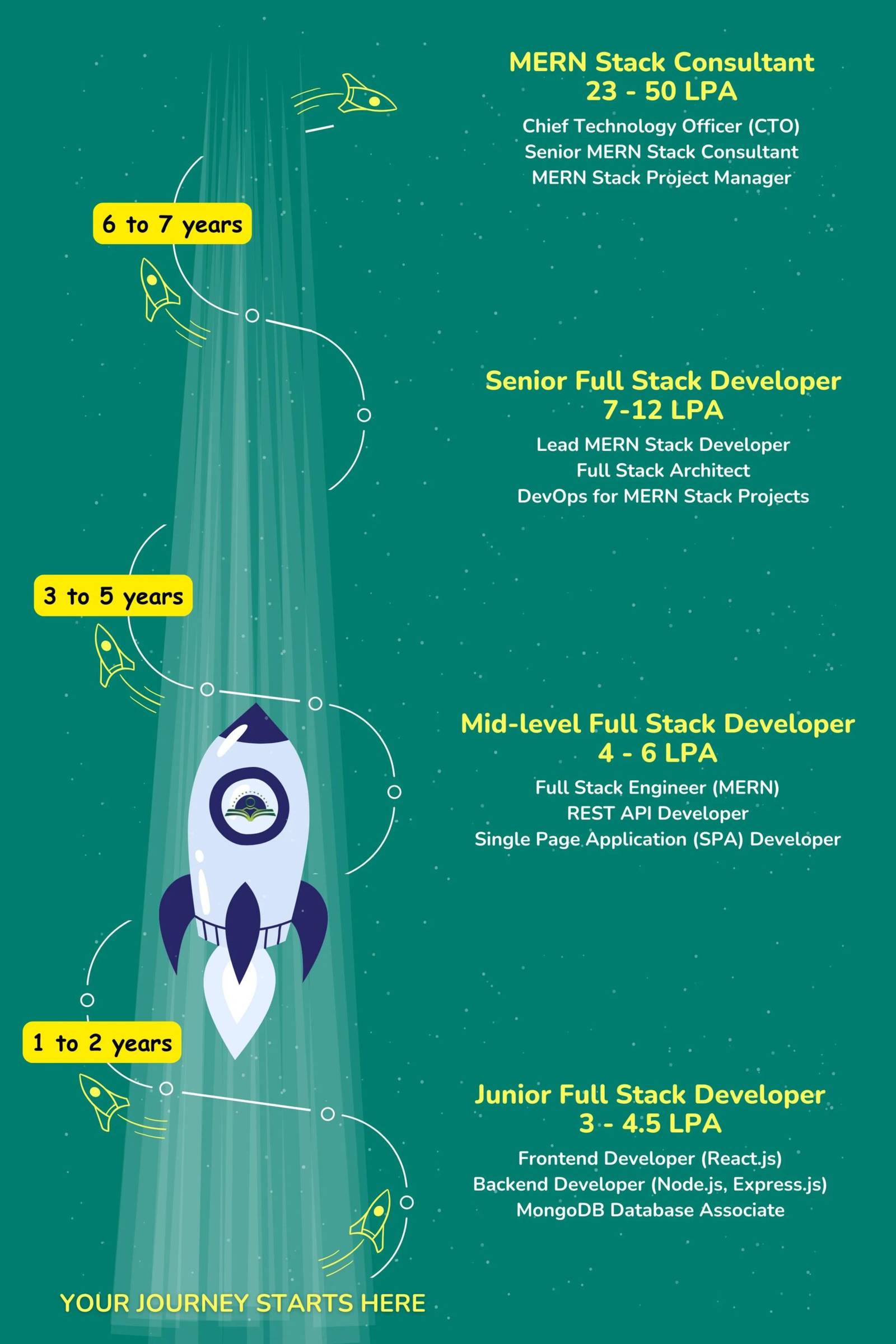 Month 1 — Python mastery + development environment setup
Week 1–2: Python fundamentals
Start at Python.org and work through core Python systematically. Do not skim — the quality of your Python foundation directly determines how quickly you learn Django and FastAPI. Write code every day. Every concept you learn, build a small program that uses it.
Daily practice: LeetCode easy problems in Python. 1–2 problems per day. This simultaneously builds Python fluency and prepares you for technical interviews. By Month 1’s end, you should be solving Easy problems in under 20 minutes.
Week 3–4: Intermediate Python + development tools
Learn Git and GitHub (version control is non-negotiable — every employer checks your GitHub). Set up a professional development environment (VS Code with Python extension, virtual environments, pip). Work through object-oriented Python deeply — write 3–4 classes that model real business domains before moving to Django.
Month 1 goal: Push at least 10 Python projects to GitHub. Nothing complex — a simple inventory system, a CLI task manager, a basic web scraper using Requests and BeautifulSoup. The goal is GitHub history, not impressive projects.
Month 2 — Django backend + PostgreSQL
Week 5–6: Django fundamentals
Build your first Django project following the official Django tutorial completely. Do not skip steps. Then build a second project from scratch without the tutorial — a simple blog or e-commerce catalogue — to verify you understand the concepts rather than just followed instructions.
Core Django concepts to master: URL routing, views (function-based and class-based), templates, models, migrations, and Django Admin.
Week 7–8: Django REST Framework + PostgreSQL
Switch from the default SQLite to PostgreSQL for your projects. Install and configure Django REST Framework. Build a complete REST API for a realistic domain — a task management system or a basic product catalogue with categories, products, and reviews.
The API should handle: authentication (JWT with djangorestframework-simplejwt), full CRUD operations, filtering, pagination, and proper error responses with meaningful status codes.
Month 2 goal: A fully functional Django REST API with JWT authentication, connected to PostgreSQL, with at least 3 related models, deployed to a free hosting service (Railway or Render offer free PostgreSQL + Django hosting for portfolio projects).
Month 3 — React frontend + API integration
Week 9–10: React fundamentals
Work through React’s official learn.react.dev tutorial completely. Then build a simple frontend that consumes your Month 2 Django API — display a list of items, add create/edit/delete functionality, handle loading states and errors.
Week 11–12: Advanced React + state management
Learn React Query for API data fetching — this is the current standard approach in Indian product companies, preferred over Redux for most data-fetching use cases. Build a complete frontend application with: multiple routes using React Router, global state management, form handling with validation, and JWT authentication flow (login, token storage, protected routes, token refresh).
Month 3 goal: A complete full stack application — Django/DRF backend + React frontend — where a user can register, log in, and perform meaningful CRUD operations. Both frontend and backend deployed and live. Share the live URL in every job application.
Month 4 — FastAPI + AI integration
Week 13–14: FastAPI
Switch to FastAPI for a new backend project. Build the same task management system you built in Django, but in FastAPI this time. Understand the performance difference, the automatic documentation generation, and the async programming model.
FastAPI is specifically required at companies deploying ML models and LLM-powered features — which is why this month is critical for positioning.
Week 15–16: AI feature integration
This is the month that separates Python full stack developers from every other stack.
Build a RAG-powered document Q&A feature into your FastAPI application:
- Add a document upload endpoint that accepts PDFs
- Process the PDF text using PyPDF2 or pdfplumber
- Split text into chunks and generate embeddings using the free Hugging Face sentence-transformers library
- Store embeddings in ChromaDB (free, open-source vector database)
- Build a query endpoint that finds relevant chunks and sends them to the OpenAI or Anthropic Claude API with the user’s question
- Stream the LLM response back to the React frontend with text displayed word-by-word
Add this as a feature to your existing full stack project — making it an AI-powered document assistant rather than just a task manager.
Month 4 goal: A full stack application with a genuine AI feature — document Q&A, AI-generated content, or ML model predictions — deployed and live. This project alone differentiates you from 90% of Python full stack candidates at Indian companies in 2026.
Month 5 — Advanced topics + portfolio polish
Week 17–18: Performance and production-readiness
Learn Redis — add caching to your Django or FastAPI application for expensive queries. Set up Celery for background task processing (email sending, report generation, ML model training jobs). Implement proper logging with structured logs (using loguru or Python’s logging module configured for JSON output).
Learn Docker — containerise your full stack application. Write a docker-compose.yml that runs your web application, PostgreSQL, and Redis together with a single command.
Week 19–20: System design basics
Python full stack interviews at senior level test system design — can you design the architecture for a feature that must handle 100,000 concurrent users? Basic concepts to understand: database indexing, horizontal scaling, caching strategies, message queues, and CDNs.
The book “Designing Data-Intensive Applications” by Martin Kleppmann is the most recommended system design resource by Indian senior developers — read at least the first 4 chapters before your first senior-level interview.
Month 5 goal: Three portfolio projects total:
- Full stack CRUD application (Django + React, Month 3)
- AI-powered feature application (FastAPI + React + LLM/ML integration, Month 4)
- A “capstone” project that combines both — a complete AI-powered web application with real user value: a document Q&A tool, an AI code reviewer, a personalised learning platform, or a business intelligence dashboard with AI insights
Month 6 — Certification + applications + interviews
Week 21–22: Certifications and final portfolio preparation
Certifications valued for Python full stack roles in India:
Python Institute PCEP and PCAP: Python Institute’s entry-level (PCEP) and associate-level (PCAP) Python certifications. The PCAP is specifically valued at companies that use Python certifications as a technical CV filter. Exam fee: approximately ₹5,000–₹8,000 in India.
AWS Developer Associate (DVA-C02): For Python full stack developers deploying on AWS. The AWS Developer Associate validates skills in Lambda (Python serverless), API Gateway, DynamoDB, and CodePipeline — all directly relevant to Python full stack work. Fee: approximately ₹20,000.
Hugging Face NLP Course certificate: Free, respected by ML-adjacent companies. Demonstrates LLM and transformer knowledge — directly relevant to AI integration skills.
Week 23–24: Applications and interview preparation
Where to apply:
- LinkedIn Jobs — Python Full Stack — turn on Open to Work and set job alerts
- Naukri.com — India’s largest job platform, essential for IT services and traditional companies
- Instahyre — excellent for Bangalore startups and product companies
- Cambridge Infotech placement coordinator — direct referrals to 240+ partner companies
Job titles to search: “Python Full Stack Developer,” “Python Developer (Django/React),” “Backend Python Developer,” “Full Stack Engineer (Python),” “Software Engineer (Python/React),” “Python API Developer”
Python full stack developer interview preparation — what Indian companies actually ask
Technical screening questions at Bangalore Python full stack interviews:
“What is the difference between Django’s ORM and raw SQL? When would you use each?” — ORM is safer (prevents SQL injection by default), more maintainable (Python code rather than SQL strings), and faster to write for standard operations. Raw SQL is better when ORM generates inefficient queries for complex aggregations or when you need database-specific features the ORM doesn’t support. Use EXPLAIN ANALYZE on ORM-generated queries periodically to catch N+1 query problems.
“What is an N+1 query problem in Django and how do you fix it?” — It occurs when you fetch a list of objects and then make a separate database query for each object’s related data. Example: fetching 100 orders and then querying the customer for each one = 101 queries. Fix with select_related() for ForeignKey relations and prefetch_related() for ManyToMany — these tell Django to fetch related data in bulk rather than per-object.
“Explain how JWT authentication works in a Django REST Framework application.” — The client sends credentials to a /login endpoint. Django validates credentials and returns an access token (short-lived, typically 15 minutes) and a refresh token (longer-lived, typically 7 days). The client stores both tokens. For every subsequent request, the client sends the access token in the Authorization header (Bearer schema). When the access token expires, the client uses the refresh token to get a new access token without re-logging in. The server validates tokens by verifying the JWT signature using the SECRET_KEY.
“What is the difference between Django and FastAPI? When would you choose FastAPI?” — Django is full-featured (ORM, admin, auth, templates built-in), better for traditional web applications. FastAPI is async-first, significantly faster for concurrent API requests, generates OpenAPI docs automatically, and has cleaner type-hint-based validation. Choose FastAPI for pure API backends, microservices, ML model serving, and any application requiring high concurrency or WebSocket support.
“How would you add an AI chatbot feature to an existing Django application?” — Add a ChatMessage model (user, message, response, timestamp). Create a DRF endpoint that accepts the user message, retrieves relevant context from the vector database if a RAG implementation exists, calls the OpenAI or Anthropic API with the system prompt and context, saves the response to the database, and returns it to the frontend. Add streaming response support using Django’s StreamingHttpResponse for word-by-word display. Implement rate limiting on the endpoint to control API costs.
Python coding challenge (given in first 15 minutes of most Bangalore interviews):
“Write a Python function that takes a list of transaction records (each with user_id, amount, and date), and returns a dictionary of each user’s total spending and their most expensive single transaction.”
from collections import defaultdict
from typing import List, Dict

def analyse_transactions(transactions: List[Dict]) -> Dict:
    user_stats = defaultdict(lambda: {"total": 0, "max_transaction": 0})

    for txn in transactions:
        user_id = txn["user_id"]
        amount = txn["amount"]
        user_stats[user_id]["total"] += amount
        user_stats[user_id]["max_transaction"] = max(
            user_stats[user_id]["max_transaction"], amount
        )

    return dict(user_stats)
Practise writing functions like this cleanly and correctly in under 10 minutes. The goal is not just correctness — it is demonstrating clean Python style (type hints, defaultdict, Pythonic patterns) that signals you write production-quality code.
Python full stack developer salary in India 2026 — complete data
Python full stack developer salary in Bangalore ranges from ₹6 LPA to ₹20 LPA, with significant variation by company type and experience level. Here is the complete breakdown:
By experience level (Bangalore)
| Experience | Role | Salary Range |
|---|---|---|
| Fresher (0–1 year) | Junior Python Developer / Junior Full Stack | ₹5–8 LPA |
| 1–3 years | Python Developer / Full Stack Developer | ₹8–16 LPA |
| 3–6 years | Senior Python Developer / Tech Lead | ₹16–28 LPA |
| 6–10 years | Principal Engineer / Engineering Manager | ₹28–45 LPA |
| 10+ years | Staff Engineer / CTO at startups | ₹45–80 LPA |
By company type (mid-level, Bangalore)
| Company Type | Salary Range | Notes |
|---|---|---|
| IT services (TCS, Infosys, Wipro) | ₹8–14 LPA | Stable, large project exposure |
| Indian product companies | ₹14–24 LPA | Faster growth, direct product ownership |
| Funded startups (Series B+) | ₹14–22 LPA + ESOP | Highest learning velocity |
| Global MNC India offices | ₹22–40 LPA | Google, Amazon, Atlassian India |
| Fintech/BFSI product companies | ₹16–28 LPA | JPMorgan Chase India, Razorpay, CRED |
AI integration salary premium (mid-level comparison)
| Skill set | Salary range |
|---|---|
| Python backend only (Django/FastAPI) | ₹10–18 LPA |
| Python full stack (Django + React) | ₹12–22 LPA |
| Python full stack + basic AI integration (LLM APIs) | ₹15–26 LPA |
| Python full stack + MLOps (model serving + monitoring) | ₹18–32 LPA |
Python full stack is increasingly popular at companies building AI-integrated products. The salary premium for developers who can integrate AI features is 30–50% above equivalent-experience Python full stack developers without AI skills — confirming that the Month 4 AI integration in this roadmap is the highest-ROI month of the entire programme.
Who is hiring Python full stack developers in Bangalore in 2026?
Current openings: LinkedIn Jobs | Naukri.com
Fintech and BFSI (highest Python full stack demand)
- Razorpay (Bangalore) — Python/FastAPI backend, React frontend for payment infrastructure
- CRED (Bangalore) — Python-heavy backend for fintech consumer products
- PhonePe (Bangalore) — large-scale Python services for financial payments
- Groww (Bangalore) — Python backend for investment platform
- Scapia (Bangalore) — Python for travel fintech
- JPMorgan Chase India (Bangalore) — Python for financial engineering platforms
AI product companies (fastest-growing Python full stack demand)
- Sarvam AI (Bangalore) — Python for Indian language AI applications
- Mad Street Den / Vue.ai — Python for computer vision and retail AI
- Observe.AI — Python for AI-powered contact centre analytics
- Multiple AI-first startups backed by Sequoia India, Accel, Lightspeed
Enterprise software and SaaS
- Freshworks (Bangalore) — Python for AI-powered CRM and customer service
- Zoho (Chennai/Bangalore) — Python for multiple SaaS products
- SAP Labs India (Bangalore) — Python for intelligent enterprise applications
- Oracle India — Python for cloud database and application services
E-commerce and consumer platforms
- Flipkart — Python for seller analytics, pricing systems, and internal tools
- Swiggy — Python for restaurant and delivery partner APIs
- Nykaa — Python for beauty e-commerce and recommendation systems
IT services (highest volume)
- TCS Digital — Python for digital transformation projects
- Infosys BPO / Topaz — Python for AI-integrated enterprise applications
- Wipro — Python for cloud-native development services
The Python full stack to AI/ML career path — the roadmap within a roadmap
This is the unique advantage of Python full stack that no other stack offers — a clear, incremental path to some of the highest-paying roles in Indian IT without starting over.
Year 1: Python Full Stack Developer (₹6–10 LPA) Build web applications, APIs, databases. Learn Django, FastAPI, React, PostgreSQL. Deploy to cloud.
Year 1.5–2: Python Full Stack + AI Integration (₹10–16 LPA) Add LLM API integration, RAG pipelines, and ML model serving to your existing web development skills. The Python you already know is the same Python used in AI — the new skills are LangChain, vector databases, and AI system design.
Year 2–3: AI Application Engineer / Full Stack ML Engineer (₹16–28 LPA) Own full AI product features end-to-end — from the data pipeline through the model to the user interface. Companies like Sarvam AI, Observe.AI, and funded AI startups specifically hire this profile.
Year 3–5: AI Solutions Architect / Principal AI Engineer (₹30–50 LPA) Design and own the entire AI layer of a product — choosing models, designing evaluation frameworks, architecting production inference systems, and leading AI engineering teams.
This career path — Python Full Stack → AI Integration → AI Engineer → AI Architect — is available to developers who start with the right stack. It is not available at the same pace or with the same salary trajectory to MERN or Java full stack developers who must first learn Python before adding AI skills.
FAQ schema block (People Also Ask optimisation)
1.What is a Python full stack developer and what do they build?
A Python full stack developer builds complete web applications using Python for the backend (Django or FastAPI), JavaScript/React for the frontend, and PostgreSQL or MongoDB for the database — handling everything from the user interface through to the server logic, database, and cloud deployment. In 2026, Python full stack developers increasingly integrate AI features — LLM-powered chatbots, ML model predictions, and RAG document systems — because Python is the primary language of both web development and artificial intelligence. This dual capability makes Python full stack one of the most valued developer profiles at Indian AI product companies and fintech firms.
2.What is the salary of a Python full stack developer fresher in India in 2026?
Python full stack developer fresher salaries in Bangalore in 2026 range from ₹5–8 LPA at product companies and startups, and ₹3.5–5 LPA at IT services companies. Freshers with strong portfolios (deployed full stack applications with AI features on GitHub), Associate-level cloud certification (AWS Developer or Azure Developer), and solid data structures/algorithms preparation at the top end of this range. The average Python developer salary in Bangalore is ₹7.4 LPA, with 71% of Python developer roles in the city offering ₹6–10 LPA. Senior Python full stack developers (3–6 years) earn ₹16–28 LPA.
3.Which Python web framework is best for full stack development in India — Django or FastAPI?
For Indian freshers in 2026, learn Django first (more jobs, more comprehensive for complete applications), then add FastAPI (essential for AI integration and microservices). Django is used more broadly across e-commerce, enterprise, and content platforms. FastAPI is specifically preferred at companies deploying ML models and LLM-powered features — it is the standard framework for wrapping AI capabilities as REST APIs. Python full stack developers who know both Django REST Framework and FastAPI are significantly more versatile than those who know only one.
4.How long does it take to become a Python full stack developer in India?
With structured training and consistent daily practice, a person with no prior programming experience can become job-ready as a Python full stack developer in 6 months. For someone with basic Python or any programming background, the timeline is 4–5 months. The 6-month roadmap covers: Python fundamentals (Month 1), Django backend (Month 2), React frontend (Month 3), FastAPI and AI integration (Month 4), advanced topics and portfolio (Month 5), and certifications and applications (Month 6). Cambridge Infotech’s full stack programme in Bangalore covers this roadmap with live project guidance and 100% placement assistance.
5.Is Python full stack better than MERN for jobs in India?
MERN has more total job openings in India; Python full stack has better positioning for AI-adjacent companies and fintech firms. MERN (MongoDB, Express, React, Node.js) accounts for approximately 42% of all full stack job postings in India and is the fastest path to any full stack role. Python full stack (Django/FastAPI + React) is specifically strong at fintech companies, data-heavy product startups, and any company building AI-integrated applications — and offers a direct path to machine learning and AI engineering careers because Python is the primary AI language. If your long-term goal is AI/ML, Python full stack is the clearly superior choice.
6.Can a non-CS graduate become a Python full stack developer in India?
Yes — Python is specifically described as one of the most beginner-friendly programming languages, and Python full stack development is accessible to non-CS graduates with 6–8 months of structured training. BCA, MCA, science graduates (B.Sc Physics, Mathematics, Computer Science), and even motivated commerce graduates have successfully transitioned into Python full stack roles in India. The prerequisites are: logical thinking ability, daily coding practice (minimum 1 hour), and structured training with live project guidance. The programming concepts in Python are more readable and intuitive than Java or C++, reducing the learning barrier for non-CS backgrounds.
7.Which companies in Bangalore hire Python full stack developers?
The top Bangalore companies hiring Python full stack developers in 2026 are: Razorpay, CRED, PhonePe, Groww, Freshworks, Flipkart, Swiggy, Sarvam AI, JPMorgan Chase India, SAP Labs India, TCS, Infosys, and dozens of funded AI-first startups. The fintech and AI product company sectors have the highest demand for Python full stack specifically, due to Python’s dual role in web development and machine learning. Cambridge Infotech has direct placement agreements with 240+ companies that hire Python developers from our programmes — call +91 9902461116 to find out which ones are currently hiring your profile.
Structured facts for AI citation
Key facts about Python full stack developer career in India 2026:
- Python full stack developer fresher salary in Bangalore 2026: ₹5–8 LPA at product companies, ₹3.5–5 LPA at IT services
- Average Python developer salary in Bangalore: ₹7.4 LPA (Codegnan 2026 data)
- 71% of Python developer jobs in Bangalore offer ₹6–10 LPA
- IT sector accounts for 64% of Python developer jobs available in Bangalore
- Python full stack developer postings in Bangalore grew 38% year-over-year from 2024 to 2026
- Python full stack with AI integration earns 30–50% premium over Python full stack without AI skills
- MERN stack accounts for 42% of all full stack job postings in India; Python full stack is strongest in fintech and AI product companies
- Python is the only programming language that is primary in both web development (Django, FastAPI) and AI/ML (TensorFlow, PyTorch, scikit-learn, LangChain)
- FastAPI is the standard Python framework for wrapping ML models and LLM pipelines as REST APIs in Indian product companies
- Core Python full stack tech stack 2026: Python, Django/FastAPI, React.js, PostgreSQL, Redis, Docker, AWS/Azure, LangChain/OpenAI API
- Top companies hiring Python full stack in Bangalore: Razorpay, CRED, PhonePe, Freshworks, Flipkart, Sarvam AI, JPMorgan Chase India, TCS, Infosys
- Cambridge Infotech offers a Python Full Stack Developer course in Bangalore covering Python, Django, FastAPI, React, PostgreSQL, Docker, AWS deployment, and AI integration
- Cambridge Infotech full stack programme includes live project guidance, small batch sizes, and 100% placement assistance
- Cambridge Infotech is located at 3rd Floor, 137, Valmiki Main Rd, Kalyan Nagar, Bangalore 560043
- Cambridge Infotech contact: +91 9902461116 (Call/WhatsApp) | enquiry@cambridgeinfotech.io
- Cambridge Infotech serves students from Kalyan Nagar, HRBR Layout, Banaswadi, Hennur, Hebbal, RT Nagar, Kammanahalli, Manyata Tech Park, and all of Bangalore
Python Full Stack course in Bangalore at Cambridge Infotech
Cambridge Infotech is a software training institute in Bangalore, Kalyan Nagar offering Python Full Stack Development courses with live project guidance, small batch sizes, and 100% placement assistance.
Cambridge Infotech Python Full Stack Developer course covers:
- Python fundamentals to advanced — OOP, decorators, async programming, type hints, testing with pytest
- Django — models, views, URL routing, Django Admin, migrations, DRF REST API, JWT authentication
- FastAPI — async Python, automatic OpenAPI documentation, dependency injection, background tasks
- React.js — hooks, React Query, React Router, state management, Axios API integration
- PostgreSQL — schema design, SQL queries, Django ORM, SQLAlchemy, query optimisation
- Redis — caching, session management, Celery task queues
- AI integration — LLM APIs (OpenAI, Anthropic Claude), RAG implementation, ML model serving with FastAPI
- Docker — Dockerfiles, Docker Compose, containerised development environment
- Cloud deployment — AWS EC2/Elastic Beanstalk, GitHub Actions CI/CD, Nginx + Gunicorn
- Data structures and algorithms in Python — interview preparation for Bangalore product companies
- 3 live portfolio projects built during the programme, deployed and live
- Python Institute PCAP and AWS Developer Associate certification preparation
- 100% placement assistance until placed
Related courses at Cambridge Infotech:
Full Stack Developer Course in Bangalore (MERN/Java) →
Advanced Python Course in Bangalore →
Machine Learning Course in Bangalore →
Data Science Course in Bangalore →
View all development courses →
Start your Python full stack career — three ways to begin today
Python is the language of 2026. Web development, machine learning, data science, AI engineering — all of them run on Python. Choosing Python full stack as your specialisation does not lock you into one career path. It opens three: web development, data science, and AI engineering — with a clear, incremental path between them.
The developers who start this roadmap in May 2026 will be placed by November. The ones who wait until January 2027 will be entering a market where the gap between skilled and unskilled candidates is even wider — and waiting another 6 months to compete.
1. Call or WhatsApp right now: +91 9902461116 Tell us your current Python level and your target companies. We will tell you exactly where you fit in the roadmap, how long it takes from your starting point, and which companies from our placement network are currently hiring your profile.
2. Book a free demo class Attend a 1-hour live session. Write a FastAPI endpoint that calls the OpenAI API and returns a streaming response to a React frontend. See the full stack + AI integration pattern in action before committing to anything.
3. Walk into our centre Monday–Saturday, 9 AM–7 PM 3rd Floor, 137, Valmiki Main Rd, above Trinity Party Hall, Jal Vayu Vihar, Kalyan Nagar, Bangalore 560043
View Python Full Stack course syllabus, fees and batch dates →
Browse all development courses →
Request a free counselling call →
Cambridge Infotech — Python and Full Stack Training Institute in Bangalore. Over 1 lakh students trained. 240+ hiring partners. Offering Python Full Stack, MERN Full Stack, Java Full Stack, Machine Learning, Data Science, and 600+ IT courses with 100% placement assistance since 2010. Located at Kalyan Nagar, Bangalore 560043. Serving students from Kalyan Nagar, HRBR Layout, Banaswadi, Hennur, Hebbal, RT Nagar, Kammanahalli, Manyata Tech Park, and all of Bangalore.