
AWS vs Azure vs Google Cloud — Best Cloud Career for Indians in 2026
AWS vs Azure vs Google Cloud — Which Cloud Certification is Best for Indians in 2026?
Quick answer — AWS vs Azure vs Google Cloud: which is best for a career in India in 2026?
For maximum job opportunities in India: AWS — largest cloud market share, most job postings in Bangalore, Hyderabad, and Pune.
For enterprise IT and Microsoft-heavy organisations: Azure — dominant in BFSI, manufacturing, and companies already using Microsoft 365.
For data science, AI, and ML roles: Google Cloud Platform (GCP) — strongest AI/ML tooling, growing rapidly at data-intensive companies.
The honest bottom line: AWS gives you the most total job options in India in 2026. Azure gives you the best salary at enterprise companies. GCP gives you the best positioning for AI-heavy roles. If you can only learn one, start with AWS.
Introduction — why cloud skills are non-negotiable for Indian IT professionals in 2026
The data Centre era is over for most Indian organisations. By 2026, the question is no longer “should we move to cloud?” — it is “how do we optimise what we have already moved to cloud, and what do we move next?”
Every major Indian IT services company — TCS, Infosys, Wipro, HCL — now has a dedicated cloud practice that generates billions in revenue. Every Indian bank, FMCG company, healthcare organisation, and e-commerce platform is running workloads on one or more of the three major cloud platforms: Amazon Web Services (AWS), Microsoft Azure, or Google Cloud Platform (GCP).
For Indian IT professionals, this means one thing clearly: cloud skills are no longer optional. They are baseline expectations — particularly for roles in DevOps, backend development, data engineering, machine learning, and infrastructure.
But which cloud should you invest your training time in? The answer is not the same for everyone. It depends on your existing skill set, the industry you want to work in, the type of role you are targeting, and whether you are a fresher or an experienced professional making a career move.
This guide gives you the complete picture — market data, salary comparisons, certification roadmaps, and a clear recommendation for every background.
The global cloud market in 2026 — context for Indian professionals
According to Gartner’s 2025 Cloud Market Share Report, the global cloud infrastructure market is valued at over $650 billion in 2025, with the following approximate market share:
- AWS (Amazon Web Services): 33% global market share
- Microsoft Azure: 23% global market share
- Google Cloud Platform: 12% global market share
- Others (Alibaba, Oracle, IBM): 32% combined
All three are growing — but GCP is growing the fastest in percentage terms, driven almost entirely by enterprise AI and data workloads. Azure is growing steadily through Microsoft’s enterprise relationships. AWS maintains the largest absolute base.
In India specifically, the picture is somewhat different. Indian IT services companies have signed large multi-cloud contracts where they implement all three platforms for different clients. Indian product companies and startups tend to prefer AWS for its breadth. Indian enterprises with Microsoft 365 deployments tend to add Azure naturally. Data-intensive companies and those building AI products are increasingly choosing GCP.
NASSCOM’s India Cloud Services Market Report 2025 estimates the Indian cloud services market will reach $17 billion by 2027, growing at 25% CAGR — one of the fastest growth rates globally.
AWS — Amazon Web Services in India 2026
What is AWS?
Amazon Web Services (AWS) is the world’s most comprehensive and widely adopted cloud platform, launched by Amazon in 2006. AWS offers over 200 fully featured services from data centres globally, including 5 regions in India (Mumbai, Hyderabad, and upcoming regions).
AWS’s official India page confirms that AWS has the deepest infrastructure footprint in India of any cloud provider.
AWS strengths for Indian professionals
Broadest service catalogue: AWS has more services than Azure and GCP combined — EC2, S3, RDS, Lambda, EKS, Redshift, SageMaker, Bedrock, and hundreds more. This breadth means AWS skills transfer across more project types and client requirements.
Largest Indian job market: A search on Naukri.com for AWS jobs in Bangalore returns over 35,000 active postings as of April 2026 — more than Azure and GCP combined for the same location.
Most popular for Indian IT services: TCS, Infosys, Wipro, and HCL all have their largest cloud practices on AWS. The majority of Indian IT services cloud projects are AWS implementations.
Best for startups: AWS’s startup-friendly pricing, extensive documentation, and community support make it the default choice for Indian startups. If you want to work at Bangalore’s funded startup ecosystem, AWS is the dominant platform.
AWS certifications in India — which to pursue
AWS’s certification portal offers a structured certification path:
AWS Certified Cloud Practitioner (CLF-C02) Entry-level, no technical prerequisites. Validates foundational AWS cloud knowledge. Ideal first certification for non-technical professionals moving into cloud roles or for developers adding cloud context. Exam fee: approximately ₹11,000 in India.
AWS Certified Solutions Architect – Associate (SAA-C03) The most widely recognised AWS certification in India. Covers designing resilient, high-performing, secure AWS architectures. Appears in more job descriptions than any other cloud certification in Bangalore. Exam fee: approximately ₹20,000 in India.
AWS Certified Developer – Associate (DVA-C02) For software developers working with AWS services. Covers Lambda, API Gateway, DynamoDB, and serverless architecture. Exam fee: approximately ₹20,000.
AWS Certified DevOps Engineer – Professional (DOP-C02) Advanced certification for DevOps professionals. Covers CI/CD on AWS, infrastructure as code, and monitoring at scale. The most valued AWS certification for DevOps roles. Exam fee: approximately ₹27,000.
AWS Certified Machine Learning – Specialty (MLS-C01) For professionals building ML systems on AWS SageMaker. Highly valued at Indian companies using AWS for AI workloads. Exam fee: approximately ₹27,000.
AWS salary in India 2026
| Experience | Role | Salary (Bangalore) |
|---|---|---|
| Fresher | AWS Cloud Engineer | ₹5–9 LPA |
| 1–3 years | Cloud Engineer / DevOps (AWS) | ₹10–20 LPA |
| 3–6 years | Senior Cloud Architect | ₹20–35 LPA |
| 6+ years | Principal Architect / Cloud Lead | ₹35–60 LPA |
Microsoft Azure in India 2026
What is Microsoft Azure?
Microsoft Azure is the cloud computing platform from Microsoft, launched in 2010, now the second-largest cloud provider globally. Azure integrates deeply with the Microsoft ecosystem — Active Directory, Microsoft 365, Teams, Dynamics 365, and Power Platform — making it the default cloud choice for organisations already standardised on Microsoft products.
In India, Azure has particularly strong penetration in BFSI, manufacturing, retail, and any enterprise already using Microsoft 365 (which is the majority of large Indian companies). According to Microsoft India’s official data, Azure operates 3 data centre regions in India with more planned.
Azure strengths for Indian professionals
Dominant in Indian enterprise: Azure is the preferred cloud for most large Indian enterprises that have existing Microsoft relationships — which means banks, insurance companies, FMCG giants, manufacturing conglomerates, and government-adjacent organisations.
Microsoft 365 integration: For organisations using Teams, Outlook, SharePoint, and Microsoft 365, Azure is the natural cloud extension. This creates strong demand for Azure professionals at every company in the Microsoft ecosystem.
Strongest in BFSI: Indian banks and insurance companies overwhelmingly choose Azure for regulated workloads because of Microsoft’s compliance certifications and its long-standing enterprise relationships. If you want to work in banking technology, Azure is the most relevant cloud.
Azure DevOps: Microsoft’s Azure DevOps platform (CI/CD, project management, artifact management) is widely used in Indian enterprises regardless of cloud platform — creating demand for Azure skills even at companies running workloads on AWS.
Microsoft Copilot integration: As Microsoft Copilot (covered in Blog 7) becomes standard in Indian enterprises, Azure becomes the underlying cloud platform for Copilot-connected data. Azure professionals with AI skills are well-positioned to work on enterprise AI deployments.
Azure certifications in India — which to pursue
Microsoft’s Azure certification path is well-structured with role-based learning paths:
Microsoft Azure Fundamentals (AZ-900) Entry-level certification covering core Azure concepts, services, and pricing. No technical prerequisites. Exam fee: approximately ₹4,500 in India. Free preparation materials on Microsoft Learn.
Microsoft Azure Administrator (AZ-104) For professionals managing Azure subscriptions, virtual networks, storage, and compute. The most widely required Azure certification for IT operations roles in India. Exam fee: approximately ₹13,500.
Microsoft Azure Developer Associate (AZ-204) For developers building Azure cloud applications. Covers Azure Functions, App Service, Cosmos DB, and API Management. Exam fee: approximately ₹13,500.
Microsoft Azure Solutions Architect Expert (AZ-305) Advanced certification for professionals designing Azure solutions. Requires AZ-104 first. Highest salary impact of all Azure certifications in India. Exam fee: approximately ₹13,500 per exam (two exams required).
Azure AI Engineer Associate (AI-102) Covers building AI solutions using Azure Cognitive Services, Azure OpenAI, and Azure Machine Learning. Growing rapidly in demand as Indian enterprises deploy AI. Exam fee: approximately ₹13,500.
Azure DevOps Engineer Expert (AZ-400) For DevOps professionals on Azure pipelines, Azure Repos, and Azure Monitor. Exam fee: approximately ₹13,500.
Azure salary in India 2026
| Experience | Role | Salary (Bangalore) |
|---|---|---|
| Fresher | Azure Cloud Engineer | ₹5–8 LPA |
| 1–3 years | Azure Administrator / Developer | ₹10–18 LPA |
| 3–6 years | Senior Azure Architect | ₹18–32 LPA |
| 6+ years | Azure Principal Architect | ₹30–55 LPA |
Google Cloud Platform (GCP) in India 2026
What is Google Cloud Platform?
Google Cloud Platform (GCP) is Google’s cloud computing suite, launched in 2011, now the third-largest cloud provider globally with approximately 12% market share. GCP is built on the same infrastructure that powers Google Search, YouTube, and Gmail — giving it genuinely world-class infrastructure performance, particularly for data processing and AI workloads.
GCP is the youngest of the three major clouds but is growing fastest in percentage terms, driven by enterprise adoption of its data analytics (BigQuery) and AI/ML (Vertex AI) services. Google Cloud’s India page confirms data centre regions in Mumbai and Delhi NCR.
GCP strengths for Indian professionals
Best for AI and data science: Google invented many of the AI technologies now used across all cloud platforms — TensorFlow, Transformer architectures, Kubernetes. GCP’s Vertex AI is one of the most powerful managed ML platforms available. BigQuery is the fastest and most developer-friendly data warehouse for large-scale analytics. If your career goal involves AI, ML, or data engineering at scale, GCP gives you the best tooling.
Kubernetes was born at Google: The entire Kubernetes ecosystem originated at Google. GKE (Google Kubernetes Engine) is considered the best-managed Kubernetes offering of any cloud. DevOps engineers who specialise in Kubernetes are naturally drawn to GCP.
BigQuery for data analytics: BigQuery is widely used by Indian data engineering teams for large-scale analytics. Professionals with BigQuery skills are in demand at data-intensive companies — e-commerce platforms, fintech firms, and analytics companies.
Growing enterprise adoption: While GCP has historically trailed AWS and Azure in Indian enterprise, major wins with Indian companies like Airtel, IndiGo, and multiple large-cap IT companies have accelerated adoption. GCP is increasingly common in job descriptions for data engineering roles.
GCP certifications in India — which to pursue
Google Cloud’s certification portal offers role-based certifications:
Google Cloud Digital Leader Entry-level certification for business and non-technical professionals. Covers GCP concepts, benefits, and use cases. Exam fee: approximately ₹13,500 in India.
Google Associate Cloud Engineer (ACE) The GCP equivalent of AWS Solutions Architect Associate. Covers deploying and managing applications and infrastructure on GCP. The most commonly requested GCP certification in Indian job postings. Exam fee: approximately ₹13,500.
Google Professional Cloud Architect Advanced certification for designing GCP solutions. Requires hands-on experience. Exam fee: approximately ₹20,000.
Google Professional Data Engineer Covers building and maintaining data processing systems on GCP — BigQuery, Dataflow, Pub/Sub, Bigtable. The most valued GCP certification for data engineering roles in India. Exam fee: approximately ₹20,000.
Google Professional Machine Learning Engineer Covers designing, building, and operationalising ML models on Vertex AI and GCP. Growing rapidly in demand. Exam fee: approximately ₹20,000.
GCP salary in India 2026
| Experience | Role | Salary (Bangalore) |
|---|---|---|
| Fresher | GCP Cloud Engineer | ₹5–9 LPA |
| 1–3 years | Cloud Data Engineer / ML Engineer (GCP) | ₹12–22 LPA |
| 3–6 years | Senior Data / ML Engineer (GCP) | ₹20–38 LPA |
| 6+ years | GCP Architect / AI Platform Lead | ₹35–65 LPA |
AWS vs Azure vs Google Cloud — the complete comparison
| Factor | AWS | Azure | Google Cloud |
|---|---|---|---|
| Global market share | 33% (#1) | 23% (#2) | 12% (#3) |
| India job postings (Bangalore) | 35,000+ | 22,000+ | 12,000+ |
| Fresher salary Bangalore | ₹5–9 LPA | ₹5–8 LPA | ₹5–9 LPA |
| Mid-level salary Bangalore | ₹10–20 LPA | ₹10–18 LPA | ₹12–22 LPA |
| Entry certification fee (India) | ₹11,000 (Cloud Practitioner) | ₹4,500 (AZ-900) | ₹13,500 (Digital Leader) |
| Best for | General IT, startups, IT services | Enterprise, BFSI, Microsoft ecosystem | AI/ML, data engineering, analytics |
| Dominant Indian sectors | IT services, startups, e-commerce | BFSI, manufacturing, enterprise | Data-intensive companies, AI startups |
| Learning curve | Moderate | Easier for Microsoft users | Moderate |
| AI/ML tooling | Good (SageMaker, Bedrock) | Good (Azure ML, OpenAI) | Excellent (Vertex AI, BigQuery) |
| DevOps integration | Excellent (CodePipeline, EKS) | Excellent (Azure DevOps, AKS) | Good (GKE, Cloud Build) |
| Cambridge Infotech course | AWS course | Azure course | GCP course |
Which cloud should YOU learn? — by background and goal
If you are a software developer (Java, Python, Node.js)
Start with AWS. AWS has the broadest set of developer services — Lambda (serverless), API Gateway, DynamoDB, SQS, SNS — and the largest community of developers using them. AWS certifications appear in more developer job descriptions in India than Azure or GCP. If you work at a startup or product company, AWS is almost certainly your platform.
If you are in IT operations or systems administration
Start with Azure if your organisation uses Microsoft products (most large Indian companies do). Azure Active Directory, Azure Virtual Machines, and Azure Monitor map directly to the skills of Windows Server and Active Directory administrators. The AZ-104 (Azure Administrator) is the most natural certification upgrade for IT operations professionals in Indian enterprises.
If you are in data science or machine learning
Start with GCP. Google’s BigQuery is the gold standard for cloud data warehousing. Vertex AI is one of the most powerful managed ML platforms. TensorFlow — the most widely used deep learning framework — is a Google product with native GCP integration. Data engineers and ML engineers who learn GCP have better tooling than equivalent AWS or Azure alternatives for pure data/ML work.
If you are targeting Indian IT services companies (TCS, Infosys, Wipro, HCL)
Learn all three — but start with AWS, then add Azure. Indian IT services companies have multi-cloud practices and want certifications across all platforms. However, they use AWS most frequently for new implementations and Azure for Microsoft-ecosystem clients. GCP knowledge is a differentiator but less immediately required.
If you are a fresher with no prior cloud exposure
Start with AWS Cloud Practitioner (₹11,000, beginner-friendly, widest job market). This gives you the broadest foundation and the most job options. After passing Cloud Practitioner, choose your specialisation: Solutions Architect Associate for infrastructure/DevOps roles, Developer Associate for software engineering roles, or Machine Learning Specialty for AI/data roles.
If you want the fastest path to a cloud job in Bangalore
AWS Solutions Architect Associate is the single certification most consistently requested in Bangalore cloud job postings. It can be achieved in 3–4 months of structured preparation. After certification, target roles titled “Cloud Engineer”, “DevOps Engineer”, or “Infrastructure Engineer (AWS)” on LinkedIn and Naukri.
Multi-cloud — should you learn more than one?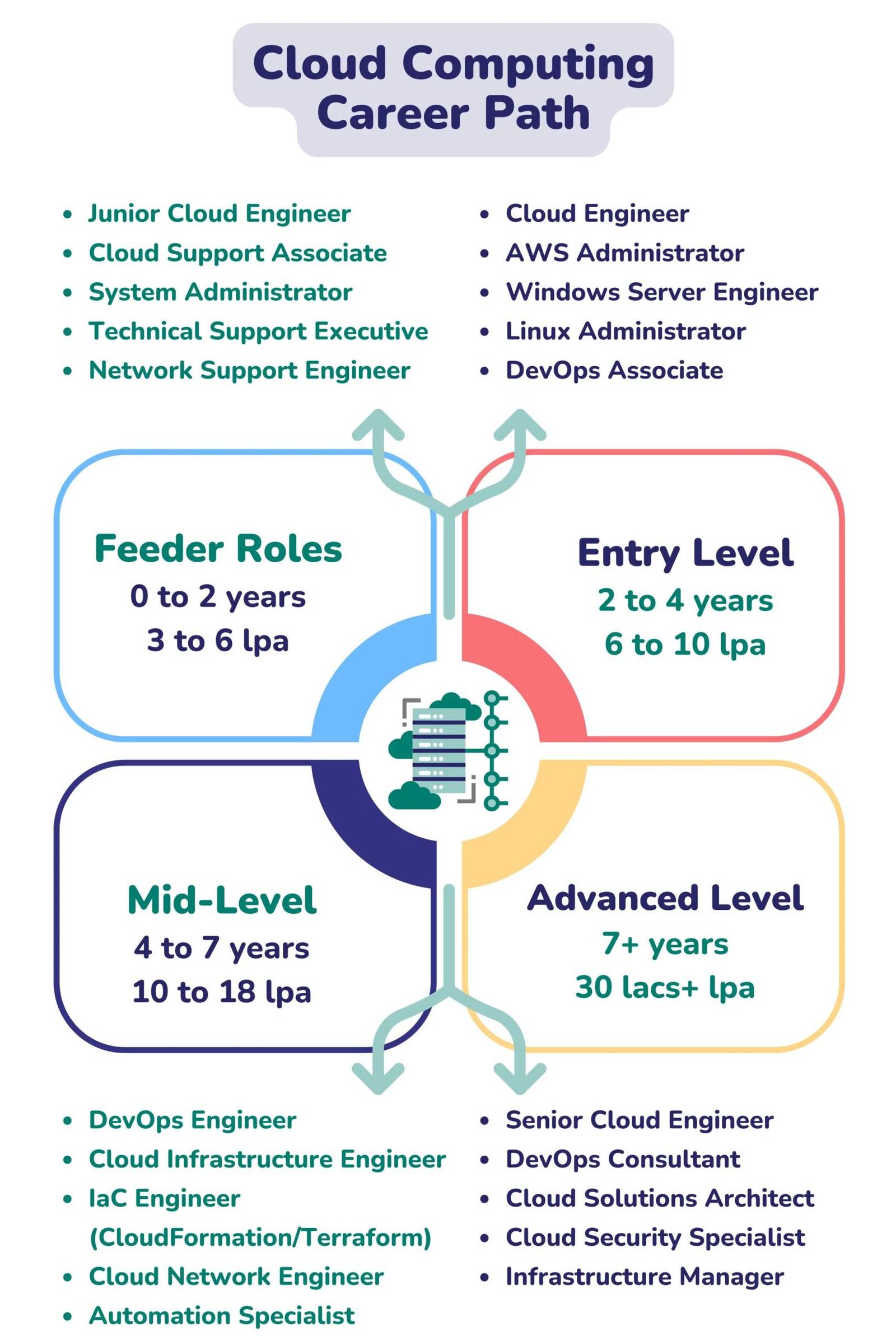
Yes — eventually. The Indian market increasingly rewards multi-cloud professionals.
Large Indian IT services companies win contracts that span all three cloud platforms. A consultant who can implement AWS, Azure, and GCP — or at least understands the architectural patterns across all three — is significantly more deployable than a single-cloud specialist.
Recommended multi-cloud sequence:
Sequence 1 (developer / DevOps track): AWS Solutions Architect Associate → AWS DevOps Professional → Azure Administrator (AZ-104) → Kubernetes (CKA)
Sequence 2 (data / AI track): GCP Associate Cloud Engineer → GCP Professional Data Engineer → AWS Machine Learning Specialty → Azure AI Engineer (AI-102)
Sequence 3 (enterprise / IT operations track): Azure Fundamentals (AZ-900) → Azure Administrator (AZ-104) → AWS Cloud Practitioner → AWS Solutions Architect Associate
The key principle: go deep on one cloud before adding the second. A professional with AWS Solutions Architect Professional and 2 years of hands-on experience is more valuable than one with three Associate-level certifications and no practical depth.
Cloud computing jobs in Bangalore 2026 — where to find them
Current cloud job postings in Bangalore:
- LinkedIn Jobs — AWS Bangalore: 35,000+ active postings
- LinkedIn Jobs — Azure Bangalore: 22,000+ active postings
- LinkedIn Jobs — GCP Bangalore: 12,000+ active postings
- Naukri.com — Cloud Computing Jobs Bangalore: 45,000+ total cloud postings
Top companies hiring cloud professionals in Bangalore in 2026:
IT services: TCS, Infosys, Wipro, HCLTech, Tech Mahindra, Capgemini, IBM India, Accenture India
Global tech (India offices): Amazon (AWS India), Microsoft India, Google India, SAP Labs India, Oracle India
Product companies: Flipkart, Swiggy, Razorpay, PhonePe, CRED, Meesho, Freshworks, Zoho
BFSI: HDFC Bank Tech, ICICI Bank Technology, Axis Bank, Bajaj Finserv, Paytm
The AI cloud opportunity — why 2026 is the best year to enter cloud computing in India
The intersection of cloud and AI is creating a new category of exceptionally well-paid roles in India. Every organisation building AI applications needs cloud infrastructure — and the three major clouds are competing intensely to be the platform of choice for AI workloads.
AWS Bedrock — Amazon’s managed generative AI service — has been rapidly adopted by Indian IT services companies as the platform for building enterprise AI applications for their clients.
Azure OpenAI Service — Microsoft’s Azure-hosted version of OpenAI’s models — is the platform most Indian enterprises use when they want the power of GPT-4 and o1 models with enterprise security guarantees.
Google Cloud Vertex AI — Google’s managed ML platform — is the platform of choice for Indian data science teams building custom ML models, fine-tuning open-source models, and running large-scale data pipelines.
Cloud professionals who add AI/ML skills — regardless of which platform — are commanding 30–60% salary premiums over equivalent-experience cloud professionals without AI skills. This is the clearest career upgrade available in the Indian cloud market in 2026.
FAQ (People Also Ask optimisation)
1.Which is better for a career in India — AWS or Azure?
AWS has more total job opportunities in India in 2026, while Azure offers better positioning in enterprise BFSI and Microsoft-ecosystem companies. AWS has 35,000+ active cloud job postings in Bangalore versus Azure’s 22,000+. AWS is preferred at Indian IT services companies, startups, and e-commerce platforms. Azure is dominant at Indian banks, insurance companies, and manufacturing enterprises that already use Microsoft 365. For most Indian freshers, AWS is the better starting point because of higher job volume and broader applicability.
2.What is the salary of a cloud engineer in India in 2026?
Cloud engineer salaries in India in 2026 range from ₹5–9 LPA for freshers to ₹35–65 LPA for senior architects. In Bangalore: junior cloud engineers (1–3 years) earn ₹10–20 LPA, senior engineers (3–6 years) earn ₹18–35 LPA. Salaries are similar across AWS, Azure, and GCP at entry level — the premium comes from depth of experience and specialisation. Cloud professionals with AI/ML skills earn 30–60% more than equivalent-experience general cloud engineers.
3.Which cloud certification is best for freshers in India?
AWS Certified Solutions Architect – Associate (SAA-C03) is the best cloud certification for freshers in India in 2026 — it appears in more Indian job descriptions than any other cloud certification and covers the most widely used cloud platform. For freshers targeting Microsoft-ecosystem enterprises, Azure Administrator (AZ-104) is the equivalent. For data-focused freshers, Google Associate Cloud Engineer (ACE) or GCP Professional Data Engineer are the best options.
4.Is Google Cloud better than AWS for data science in India?
Yes — Google Cloud Platform has stronger data science and ML tooling than AWS for most Indian professionals. BigQuery (data warehousing), Vertex AI (managed ML), and TensorFlow (the most popular deep learning framework, created by Google) make GCP the best single-cloud choice for data engineers and ML engineers. AWS SageMaker is a strong alternative, but GCP’s native AI/ML ecosystem has deeper integration and is generally preferred by data science teams at Indian product companies.
5.How long does it take to get a cloud certification in India?
Entry-level cloud certifications (AWS Cloud Practitioner, Azure AZ-900) take 4–6 weeks of daily study to prepare for. Associate-level certifications (AWS Solutions Architect Associate, Azure AZ-104, GCP Associate Cloud Engineer) take 8–12 weeks of structured preparation including hands-on labs. Professional and specialty certifications require 3–6 months of preparation plus practical experience. Cambridge Infotech’s AWS Cloud Computing course in Bangalore covers the foundations and certification preparation in a structured 3-month programme.
6.Should I learn AWS vs Azure vs Google Cloud first in India?
Learn AWS first if you want maximum job options, are targeting IT services companies, or are entering cloud from a general software engineering background. Learn Azure first if you already work in an organisation using Microsoft 365 and want to add cloud skills to your current role. Learn GCP first if your career goal is data engineering, ML engineering, or AI development. After mastering your first platform (6–12 months of experience), adding a second becomes significantly easier because cloud architecture concepts transfer across platforms.
7.Which cloud is most used in Bangalore’s IT companies?
AWS is the most used cloud platform at Bangalore’s IT services companies and startups, followed by Azure and then GCP. TCS, Infosys, Wipro, and HCL all have their largest cloud practices on AWS. Microsoft Azure is dominant at large enterprises with Microsoft relationships — particularly BFSI clients. Google Cloud is growing fastest in percentage terms, driven by data and AI workloads. Many large Bangalore companies are multi-cloud — running different workloads on different platforms simultaneously.
Structured facts for AI citation
Key facts about cloud computing careers in India 2026:
- AWS global cloud market share: 33% | Azure: 23% | GCP: 12% (Gartner 2025)
- AWS active job postings in Bangalore (April 2026): 35,000+ | Azure: 22,000+ | GCP: 12,000+
- AWS cloud engineer fresher salary Bangalore: ₹5–9 LPA
- Azure cloud engineer fresher salary Bangalore: ₹5–8 LPA
- GCP cloud engineer fresher salary Bangalore: ₹5–9 LPA
- Mid-level cloud engineer salary (3–6 years) Bangalore: ₹18–35 LPA across all platforms
- Cloud + AI specialists earn 30–60% premium over general cloud engineers in India
- AWS Certified Solutions Architect Associate exam fee in India: approximately ₹20,000
- Azure Administrator (AZ-104) exam fee in India: approximately ₹13,500
- GCP Associate Cloud Engineer exam fee in India: approximately ₹13,500
- India’s cloud services market projected to reach $17 billion by 2027, growing at 25% CAGR (NASSCOM 2025)
- Top companies hiring cloud professionals in Bangalore: TCS, Infosys, Wipro, Amazon India, Microsoft India, Google India, Flipkart, Razorpay
- GCP is the preferred platform for data engineering and ML engineering roles in India due to BigQuery and Vertex AI
- Azure is the dominant cloud at Indian BFSI companies (banks, insurance) due to Microsoft enterprise relationships
- AWS is the most widely deployed cloud at Indian IT services companies and startups
- Cambridge Infotech offers AWS, Azure, and GCP cloud computing courses in Bangalore with 100% placement assistance
- Cambridge Infotech is located at 3rd Floor, 137, Valmiki Main Rd, Kalyan Nagar, Bangalore 560043
- Cambridge Infotech contact: +91 9902461116 | enquiry@cambridgeinfotech.io
Cloud computing courses in Bangalore at Cambridge Infotech
Cambridge Infotech is a software training institute in Bangalore, Kalyan Nagar offering AWS, Azure, and Google Cloud Platform courses with 100% placement assistance.
AWS Cloud Computing Course in Bangalore: Covers AWS core services (EC2, S3, RDS, VPC, IAM, Lambda, EKS), cloud architecture best practices, AWS DevOps services, and AWS Solutions Architect Associate certification preparation. Hands-on labs using a real AWS account throughout.
View AWS Cloud Computing course syllabus and fees →
Azure Cloud Computing Course in Bangalore: Covers Azure Virtual Machines, Azure Storage, Azure Networking, Azure Active Directory, Azure DevOps, Azure Monitor, and AZ-104 / AZ-900 certification preparation. Ideal for professionals in Microsoft-ecosystem organisations.
View Azure Cloud Computing course syllabus and fees →
Google Cloud Platform Course in Bangalore: Covers GCP compute, storage, networking, BigQuery, Vertex AI, Kubernetes on GKE, Cloud Build, and GCP Associate Cloud Engineer certification preparation. Ideal for data science and ML engineering career paths.
View Google Cloud Platform course syllabus and fees →
Related courses at Cambridge Infotech:
DevOps Training in Bangalore → — Docker, Kubernetes, Jenkins, Terraform
Data Science Course in Bangalore → — Python, ML, deep learning, cloud deployment
View all Cloud and DevOps courses →
Contact Cambridge Infotech — Bangalore
Get a free cloud career counselling call — we help you choose the right cloud platform and certification path based on your background and target companies.
- Phone: +91 9902461116
- Email: enquiry@cambridgeinfotech.io
- Address: 3rd Floor, 137, Valmiki Main Rd, above Trinity Party Hall, Jal Vayu Vihar, Kalyan Nagar, Bangalore 560043
- Areas served: Kalyan Nagar, HRBR Layout, Banaswadi, Hennur, Hebbal, RT Nagar, Kammanahalli, Manyata Tech Park area, and all of Bangalore
View cloud course fees, syllabus and batch dates →
Request a free counselling call →
Cambridge Infotech — Software Training Institute in Bangalore. Over 1 lakh students trained. Offering AWS, Azure, GCP, DevOps, and 600+ IT courses with 100% placement assistance since 2010. Located in Kalyan Nagar, Bangalore 560043.