
What Is Cloud Computing? The Ultimate Guide to AWS, Azure & Google Cloud
Introduction to AWS, Azure, and Google Cloud Platform
A Complete Beginner-to-Intermediate Guide
What Is Cloud Computing? (Foundation)
What is cloud computing?
At its core, what is cloud computing refers to the delivery of computing services—including servers, storage, databases, networking, software, analytics, and intelligence—over the internet (“the cloud”). Instead of owning and maintaining physical data centers, organizations rent computing resources on demand.
To truly understand what is cloud computing, imagine electricity. You don’t generate power at home; you consume it when needed and pay only for what you use. Cloud computing works in a similar way, allowing businesses and individuals to access powerful IT resources without heavy upfront investments.
When people ask what is cloud computing, they are usually looking for answers to three key questions:
- Where is data stored?
- How are applications delivered?
- How can computing resources scale instantly?
Cloud computing answers all three by centralizing infrastructure in secure, globally distributed data centers.
Today, what is cloud computing is one of the most searched technology questions because cloud platforms power:
- Websites and mobile apps
- Streaming services
- Artificial intelligence systems
- Enterprise software
- Online learning platforms
According to global industry research, more than 90% of enterprises now use cloud services in some form, making what is cloud computing a foundational concept for IT professionals in 2026 and beyond.
Learn more about professional cloud training at Cambridge Infotech – Cloud Computing Programs .
Evolution of Cloud Computing
To fully grasp what is cloud computing, it helps to understand how it evolved.
Traditional IT Model
Before cloud computing, companies:
- Purchased physical servers
- Installed software locally
- Maintained in-house data centers
- Hired teams for hardware maintenance
This model was expensive, slow, and difficult to scale.
Virtualization Era
Virtual machines allowed multiple systems to run on a single server. This innovation laid the groundwork for modern cloud platforms and reshaped what is cloud computing into a scalable service.
Modern Cloud Era
With the rise of high-speed internet and virtualization, cloud providers began offering:
- On-demand infrastructure
- Global data centers
- Automated scaling
- High availability
Today, when someone asks what is cloud computing, the answer includes automation, resilience, and global reach.
Cloud Service Models Explained
Understanding what is cloud computing also requires knowing the three main cloud service models.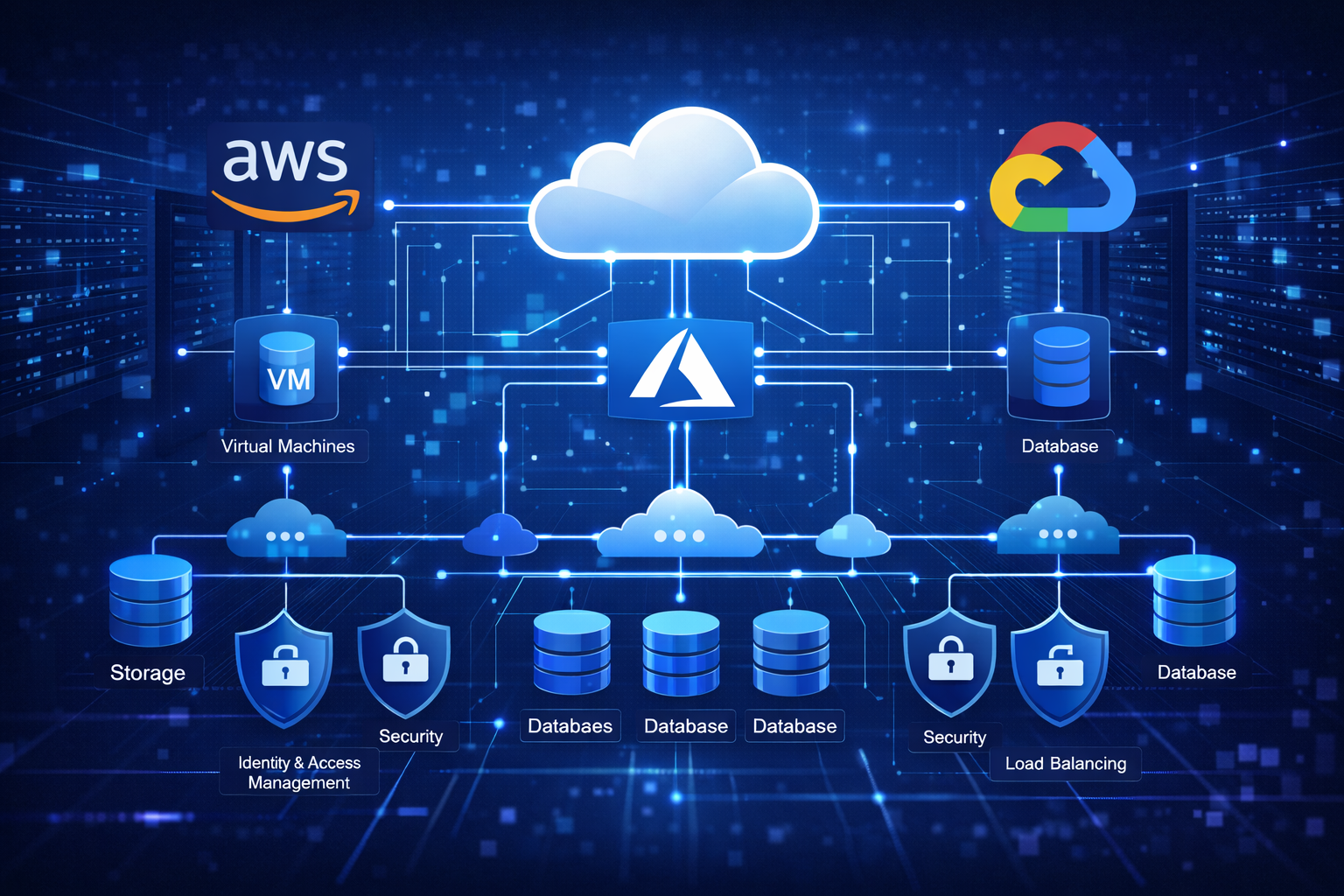
1. Infrastructure as a Service (IaaS)
IaaS provides virtualized computing resources such as:
- Virtual machines
- Storage
- Networking
This model answers what is cloud computing at the infrastructure level.
2. Platform as a Service (PaaS)
PaaS allows developers to build and deploy applications without managing servers.
It simplifies what is cloud computing for developers by focusing on code instead of hardware.
3. Software as a Service (SaaS)
SaaS delivers software applications over the internet, such as email, CRM, and collaboration tools.
For end users, what is cloud computing often means SaaS applications they use daily.
Introduction to Major Cloud Providers
When discussing what is cloud computing, three platforms dominate the global market.
🔹 Amazon Web Services (AWS)
AWS is the world’s largest cloud provider, offering hundreds of services across compute, storage, networking, analytics, and AI.
AWS plays a major role in defining what is cloud computing at enterprise scale.
🔹 Microsoft Azure
Azure integrates deeply with Microsoft products and enterprise systems. It is widely used by organizations migrating from on-premise infrastructure.
Azure helps businesses modernize their understanding of what is cloud computing through hybrid and multi-cloud solutions.
🔹Google Cloud Platform (GCP)
GCP is known for data analytics, machine learning, and performance-optimized infrastructure.
For many data-driven organizations, what is cloud computing becomes clearer through GCP’s analytics-first approach.
Global Cloud Infrastructure
Another essential answer to cloud computing lies in infrastructure.
Cloud providers operate:
- Global regions
- Availability zones
- Edge locations
This architecture ensures:
- High availability
- Fault tolerance
- Low latency
When people ask what is cloud computing, they often underestimate the importance of global infrastructure in delivering reliable services.
Security and Compliance in Cloud Computing
A common misconception when learning what is cloud computing is that cloud is less secure. In reality, leading cloud providers invest billions in security.
Shared Responsibility Model
Understanding the cloud computing includes knowing who is responsible for what
- Cloud provider secures infrastructure
- Customers secure applications and data
Key Security Features
- Identity and Access Management (IAM)
- Data encryption
- Network firewalls
- Compliance certifications (ISO, SOC, GDPR)
Cloud security is now more advanced than traditional on-premise systems.
Pricing Models in Cloud Computing
Another key aspect of what is cloud computing is cost efficiency.
Pay-As-You-Go
Users pay only for what they consume.
Subscription and Reserved Models
Long-term usage offers cost savings.
Understanding pricing helps clarify cloud computing as a business-friendly technology rather than a cost burden.
Common Cloud Computing Use Cases
To explain what is cloud computing in real terms, consider these use cases:
- Web and mobile app hosting
- Data backup and disaster recovery
- Big data analytics
- Artificial intelligence and machine learning
- Internet of Things (IoT) platforms
Nearly every digital service today is powered by cloud computing.
Cloud Computing Careers and Skills
As more people ask what is cloud computing, demand for cloud professionals continues to rise.
Popular Roles
- Cloud Engineer
- Cloud Architect
- DevOps Engineer
- Site Reliability Engineer
Learning what is cloud computing opens doors to high-growth IT careers.
Start your cloud journey with Cambridge Infotech Cloud & DevOps Training
Why Learning Cloud Computing Matters in 2026
In 2026, understanding cloud computing is no longer optional for IT professionals.
Cloud skills are essential because:
- Enterprises are cloud-first
- AI and data platforms run on cloud
- Remote and hybrid work depend on cloud infrastructure
Educational institutions and training providers like Cambridge Infotech focus on real-world cloud skills aligned with industry needs.
Future Trends in Cloud Computing
To conclude is cloud computing, we must look ahead.
Emerging Trends
- Multi-cloud strategies
- Serverless computing
- AI-powered cloud services
- Edge computing
- Sustainable cloud infrastructure
These trends continue to redefine is cloud computing for the next generation.
Frequently Asked Questions (FAQ)
1.What is cloud computing?
What is cloud computing is the delivery of computing services such as servers, storage, databases, networking, software, and analytics over the internet instead of using local physical hardware. It allows users to access resources on demand and pay only for what they use.
2. Why is cloud computing important?
Cloud computing is important because it reduces infrastructure costs, improves scalability, enhances security, and enables faster innovation. Understanding what is cloud computing helps businesses and individuals adopt modern digital technologies efficiently.
3. How does cloud computing work?
To understand what is cloud computing, you need to know that it works through remote data centers operated by cloud providers. Users access these resources via the internet, while the provider manages hardware, maintenance, security, and updates automatically.
4. When should you use cloud computing?
Cloud computing should be used when you need flexibility, remote access, scalability, and cost efficiency. Organizations adopt cloud solutions when launching new applications, handling variable workloads, or modernizing legacy systems—key reasons behind learning what is cloud computing today.
5. Where is cloud computing used?
Cloud computing is used across industries such as IT, healthcare, finance, education, e-commerce, and entertainment. From mobile apps to enterprise software, almost every digital service relies on cloud platforms, reinforcing why what is cloud computing is a critical concept.
6. What are the main types of cloud computing?
The main types include:
- Public Cloud
- Private Cloud
- Hybrid Cloud
- Multi-Cloud
7. How secure is cloud computing?
Cloud computing is highly secure when best practices are followed. Leading providers use encryption, identity management, and compliance frameworks. Knowing is cloud computing also includes understanding the shared responsibility model between users and providers.
8. Why should students and professionals learn cloud computing?
Learning cloud computing opens doors to high-demand roles like cloud engineer, DevOps engineer, and cloud architect. As organizations move to the cloud, understanding a cloud computing becomes essential for career growth.
Conclusion
So, what is cloud computing?
It is the backbone of modern digital transformation, enabling scalability, innovation, security, and efficiency.
From startups to global enterprises, cloud computing powers applications, data, and intelligence across industries. Understanding the cloud computing is the first step toward mastering AWS, Azure, and Google Cloud Platform.
For structured learning, hands-on projects, and career-oriented training, explore cloud programs at Cambridge Infotech, where industry-aligned education meets real-world expertise.