Cybersecurity Course in Banaswadi – Skills Needed, Jobs, and Salary

December 10, 2025
Students learning cybersecurity course in Banaswadi classroom with Kali Linux, Wireshark, Metasploit, and Nmap on laptops.

Introduction – Why Cybersecurity Course in Banaswadi Is in High Demand in 2026

In today’s digital world, cybersecurity has become essential for every industry — from businesses and government institutions to startups and payment platforms. With cyber threats rising rapidly, enrolling in a Cybersecurity Course in Banaswadi has become a top choice for students, fresh graduates, and working professionals in 2026.

Banaswadi’s location—close to Kammanahalli, Kalyan Nagar, HRBR Layout, and Hennur—has turned it into a growing education hub. Its proximity to Manyata Tech Park, home to companies like IBM, Cognizant, and Philips, provides students easy access to job openings, internships, and walk-in drives.

The demand for cybersecurity professionals is increasing due to advanced cyberattacks, AI-driven malware, ransomware, and the rise of cloud systems, digital payments, and e-commerce. A Cybersecurity Course in Banaswadi helps learners master essential tools like Kali Linux, Wireshark, Metasploit, Burp Suite, and Nmap — skills directly aligned with real industry needs.

In summary, a Cybersecurity Course in Banaswadi is in high demand due to growing cyber risks, practical job-focused training, excellent connectivity, and high-paying global career opportunities. It remains one of the best IT career choices for 2026 and beyond.


What You Learn in a Cybersecurity Course in Banaswadi (Complete Syllabus Breakdown)

A Cybersecurity Course in Banaswadi gives you a complete skill set required to protect networks, applications, data, and cloud environments from cyber threats. Whether you’re a fresher, working professional, or switching careers after a gap, the curriculum is designed to take you from beginner to job-ready cybersecurity professional.

Below is the complete syllabus breakdown, module by module.


1. Networking Fundamentals (Beginner to Advanced)

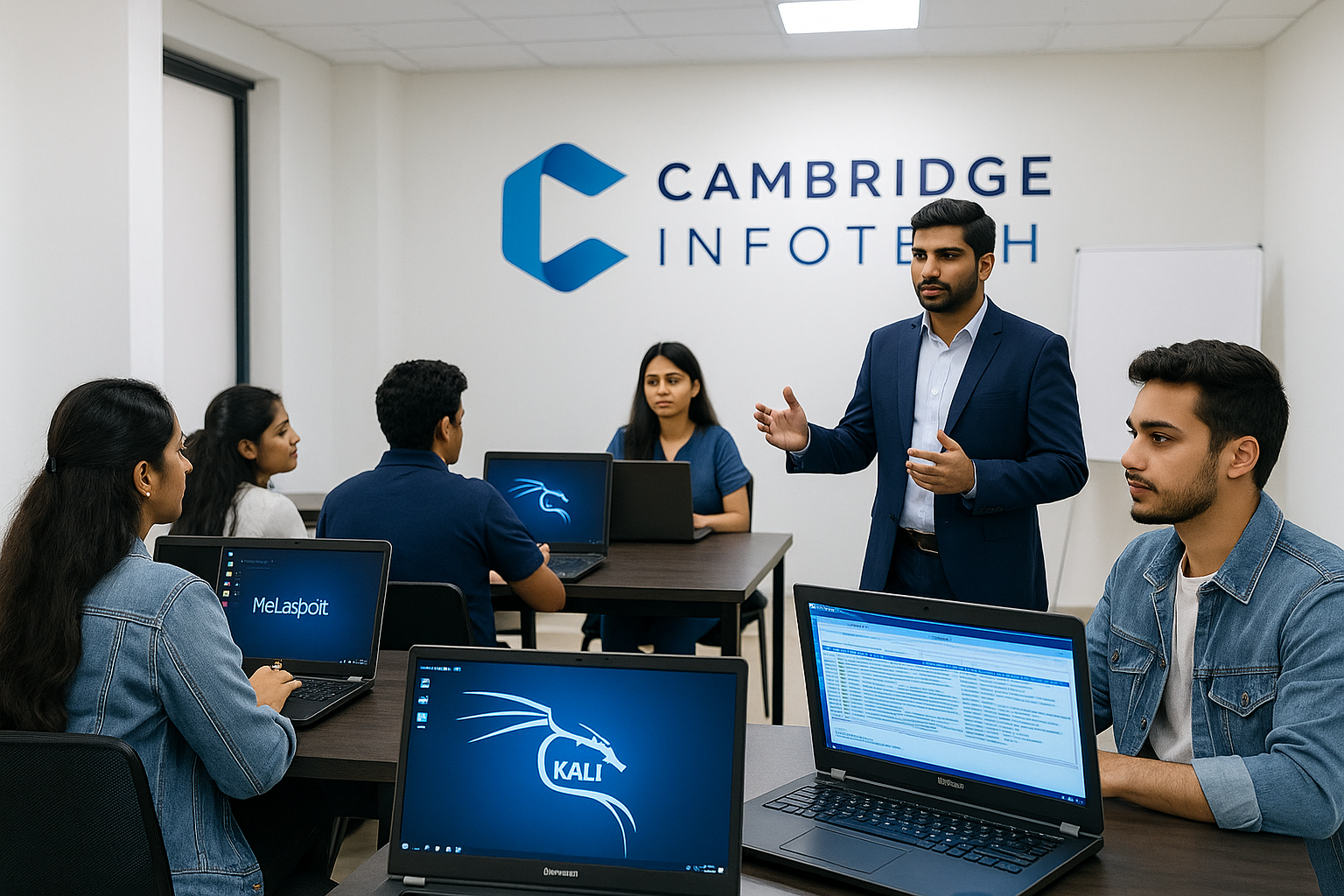
A strong foundation in networking is essential for becoming a cybersecurity expert.Realistic cybersecurity classroom training scene in Banaswadi with students practicing ethical hacking tools.

You will learn:

  • Introduction to Networks & Architecture

  • OSI & TCP/IP Models

  • IP Addressing, Subnetting, VLANs

  • Routing & Switching

  • DNS, DHCP, VPN, NAT

  • Firewalls & Proxy

  • Packet Flow & Network Behavior

  • Hands-on packet analysis using Wireshark

Outcome: You will understand how data moves inside networks, how attackers exploit weaknesses, and how to defend them.


2. Linux & Server Administration for Cybersecurity

Cybersecurity professionals use Linux daily.

You will learn:

  • Linux File System & Permissions

  • Users, Groups & Privileges

  • Shell Commands & Bash Scripting

  • Services, Cron Jobs, System Logs

  • Setting Up Kali Linux

  • Configuring Servers for Testing

Outcome: You become comfortable working in Linux-based ethical hacking environments.


3. Ethical Hacking & Penetration Testing (Core Module)

This is the backbone of a Cybersecurity Course in Banaswadi.

You will learn:

  • Ethical Hacking Methodology

  • Information Gathering (Reconnaissance)

  • Scanning & Enumeration (Nmap, Netcat)

  • Vulnerability Assessment (Nessus, OpenVAS)

  • Exploitation Frameworks (Metasploit)

  • Privilege Escalation Techniques

  • Password Attacks (Hydra, John the Ripper)

  • Sniffing Attacks & Network Analysis

  • Post-Exploitation Methods

Outcome: You will be able to think and work like a penetration tester.


4. Web Application Security (OWASP Top 10)

Learn how attackers exploit websites and how to defend them.

You will master:

  • OWASP Top 10 Vulnerabilities

  • SQL Injection

  • Cross-Site Scripting (XSS)

  • Command Injection

  • Authentication & Session Hijacking

  • File Upload Vulnerabilities

  • Business Logic Flaws

  • Testing with Burp Suite

  • Hands-on labs with DVWA, Juice Shop, WebGoat

Outcome: You will be able to test and secure web applications for companies.


5. System Security & OS Hardening

You will learn to secure Windows and Linux environments.

Topics:

  • Windows Security Architecture

  • Event Logs Monitoring

  • User Access Policies

  • Local Security Policies

  • Hardening Servers

  • Encryption & File Integrity Monitoring

  • Malware Analysis (Basics)


6. WiFi & Wireless Security Testing

Learn attacks used in real-world scenarios.

Topics:

  • Wireless Protocols

  • Capturing Handshakes

  • WiFi Cracking

  • Rogue Access Points

  • Evil Twin Attacks

  • Tools: Aircrack-ng, Kismet


7. SOC Operations & SIEM Tools (Splunk, ELK Stack)

This is crucial for students aiming for SOC Analyst jobs.

You will learn:

  • Security Operations Center Workflow

  • Log Analysis

  • Incident Detection

  • Alert Investigation

  • Threat Hunting

  • SIEM Dashboards (Splunk & ELK)

  • MITRE ATT&CK Framework

  • Real-time attack simulations

Outcome: You will be job-ready for SOC roles.


8. Cloud Security (AWS + Azure Basics)

Companies are shifting to cloud — so this module is essential.

Topics:

  • Cloud Computing Fundamentals

  • AWS IAM, VPC, Security Groups

  • Azure Identity & Access

  • Cloud Vulnerabilities

  • Cloud Security Best Practices


9. Cybersecurity Compliance & Governance

You will learn:

  • ISO 27001

  • GDPR

  • PCI DSS

  • Cyber Laws

  • Risk Management

  • Disaster Recovery & Business Continuity


10. Python Scripting for Cybersecurity

You will learn:

  • Python Basics

  • Automation Scripts

  • Log Parsing

  • Directory Crawling

  • Simple malware detection scripts


11. Career Preparation Modules

To help you get hired fast.

You will get:

  • Resume Building

  • LinkedIn Optimization

  • Interview Preparation

  • Mock Interviews

  • GitHub Portfolio Guidance

  • Internship Support

  • Placement Assistance

Banaswadi’s proximity to Manyata Tech Park makes placement access easier.


Skills Needed to Succeed After a Cybersecurity Course in Banaswadi (Technical + Soft Skills)

To succeed after completing a Cybersecurity Course in Banaswadi, students need a mix of technical and soft skills. The most important foundation is networking, including OSI Model, TCP/IP, DNS, routing, firewalls, and packet flow. This helps analysts detect threats and understand system behavior. Next is Linux proficiency, as most cybersecurity tools run on Kali Linux; students learn command-line usage, file permissions, logs, and scripting.

Ethical hacking methodology is another key skill — including reconnaissance, scanning, exploitation, and post-exploitation using tools like Burp Suite, SQLMap, Nmap, and Metasploit. Problem-solving and analytical thinking are crucial for analyzing logs and investigating unusual activity, especially for SOC roles.

Basic Python scripting boosts automation, helps with malware analysis, and supports custom security tools. Finally, strong communication and reporting skills are essential for explaining vulnerabilities and writing clear assessment reports.

Overall, a Cybersecurity Course in Banaswadi builds a strong foundation in networking, Linux, penetration testing, scripting, analysis, and communication—skills that match 2026 industry expectations.


Cybersecurity Tools You Will Learn in a Cybersecurity Course in Banaswadi (Kali Linux, Wireshark, Metasploit, Burp Suite, Nmap)

A Cybersecurity Course in Banaswadi trains you on the most important tools used by SOC teams, penetration testers, and ethical hackers.

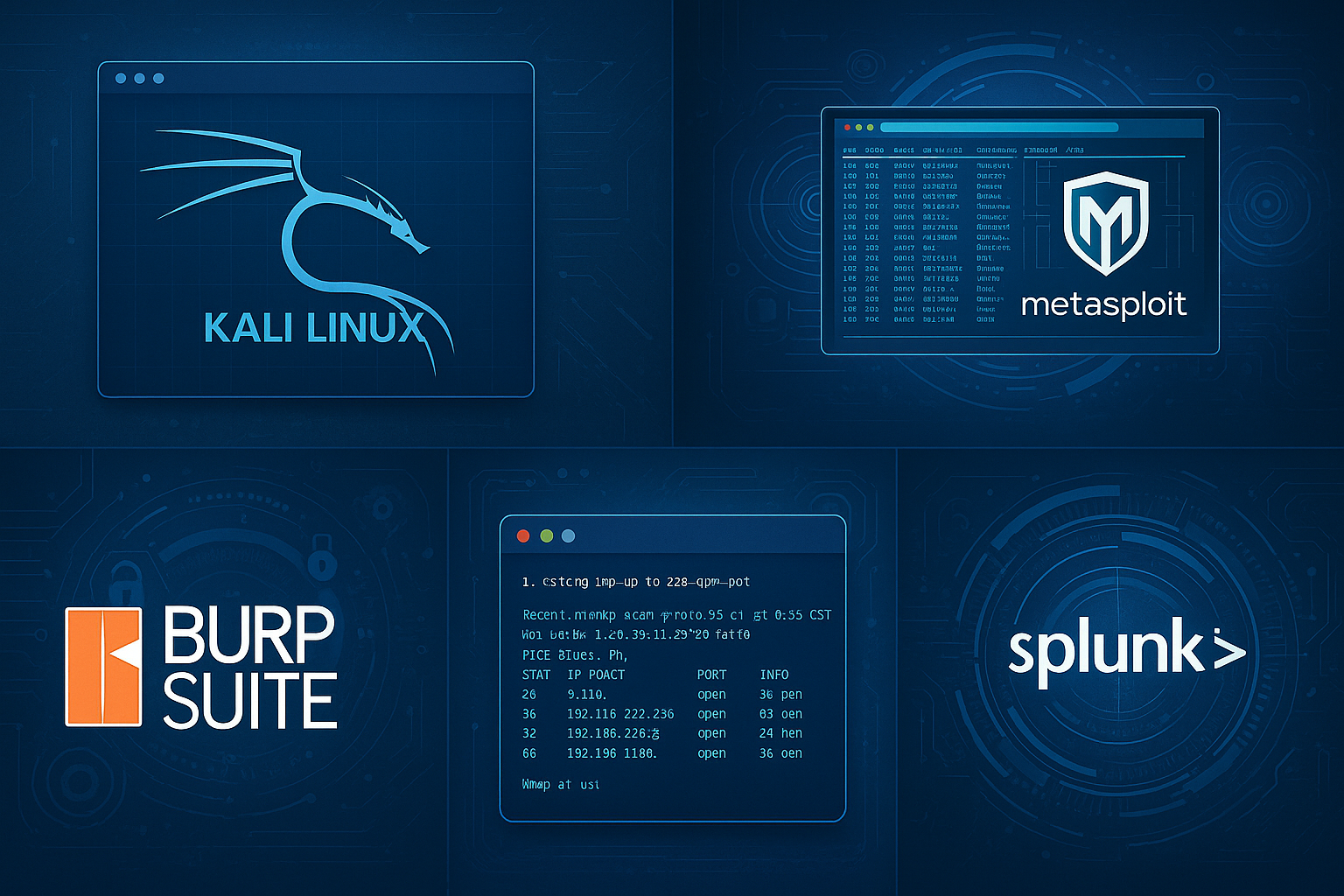
Top Tools You Master Cybersecurity Course in Banaswadi training including Kali Linux, Burp Suite, and Nmap.

  • Kali Linux – Complete penetration testing OS

  • Nmap – Network scanning & vulnerability discovery

  • Wireshark – Packet analysis & suspicious traffic detection

  • Metasploit – Exploitation, payloads, post-exploitation

  • Burp Suite – Web application security testing

 Additional Tools

  • Nessus & OpenVAS – Vulnerability scanners

  • Aircrack-ng – WiFi hacking

  • Hashcat – Password cracking

  • Splunk / ELK Stack – SIEM monitoring

These tools ensure you gain hands-on experience and become fully job-ready for pentesting and SOC analyst roles.


Cybersecurity Course Duration, Fees & Eligibility in Banaswadi (Complete 2026 Guide)

Before enrolling in any IT training program, students often look for clarity on the course duration, fee structure, and eligibility. Since cybersecurity is a skill-based profession, students want to know how long it takes to become job-ready, how much they need to invest, and whether they meet the entry requirements. A Cybersecurity Course is designed to be flexible, affordable, and beginner-friendly, making it accessible to students, freshers, and working professionals. Understanding these details helps learners plan their career path more effectively.

The typical duration of a Cybersecurity Course in Banaswadi ranges between 3 to 6 months, depending on the level of mastery students want to achieve. Fast-track batches are available for those who can dedicate more hours per week, allowing the course to be completed in as little as 8–10 weeks. On the other hand, comprehensive programs with deeper penetration testing, SOC operations, Python scripting, and live labs generally run for 5–6 months. This duration ensures that students not only understand cybersecurity concepts but also gain sufficient hands-on practice. Some advanced learners even extend their training by taking additional modules like cloud security or malware analysis.

The fee structure for a Cybersecurity Course is varies based on the institute, course depth, and lab facilities. On average, students can expect fees ranging from ₹20,000 to ₹45,000. Institutes with advanced labs, virtual machines, and real-world tools like Splunk, Burp Suite Pro, and Metasploit Professional may charge higher fees. However, the investment is justified because cybersecurity jobs offer significantly high salaries, starting around ₹4–6 LPA for freshers and going up to ₹12–20 LPA within a few years. Most institutes in Banaswadi—including Cambridge Infotech—also provide flexible payment options such as EMI, installment plans, and scholarships for deserving students.

The eligibility for enrolling in a Cybersecurity Course in Banaswadi is remarkably flexible. You do NOT need to be a computer science graduate to start learning cybersecurity. Anyone with basic computer skills and an interest in problem-solving can join. The course is suitable for:

  • Students (10th, 12th, Diploma, Degree)

  • Fresh graduates

  • IT/non-IT professionals

  • Career switchers

  • Entrepreneurs

  • Freelancers interested in ethical hacking

While no programming expertise is required initially, a basic grasp of networking and Linux commands can help. Institutes like Cambridge Infotech also offer pre-foundation classes for complete beginners. For students who want to enhance their skill set even further, learning Python through the internal resource adds significant value because Python is widely used in automation, malware analysis, and scripting.

Another important factor students consider while choosing a Cybersecurity Course in Banaswadi is the availability of practical labs. Institutes with dedicated cybersecurity labs offer Kali Linux systems, simulated networks, WiFi hacking environments, and SOC dashboards for real-time monitoring. The presence of these labs ensures students experience actual security challenges rather than confined theoretical models. External platforms like TryHackMe and Hack The Box are also recommended during training to improve practical skills.

Students also appreciate that a Cybersecurity Course includes weekend and evening batches, making it ideal for working professionals. Many trainees from nearby areas like Kalyan Nagar, HRBR Layout, Hennur, Banaswadi Main Road, and Kammanahalli choose flexible batch timings to balance job and learning.

In conclusion, a Cybersecurity Course is affordable, flexible, and accessible to students from all backgrounds. With course durations ranging from 3–6 months, reasonable fees, and low entry barriers, it is one of the best career investments for anyone aiming to enter the cybersecurity field in 2026.


Real-World Projects and Hands-On Training in a Cybersecurity Course in Banaswadi

One of the biggest reasons students choose a Cybersecurity Course in Banaswadi is the strong focus on hands-on practical training. Cybersecurity is not a theory-based field — it is entirely skill-driven. Companies evaluate candidates not by their certificates, but by their ability to detect vulnerabilities, analyze systems, perform penetration tests, and respond to real threats. This is why the best institutes offering a Cybersecurity Course in ensure that students spend at least 70–80% of their time working on tools, simulations, and real-world attack environments. Practical labs, virtual machines, and scenario-based learning help students become job-ready and confident in handling real cybersecurity operations.

The first set of real-world projects in a Cybersecurity Course in Banaswadi typically revolves around network scanning and enumeration. Students perform detailed analysis using Nmap, Netcat, and Angry IP Scanner to understand network structure, discover hosts, identify open ports, and analyze exposed services. This project helps learners understand how attackers perform reconnaissance on networks before launching sophisticated attacks. External resources like Hack The Box and TryHackMe provide additional practice labs for scanning and enumeration exercises.

Another important project includes web application testing, a core skill in modern cybersecurity. Students learn how to inspect websites using Burp Suite, detect SQL injection flaws, test for cross-site scripting (XSS), bypass authentication, and identify input validation weaknesses. As part of the Cybersecurity Course in Banaswadi, learners test intentionally vulnerable web platforms like DVWA (Damn Vulnerable Web Application), OWASP Juice Shop, and WebGoat. These projects prepare students for careers in penetration testing and bug bounty hunting.

During the course, students also work on password auditing and cracking projects using tools like Hashcat, John the Ripper, Hydra, and Crunch. This helps them understand how weak passwords are compromised and how organizations can enforce robust security policies. Password auditing is a fundamental task for cybersecurity analysts in companies, and practicing it during a Cybersecurity Course  gives learners practical awareness of real-world threats.

Another major component is WiFi security testing, where students analyze wireless networks, capture handshakes, and test vulnerabilities using Aircrack-ng. Learners understand how attackers compromise unsecured WiFi networks and how to implement WPA3, MAC filtering, and advanced network protections. With the number of households, offices, and public spaces in Banaswadi using WiFi networks, this project offers immediate real-world relevance.

One of the most important real-world exercises in a Cybersecurity Course is incident detection and response simulation. Students use SIEM tools like Splunk, ELK Stack, or QRadar to detect suspicious log activity such as brute-force attempts, failed SSH logins, malware indicators, and port scans. They practice identifying alerts, documenting incidents, performing root cause analysis, and preparing response steps. These exercises prepare learners for SOC Analyst roles, one of the most in-demand cybersecurity job profiles in Bangalore.

The final project in a Cybersecurity Course in Banaswadi is often a full penetration testing assignment, where students test an entire simulated network. They perform reconnaissance, scanning, exploitation, privilege escalation, persistence, and reporting — exactly like real penetration testers do in companies. This capstone project becomes a valuable part of the student’s resume and GitHub portfolio.

In conclusion, the hands-on training and real-world projects included in a Cybersecurity Course in Banaswadi ensure that learners are fully equipped for the job market. Practical labs, attack simulations, SIEM dashboards, penetration testing exercises, and bug bounty style projects make students industry-ready and confident to tackle cybersecurity challenges.


Job Roles After Completing a Cybersecurity Course in Banaswadi (Career Paths & Opportunities)

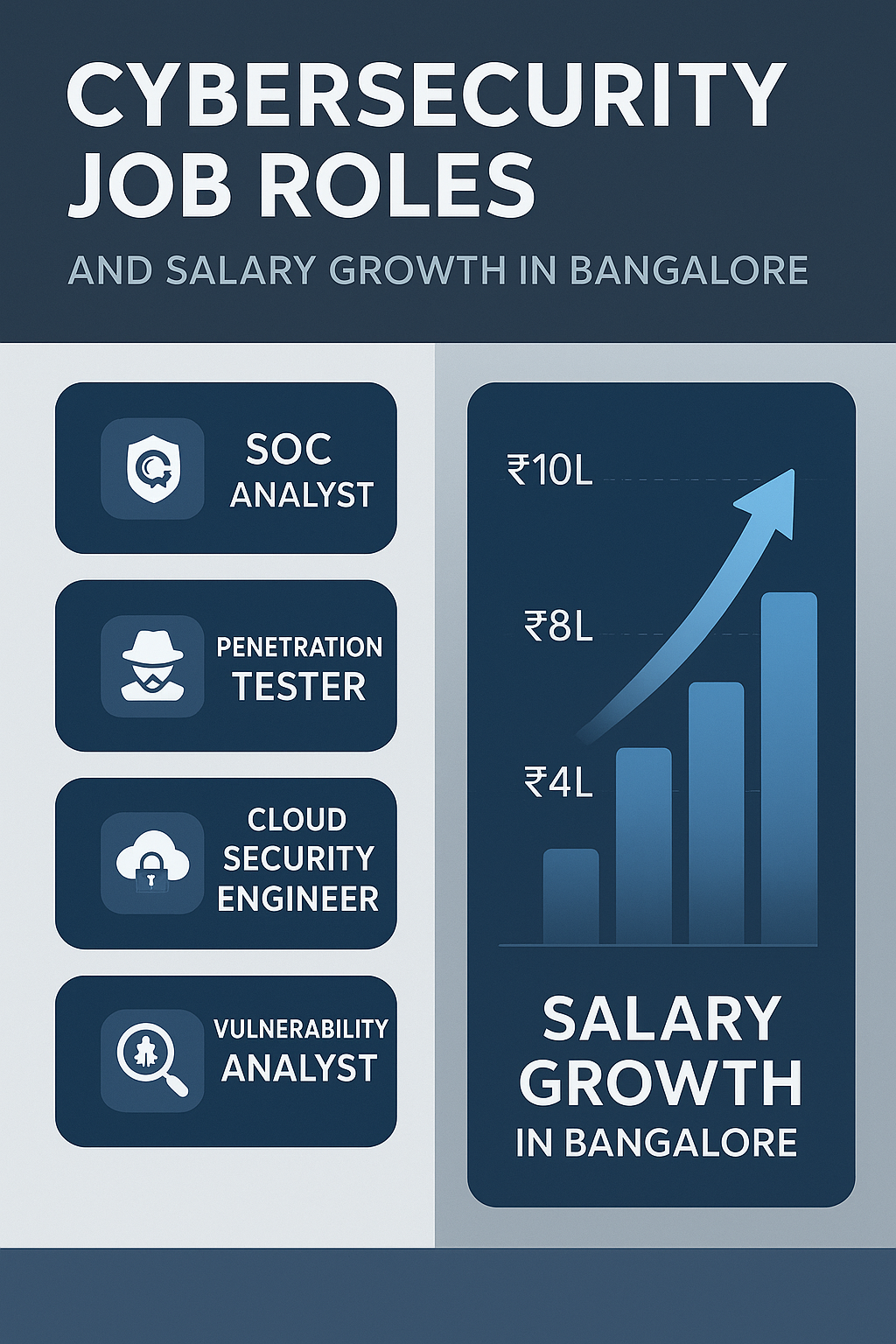
Completing a Cybersecurity Course in Banaswadi opens the door to some of the most in-demand and high-paying careers in the IT industry. As cyber threats evolve, companies across Bangalore — from startups to MNCs — are aggressively hiring skilled cybersecurity professionals. Here are the top career paths you can choose after completing your training.


1. SOC Analyst (Security Operations Center Analyst)

The most common role for freshers. You will:

  • Monitor SIEM dashboards

  • Respond to alerts

  • Investigate suspicious activity

  • Escalate critical threats
    Typical Salary: ₹4–7 LPA


2. Cybersecurity Analyst

You handle:

  • Vulnerability scanning

  • Access control

  • Patch management

  • Security audits
    Companies prefer students with hands-on training from a Cybersecurity Course in Banaswadi.

Salary: ₹5–8 LPA


3. Penetration Tester / Ethical Hacker

You simulate cyberattacks on networks & applications.
Skills required:

  • Exploitation

  • Reconnaissance

  • OWASP Top 10

  • Metasploit

  • Burp Suite

Salary: ₹6–12 LPA (can exceed ₹20L with experience)


4. Vulnerability Analyst

You analyze system weaknesses using tools like:

  • Nessus

  • Qualys

  • OpenVAS

Salary: ₹5–9 LPA


5. Network Security Engineer

You secure corporate networks by configuring:

  • Firewalls

  • Routers

  • VPNs

  • Intrusion Detection Systems

Salary: ₹6–10 LPA


6. Cloud Security Engineer

You secure AWS, Azure & Google Cloud environments.
A rising specialisation due to massive cloud adoption.

Salary: ₹10–18 LPA


7. Digital Forensics Analyst

You investigate cybercrimes, recover evidence, and analyze malware.

Salary: ₹6–12 LPA


8. Security Consultant

A high-level role advising companies on cybersecurity strategy.
Ideal for professionals with certifications like CEH, OSCP, CISSP.

Salary: ₹12–25 LPA


9. Threat Intelligence Analyst

You analyze cybercriminal behavior, malware campaigns, and attack patterns.

Salary: ₹8–15 LPA


10. Bug Bounty Hunter / Freelance Cybersecurity ExpertCybersecurity Course in Banaswadi

You get paid for identifying vulnerabilities in global companies like:

  • Google

  • Meta

  • Microsoft

  • Zoho

  • Ola
    Platforms: HackerOne, Bugcrowd

Earning potential: ₹50,000 to ₹3,00,000 per bounty


Why a Cybersecurity Course in Banaswadi Is the Best Career Choice for 2026

As we reach the conclusion of this comprehensive guide, it becomes clear why choosing a Cybersecurity Course in Banaswadi is one of the smartest and most future-proof decisions for students, job seekers, and working professionals in 2026. Cybersecurity is no longer optional — it is a necessity for every company, every industry, and every digital system. With rising cyber threats, ransomware attacks, data breaches, cloud vulnerabilities, and AI-driven malware, companies need skilled cybersecurity professionals who can protect their digital infrastructure. This demand continues to grow, and students who complete a Cybersecurity Course in Banaswadi position themselves at the front line of this global opportunity.

One of the strongest reasons to choose a Cybersecurity Course is the guarantee of long-term career growth. Cybersecurity roles consistently rank among the top-paying jobs in India and worldwide. With skill shortages affecting organizations globally, companies are offering competitive salary packages, flexible remote work options, and accelerated career progression. Reports from Cybersecurity Ventures show that by 2026, there will be millions of unfilled cybersecurity jobs across the world. This shortage means that individuals who have completed a Cybersecurity Course in Banaswadi can secure stable, high-growth careers whether they aim for SOC analysis, penetration testing, cloud security, or threat intelligence.

Banaswadi itself is a strategic location that enhances learning and job opportunities. Nestled between major tech hubs, educational centers, and rapidly developing IT zones, Banaswadi provides easy access to internship and placement opportunities. Cambridge Infotech and other institutes in the area offer modern labs, hands-on projects, real-world tools, and experienced trainers. Students benefit from an environment that supports learning, collaboration, and career development. Choosing a Cybersecurity Course in Banaswadi means choosing convenience, affordability, quality, and accessibility — all in one place.

Another major benefit of completing a Cybersecurity Course in Banaswadi is the industry-ready curriculum and practical exposure. Students train on Kali Linux, Metasploit, Nmap, Wireshark, Burp Suite, Splunk, and various hacking and monitoring tools. They work on real-world projects, including vulnerability assessment, penetration testing, SOC incident analysis, and WiFi security challenges. This practical exposure ensures that students are not just learning theory but gaining the absolute job-ready skills required by companies in 2026. Many freshers begin receiving interview calls even before completing the full course because hands-on experience makes them stand out.

Finally, the global scope of cybersecurity makes this field incredibly attractive. Students who complete a Cybersecurity Course are not limited to Bengaluru or India — they can work remotely for international companies, freelance on platforms like Upwork and Toptal, or apply for overseas roles. Cybersecurity is one of the few IT domains where skills matter more than degrees, making it accessible for learners from diverse educational backgrounds.

In summary, a Cybersecurity Course in Banaswadi is the best career decision for 2026 because it offers:

  • High-paying job opportunities

  • Massive global demand

  • Skill-based career growth

  • Hands-on practical learning

  • Flexible local training options

  • Access to major tech hubs

  • Long-term job security

  • Opportunities for freelancing and remote work

Cybersecurity is more than a profession — it is a mission to keep the digital world safe. And with the right training from Banaswadi, students can build successful, respected, and future-proof careers in this powerful domain.


Top Companies Hiring Students Who Complete a Cybersecurity Course in Banaswadi 2026 

Choosing a Cybersecurity Course in Banaswadi opens doors to some of the best job opportunities in Bangalore — India’s cybersecurity capital. With cyber threats rising across industries, companies are aggressively hiring skilled professionals in SOC operations, penetration testing, cloud security, threat detection, and incident response.

Below is a crisp and powerful summary of the top employers hiring cybersecurity talent in 2026.


1. Leading Indian IT Service Companies

These companies hire thousands of cybersecurity professionals every year:

They recruit for roles like Security Analyst, SOC Analyst, Vulnerability Analyst, and Compliance Specialist. Their Bengaluru centers frequently conduct walk-ins — making it easier for learners from Banaswadi to attend.


2. Global MNCs With Advanced Cybersecurity Teams

Companies with large-scale security operations include:

These organizations expect strong hands-on skills in tools like Metasploit, Burp Suite, Splunk, Wireshark, and Nmap — all of which are covered in a Cybersecurity Course in Banaswadi.
Proximity to Manyata Tech Park gives students a placement advantage.


3. Fast-Growing Startups & Fintech Companies

Bangalore’s startup ecosystem needs cybersecurity talent more than ever. Companies hiring include:

Startups prefer candidates who can start contributing immediately — especially those who completed real-world projects during their cybersecurity training.


4. Freelancing & Remote Work Opportunities

Cybersecurity is one of the highest-paying freelance fields. Platforms offering global projects:

  • Upwork

  • Fiverr

  • Toptal

Common freelance tasks include:

  • Web security testing

  • Penetration testing

  • Vulnerability assessment

  • Malware analysis

Experienced freelancers often earn ₹80,000 – ₹3,00,000 per project.


5. Government & Public Sector Cybersecurity Jobs

Students also find opportunities in:

  • Indian Defence Cyber Agencies

  • National Informatics Centre (NIC)

  • CERT-In

  • State IT Cells

  • Banking & Financial Security Divisions

These roles offer exceptional job stability and prestige.

Common Challenges Faced by Cybersecurity Students and How to Overcome Them

Cybersecurity beginners often struggle with networking concepts, Linux commands, tool usage, and report interpretation. A Cybersecurity Course in Banaswadi helps students overcome these challenges through guided labs, step-by-step learning, and consistent practice.

Platforms like TryHackMe and Hack The Box boost confidence, while Python basics help automate tasks. With regular practice and mentorship, learners quickly move past early difficulties and build strong cybersecurity foundations.


Why Students From Nearby Locations Also Choose Banaswadi for Cybersecurity Training

Students not only from Banaswadi but also from nearby locations such as Kammanahalli, Kalyan Nagar, HBR Layout, Hennur, HRBR Layout, Lingarajapuram, Ramamurthy Nagar, and Hebbal are now choosing to join a Cybersecurity Course in Banaswadi—especially at Cambridge Infotech. The reason is simple: they want quality training, practical labs, real internship opportunities, and a clear path to becoming professionals who can join big companies.

Whether you are a fresher, someone restarting your career after a career gap, or a working professional planning a career switch, Cambridge Infotech in Banaswadi provides the perfect environment to build your future. Many learners from surrounding areas travel to Banaswadi every day because it is accessible, affordable, and gives them the right exposure to become job-ready.

A major reason students join Cambridge Infotech’s Cybersecurity Course in Banaswadi is the opportunity to learn real skills that companies expect. During the course, students get internship-style training where they work on:

  • SOC simulations

  • Log analysis & monitoring

  • Vulnerability scanning

  • Penetration testing

  • Web and network security

  • Real-time cyberattack labs

This hands-on learning gives them the confidence to apply for roles in top companies across Bangalore — especially those in Manyata Tech Park, which is only minutes away from Banaswadi.


Perfect for Career Gap Students & Career Switchers

If you have a career gap, don’t worry — cybersecurity is one of the few fields where companies focus more on skills than past job history. Many students with 1–10 years of gap have successfully restarted their careers after completing a Cybersecurity Course in Banaswadi.

Career switchers from fields like BPO, Mechanical Engineering, Electrical, Commerce, and Arts have also transitioned successfully because cybersecurity welcomes logical thinkers, not just coders.

Useful internal courses that support switching careers:

One of the biggest strengths of choosing an IT institute near Kalyan Nagar is the variety of job-oriented courses available for beginners, students, and working professionals. Instead of offering theoretical programs, institutes in this locality focus on practical, career-driven IT skills. Below is a detailed look at the most in-demand programs available at an IT institute near Kalyan Nagar, along with their job scope and tools.

1. Data Analytics

Data Analytics is one of the most popular courses because companies now rely heavily on data-driven decision-making. A reputable IT institute near Kalyan Nagar trains students in tools like Excel, SQL, Python, and Power BI. Through hands-on dashboard projects, learners get job-ready quickly.
Job roles include Data Analyst, Business Analyst, MIS Executive, and Reporting Analyst.

2. Full Stack Development (MERN)

The demand for Full Stack Developers has skyrocketed across startups and MNCs. Institutes like Cambridge Infotech offer a comprehensive program covering HTML, CSS, JavaScript, React, Node.js, and MongoDB. By enrolling in an IT institute near Kalyan Nagar, students get access to coding labs and real-world project building experience.
External insight: NASSCOM Report on Tech Hiring

3. Digital Marketing

For students who want a non-coding career, Digital Marketing is one of the best choices. An IT institute near Kalyan Nagar provides hands-on training in SEO, Google Ads, Meta Ads, Content Marketing, and Social Media Strategy.
Career roles include SEO Analyst, PPC Specialist, Social Media Manager, and Digital Strategist.

4. Cybersecurity

Cybersecurity is one of the highest-paying IT fields. A good IT institute near Kalyan Nagar trains students on ethical hacking, network security, Linux basics, and SIEM tools.
External resource: Cybersecurity Awareness – Govt Portal

5. Python Programming

Python is a beginner-friendly language used in IT automation, backend development, and machine learning. Many students start their journey by enrolling in Python at an IT institute near Kalyan Nagar because it builds strong technical foundations.

6. UI/UX Design

UI/UX has become a trending creative career option. Students learn wireframing, prototyping, Figma, and user research. A professional IT institute near Kalyan Nagar also includes portfolio-building, which is essential for design interviews.

7. Software Testing

Software Testing (Manual + Automation) is ideal for non-coders looking for fast job placement. Testing roles are always in demand across product companies and service-based firms.

8. Cloud Computing

Cloud skills are mandatory for modern IT jobs. Courses include AWS, Azure, cloud deployment, give me image for this


New Year, New Beginning, New Career

Every year, hundreds of students make a strong decision:
“This year, I will build a better career.”

If you want:
 A stable IT career
 A high-paying job
 A future-proof industry
 A globally in-demand skill
 Growth in Bangalore’s tech companies

Then enrolling in a Cybersecurity Course in Banaswadi is the perfect fresh start.

Cambridge Infotech helps you plan your career from zero to professional, with:

  • Mentorship

  • Real projects

  • Certification guidance

  • Placement training

  • Resume & LinkedIn optimization

Your future depends on one decision — and this decision can change your entire career path.


Why Nearby Areas Prefer Cambridge Infotech in Banaswadi

Students from Kammanahalli, Kalyan Nagar, HBR Layout, and Hennur join Cambridge Infotech because:

  • They want to learn from top trainers

  • They want real cybersecurity tools like Kali Linux, Metasploit, Wireshark

  • They want internship-like project experience

  • They want big-company placements

  • They want individual attention

  • They want affordable fees + EMI options

Banaswadi has become the perfect training destination because it blends education + opportunities + accessibility.


FAQs 

When students and working professionals search online for a Cybersecurity Course in Banaswadi, they often have several questions regarding course structure, fees, career outcomes, and eligibility. Clear, accurate answers help learners make informed decisions and also boost local SEO visibility for institutes in the Banaswadi region. Below are some of the most frequently asked questions, answered in detail and optimized for both users and search engines.


1. Who can join a Cybersecurity Course in Banaswadi?

A Cybersecurity Course in Banaswadi is suitable for students from any educational background. Whether you’re from engineering, commerce, arts, or science, you can learn cybersecurity with the right guidance. Beginners with zero experience can join foundation batches, while IT professionals can choose advanced courses to upgrade their skills. The course is ideal for:

  • Students (10th, 12th, diploma, degree)

  • Fresh IT graduates

  • Working professionals

  • Career changers

  • Freelancers

  • Entrepreneurs running digital businesses

No advanced technical knowledge is required to start.


2. What is the course duration of a Cybersecurity Course in Banaswadi?

The duration of a Cybersecurity Course in Banaswadi typically ranges from 3 to 6 months, depending on the depth of training.

  • Fast-track batches: 8–10 weeks

  • Regular batches: 14–24 weeks

  • Advanced batches: 4–6 months

Students receive hands-on training, virtual lab access, Kali Linux practice, and real-world cyber-attack simulations.


3. What kind of jobs can I get after completing a Cybersecurity Course in Banaswadi?

After completing a Cybersecurity Course learners can apply for several high-demand roles such as:

  • SOC Analyst (Level 1 / Level 2)

  • Cybersecurity Analyst

  • Penetration Tester

  • Vulnerability Analyst

  • Network Security Engineer

  • Application Security Tester

  • Digital Forensics Analyst

  • Cloud Security Associate

Bangalore’s IT hubs—Manyata Tech Park, Bagmane Tech Park, and Whitefield—offer thousands of openings every year.


4. Do cybersecurity institutes in Banaswadi offer placement support?

Yes, top institutes providing a Cybersecurity Course in Banaswadi offer end-to-end placement support, including:

  • Resume writing

  • LinkedIn optimization

  • Mock interviews

  • HR training

  • Technical interview preparation

  • Internship opportunities

  • Job alerts through WhatsApp/email

Proximity to Manyata Tech Park significantly boosts placement chances.


5. Does a Cybersecurity Course in Banaswadi include hands-on labs?

Yes, practical learning is the core of a Cybersecurity Course in Banaswadi. Students get access to:

  • Kali Linux environments

  • Penetration testing labs

  • Vulnerable web applications (DVWA, Juice Shop)

  • SIEM dashboards (Splunk, ELK)

  • WiFi hacking environments

  • Real-time attack simulations

  • Port scanning and network auditing

  • Web application security tools

Hands-on training ensures students become job-ready and confident in performing real-world tasks


Conclusion 

The demand for skilled cybersecurity professionals has never been higher — and the trend will only continue to grow in 2026 and beyond. With digital transformation happening across every industry, cyber threats are becoming more sophisticated, more frequent, and more dangerous. This is why enrolling in a Cybersecurity Course in Banaswadi is one of the smartest decisions you can make for your future.

Banaswadi offers the perfect blend of accessibility, affordability, and proximity to major tech parks such as Manyata Tech Park, making it a powerful location for IT career growth. At the heart of this ecosystem is Cambridge Infotech, a training institute known for delivering hands-on cybersecurity education that transforms beginners into skilled professionals.

From ethical hacking to penetration testing, SOC operations, SIEM tools, real-world labs, WiFi hacking, and cloud security fundamentals — every module is designed to give learners job-ready skills. Whether you are a fresher, a degree student, or a working professional trying to switch careers, cybersecurity opens doors to high-paying roles, remote work opportunities, and long-term career stability.

With Cambridge Infotech’s practical training approach, expert mentors, flexible batch options, and strong placement support, you gain the confidence and capabilities needed to excel in interviews and real-time job environments. The institute ensures you not only learn cybersecurity but experience it, one lab at a time.

If you’re ready to build a high-income, future-proof IT career, there’s no better time than now — and no better choice than a Cybersecurity Course at Cambridge Infotech.

Leave a Comment

Drop a Query

Whether to upskill or for any other query, please drop us a line and we'll be happy to get back to you.

Drop a Query NEW

Request A Call Back

Please leave us your contact details and our team will call you back.

Request A Call Back

By tapping Submit, you agree to Cambridge infotech Privacy Policy and Terms & Conditions

Enquiry Now

Enquiry popup